
How to combine Hanoi, Da Nang & Hoi An in one trip (Perfect Vietnam Itinerary).
Vietnam is one of those countries that quietly spoils you.
In a single trip, you can sip egg coffee in a chaotic Old Quarter, watch the sunrise from a marble mountain temple, swim at a tropical beach, and wander lantern-lit streets that feel frozen in time.
If you’re planning your first visit and wondering how to combine Hanoi, Da Nang, and Hoi An into one seamless itinerary, the answer is simple.
It’s not only easy… It’s one of the best Vietnam routes you can possibly choose.
This north-to-central Vietnam itinerary blends:
Hanoi’s history, street food, and energy.
Da Nang’s beaches, temples, and modern comforts.
Hoi An’s charm, culture, and slow-travel magic.
I’ve travelled this route myself, and in this guide I’ll show you:
The best order to visit each destination.
How many days you realistically need.
Exactly how to travel between cities.
Sample itineraries you can copy or adapt.
Whether you have 7 days or two full weeks, this itinerary gives you a genuine, well-balanced taste of Vietnam, without rushing or backtracking.

Linh Ung Pagoda in Da Nang.
Disclosure: I sometimes use affiliate marketing. This will not cost you anything, but helps with my travel costs. I only recommend companies I use myself.
Hanoi, Da Nang & Hoi An – Where to Stay for the Perfect Vietnam Route 👇
Hanoi – History, Street Food & Old Quarter Energy.
La Siesta Classic Ma May – One of the best-rated boutique hotels in the Old Quarter, perfectly placed for street food, coffee spots and evening walks… Comfortable, central, and incredible value.
Da Nang – Beaches, Cafés & Space to Breathe.
InterContinental Danang Sun Peninsula Resort – A world-class luxury retreat tucked into the hills above the bay… Dramatic architecture, private beaches and a true “wow” factor stop.
Hoi An – Lanterns, Old Town Charm & Slow Evenings.
Anantara Hoi An Resort – Riverside luxury with colonial charm, serene pools and direct access to Old Town life… Ideal if you want calm mornings and magical nights.
Hanoi Hotel Guide - Da Nang Best Hotels - Proven Vietnam eSim
Is it easy to combine Hanoi, Da Nang & Hoi An in one trip?
Yes, and this is one of the biggest reasons Vietnam is such a rewarding country for first-time visitors.
Vietnam’s transport network is:
Affordable.
Reliable.
Tourist-friendly.
Hanoi and Da Nang are major transport hubs with frequent domestic flights, trains, and buses, while Hoi An sits just 45 minutes south of Da Nang by road.
That scooter journey along the coast in Central Vietnam was unforgettable.
You’re never stuck figuring out complicated connections, and you won’t lose full days to travel. Each leg of this itinerary is straightforward, predictable, and well-trodden by travellers.
This makes Hanoi–Da Nang–Hoi An ideal if:
It’s your first time in Vietnam.
You want variety without chaos.
You’re balancing sightseeing with downtime.
It’s one of those routes that simply works, as it combines three of the best places in Vietnam in a simple and efficient way.
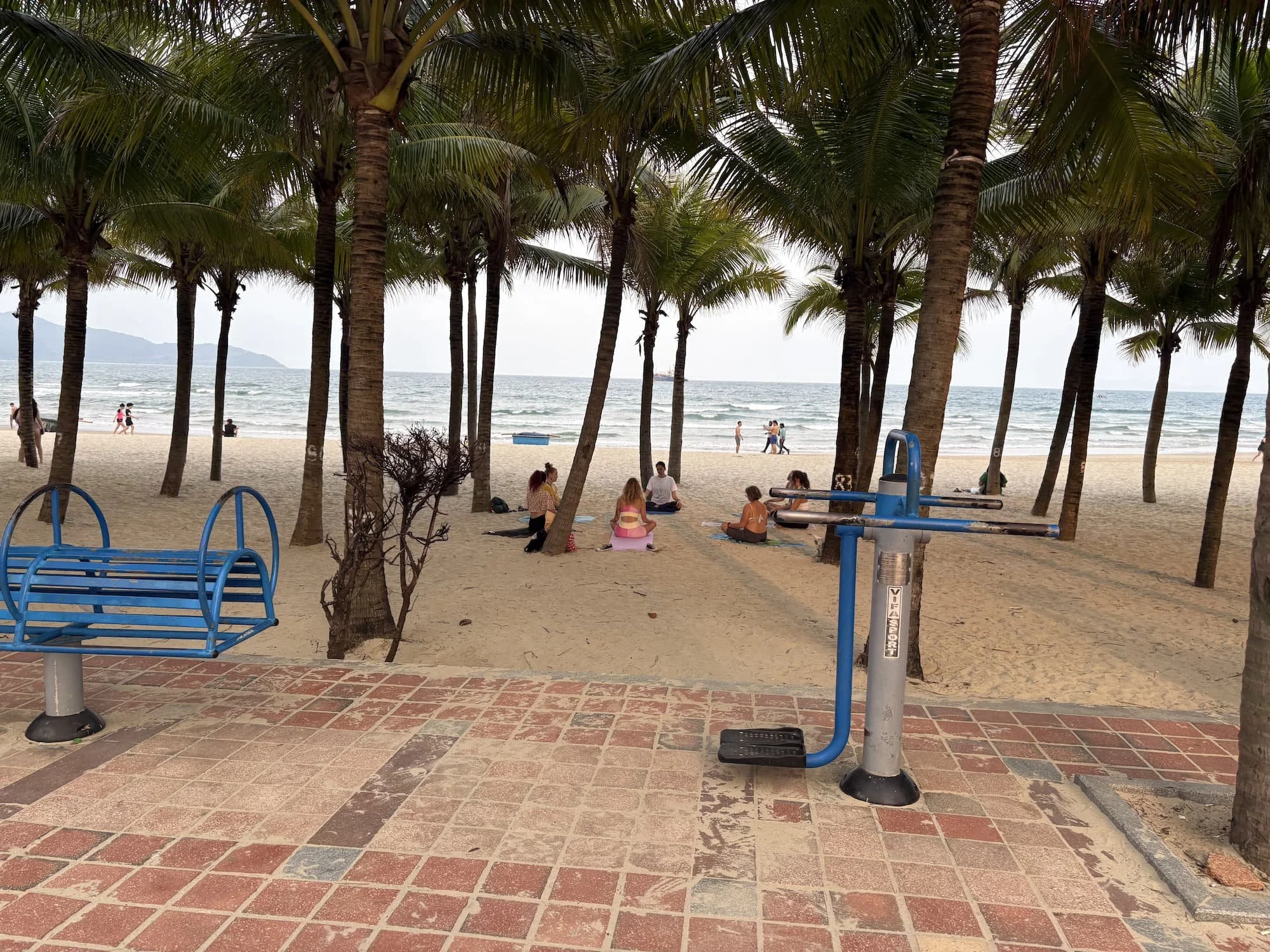
My Khe Beach in Da Nang.
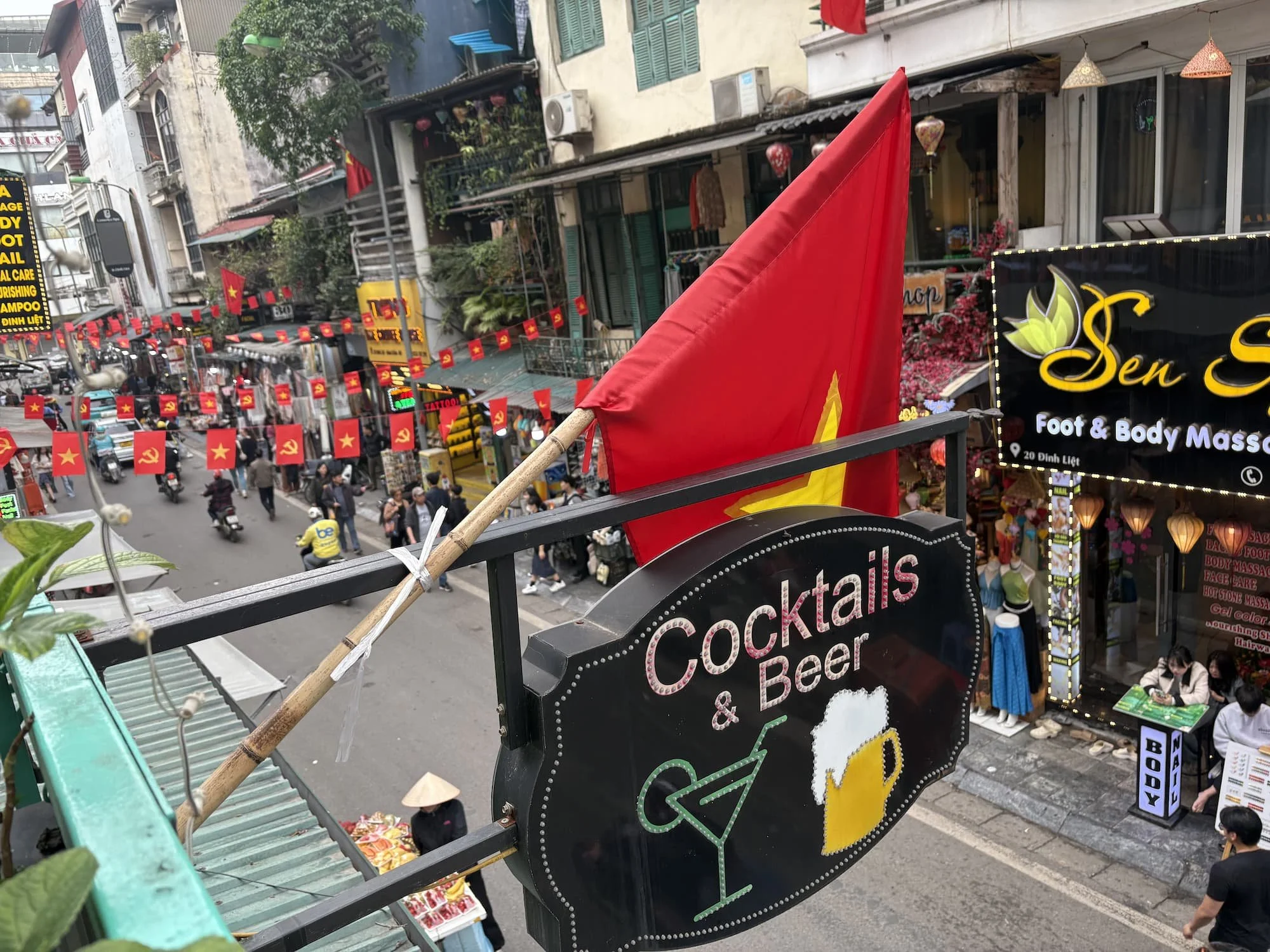
The Old Quarter in Hanoi.
For travellers who want reassurance before booking flights, this route is about as low-stress as Vietnam gets…
You can fly long-haul into Hanoi, work your way south at a comfortable pace, and finish in Hoi An without backtracking or rushing.
If you’re still weighing up your options, it’s worth comparing this route with alternative trips like Hanoi & Ho Chi Minh City, or even a wider 10-day Vietnam itinerary, but for first-timers, in my experiences, Hanoi–Da Nang–Hoi An remains the most balanced and beginner-friendly choice.
Once you understand how simple the logistics are, the rest of the planning becomes much easier — deciding how long to stay in each place, where to base yourself, and which experiences matter most to you.
If you want help with that next step, you can dive deeper into my 3 days in Hanoi guide, or my Da Nang Hotel Guide.
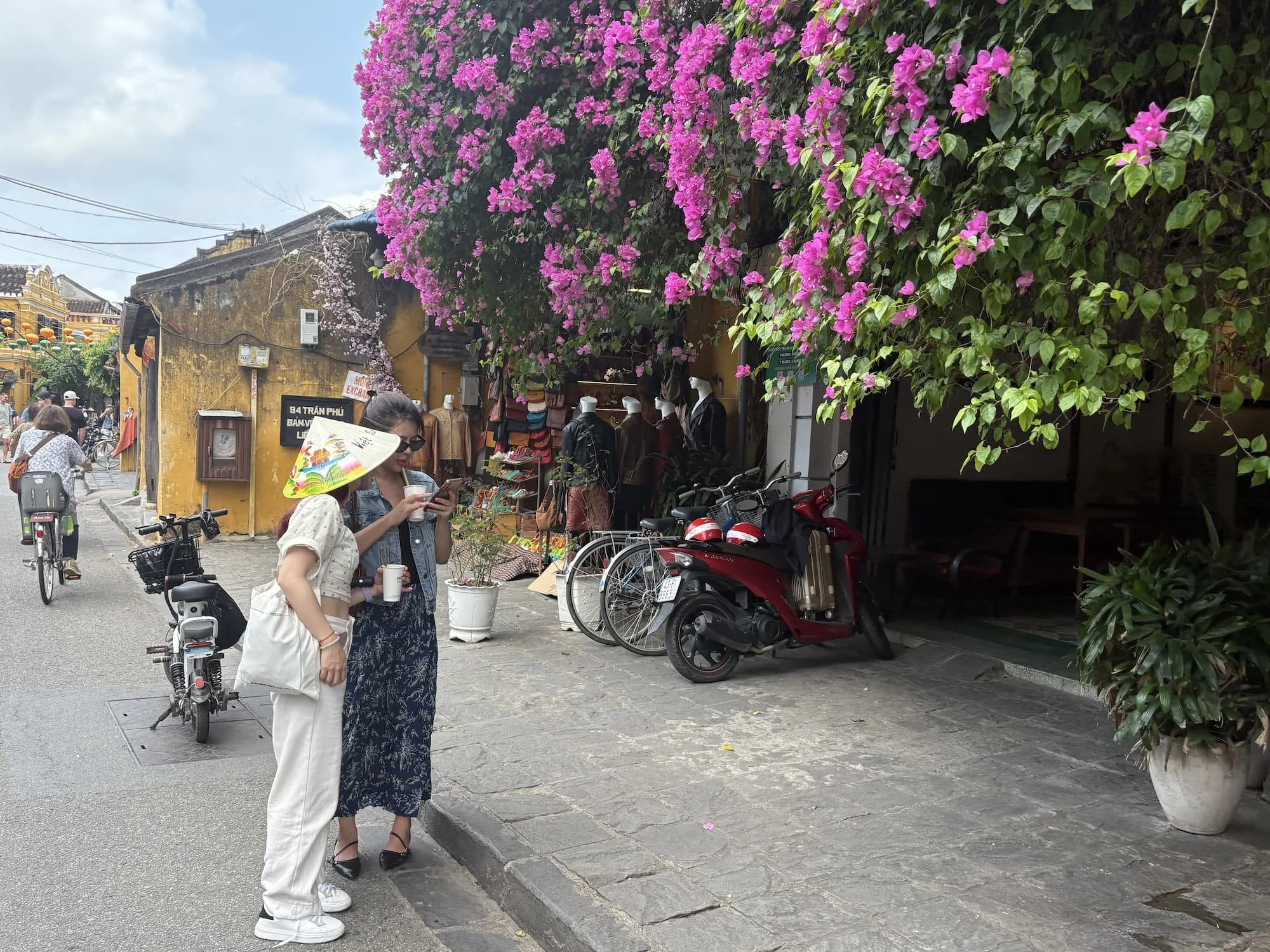
Flowery Hoi An.
Best order to visit Hanoi, Da Nang & Hoi An.
Hanoi → Da Nang → Hoi An (Best Route).
This is the most efficient and logical order and the one I recommend.
Why starting in Hanoi makes sense.
Hanoi is the cultural and historical heart of Vietnam, and it’s where many international flights arrive. Starting here allows you to ease into the country while experiencing it at full intensity.
You should expect:
Bustling streets and constant movement.
Deep history and traditional neighbourhoods.
Some of the best street food in Southeast Asia.
Hanoi is exciting, but it can also be overwhelming, which is why it works best at the beginning of your trip, when your energy levels are highest and you’re eager to explore.
You can browse the best areas to stay in Hanoi here.
Why Da Nang is the perfect midway stop.
After a few days in Hanoi, Da Nang felt like the perfect place to recharge my batteries on my South East Asia trip.
The coastal city offers:
Long, open beaches,
Modern cafés and restaurants.
Wide roads and plenty of space to breathe.
My time in Da Nang was the perfect way to break up the journey, giving me time to slow down, and enjoy some of Vietnam’s best beaches.
It’s also a practical transport hub, making it the natural gateway to central Vietnam, and a far more relaxed introduction to the coast than heading straight into Hoi An.
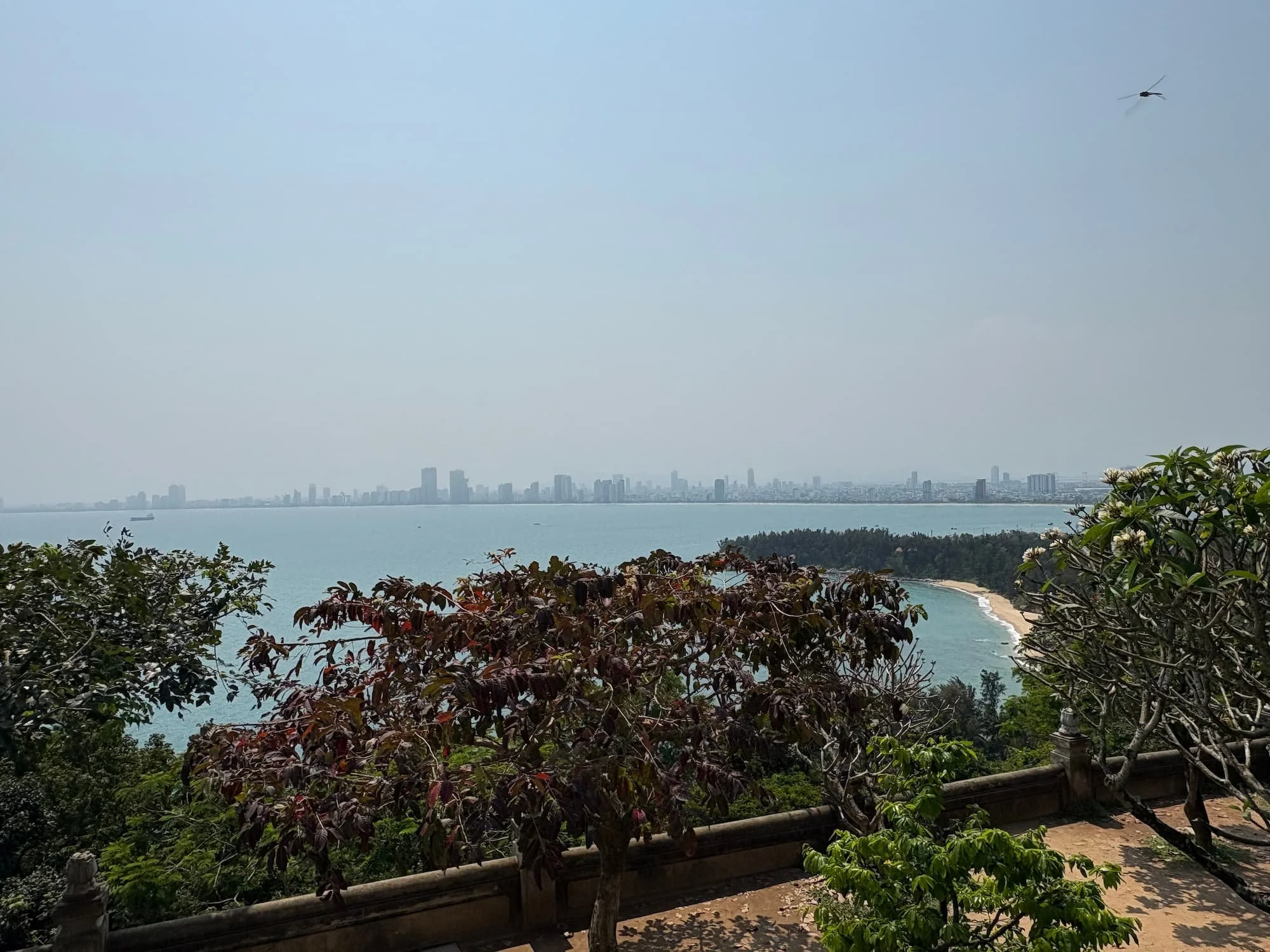
Da Nang’s Coastline.
Why ending in Hoi An just works.
Hoi An is calm, compact, and deeply atmospheric, which makes it the perfect final stop.
Here, I found the pace dropped:
Everything is walkable.
Evenings revolve around lantern-lit streets and riverside strolls.
Days can be full on, or as slow as you want.
Ending in Hoi An felt like the perfect way to end the trip.
It gives me some space to soak up Vietnam’s softer side, rather than finishing in a loud, hectic city.
For most first-time visitors, this north-to-central route creates a natural flow:
Energy → Balance → Calm.
It’s one of the reasons Hanoi–Da Nang–Hoi An is so widely recommended, and why it remains one of the most satisfying Vietnam itineraries.

Arriving in Hanoi.
How many days do you need for Hanoi, Da Nang & Hoi An?
The number of days you need for this itinerary depends on your pace and what you want from the trip, but I found that 10–12 days offers the best balance to tick off some of the best experiences in Vietnam.
That timeframe allows you to enjoy each destination without rushing, while still keeping travel days manageable and stress-free
Recommended Time Split.
Hanoi: 2–4 days.
Da Nang: 1–3 days.
Hoi An: 2–4 days.

Some very active locals in Da Nang.
I’ve done this route at different speeds, and the difference in how it feels can be significant.
If you’re working with 7–9 days, the itinerary is absolutely doable, but it will feel fast.
On my first short trip, Hanoi was incredible, I remember my excitement exploring the Old Quarter for a couple of days, but I was already thinking about the next flight before I’d fully settled in.
You’ll want to focus on the city’s famous spots, and iconic highlights, such as Train Street, Hoan Kiem Lake, and Hoa Lo Prison.
With 10–12 days, everything clicks into place easier.
This is the point where the itinerary starts to feel natural rather than rushed. You have time to properly experience Hanoi, enjoy Da Nang in a more relaxed way, and fully experience the ancient treasures of Hoi An.

Exploring Ancient Hoi An.
If you have 13–14 days or more, this route becomes wonderfully flexible.
This is when you can settle in a routine in each place. Daily morning egg coffees in Hanoi, day trips to Ha Long Bay or Ninh Binh, then, a day at Ba Na Hills from Da Nang, or the fun coconut basket boat tour in Hoi An.
I always find that Vietnam rewards slower travel, so make sure you consider this when planning your trip.
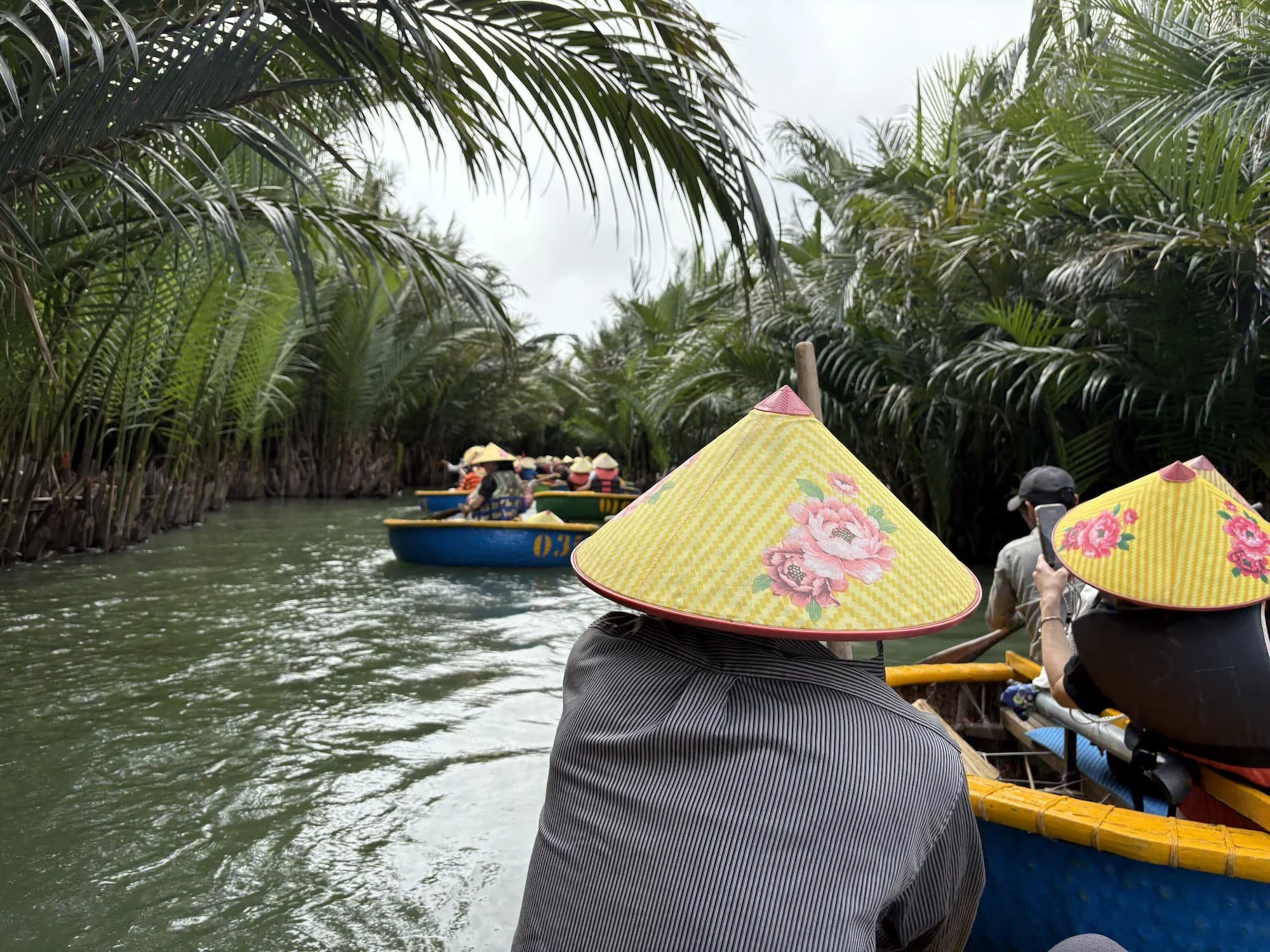
The really fun basket boat tour near Hoi An.
Hanoi – How long to stay & what not to miss.
Recommended stay: 2–4 days.
As soon as I stepped out of my taxi from the airport in the Old Quarter of Hanoi, the city’s character hit me!
Noise, traffic, the smell of street food…
It can feel chaotic at first, but once you settle in, Hanoi becomes one of the most rewarding cities in Vietnam. It feels like the authentic side of the country that you hear about when planning your adventure.
I’d recommend at least 3 days here if it’s your first visit, especially if you want to add a visit to the iconic Ha Long Bay into your itinerary.
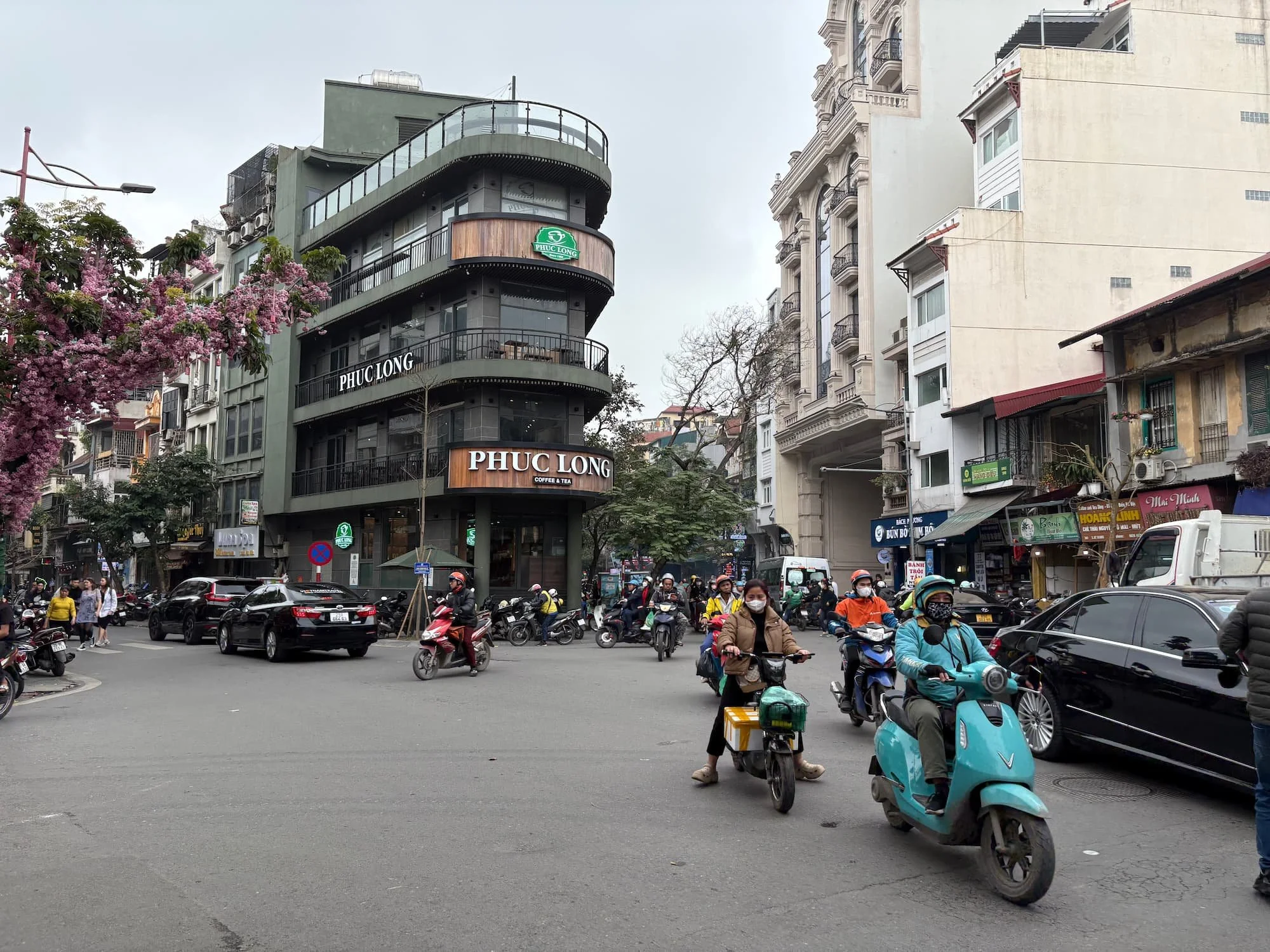
I love the chaos of Hanoi
What not to miss in Hanoi.
Start with the Old Quarter, which is the best area to stay in Hanoi for first timers…
In this area, each street still loosely reflects the trade it was named after. This is where Hanoi feels most alive. I spent my early mornings watching locals exercise by Hoan Kiem Lake, as I got my daily step count in before lunch.
When it comes to food and coffee, a few local places stand out…
Banh Mi 25 is one of the easiest introductions to Hanoi’s street food scene, while Cafe Giang is the birthplace of egg coffee, a surprisingly rich, dessert-like drink that’s become one of the city’s signatures.
I loved the food scene during my time in Ho Chi Minh City, however, Hanoi is a level above!
For views, and quirky vibes, The Note Coffee is worth climbing the narrow staircases for, especially if you want a rooftop perspective over the lake.

The famous Train Street.
One experience that needs careful timing is Train Street.
When it’s open and visited responsibly, it’s one of Hanoi’s most unique sights, just make sure you go with a café host and avoid peak crowds.
I visited day and night, and the vibes are much different. Coffee and chill in the daytime, vs bright lights and Hanoi beers in the evening… Both were fun!
For something quieter and less visited, Phung Hung Mural Street offers a glimpse of Hanoi’s creative side, with painted arches that tell stories of the city’s past.

Ho Chi Minh’s face is displayed everywhere.
Day Trips & Escapes from Hanoi.
If you have extra time, Hanoi is also a fantastic base for exploring northern Vietnam.
One of the most popular options is a day trip or overnight cruise to Ha Long Bay, famous for its limestone karsts and emerald waters. It’s a long day if done as a day trip, but still achievable if you’re short on time.
For something greener and closer, there are several excellent options covered in my blog on the best Vietnam day trips for first timers, including rice paddies, temples, and river landscapes that offer a complete contrast to the city.
If mountains and cooler air appeal to you, Sapa is another great option, but further away, and best reached via an overnight sleeper or luxury bus. I’ve broken down the most comfortable way to do this in my Hanoi to Sapa Luxury Bus guide, which is ideal if you want to avoid internal flights.

On mour amazing day trip to Ha Long Bay.
How to travel from Hanoi to Da Nang.
This is the longest journey of the itinerary, and the one most travellers overthink.
The good news? Getting from Hanoi to Da Nang is simple, well-organised, and affordable, with several solid options depending on how much time and comfort you want.
I’ve used different methods over multiple trips, and choosing the right one can completely change how this itinerary feels.
✈️ Flying from Hanoi to Da Nang (Fastest & Easiest).
For most travellers, flying is the best overall option.
Flight time: around 1 hour 20 minutes.
Multiple departures every day.
Often surprisingly cheap if booked early.
If you’re short on time or want to arrive feeling fresh, flying avoids losing a full day to travel and lets you hit the ground running in Da Nang or Hoi An.
👉 Best for: shorter trips, first-time visitors, anyone prioritising convenience.
👉 How to book: Compare flights, prices, and times easily using 12Go, which shows all airlines in one place.
🚆 Overnight Train from Hanoi to Da Nang (Scenic & Memorable).
If you enjoy slow travel, the overnight train is one of the most atmospheric ways to cross Vietnam.
Travel time: 14–16 hours.
Sleeper cabins available.
Scenic coastal sections as you approach central Vietnam.
You’ll save a night of accommodation and wake up closer to the coast, but it does require a bit more patience and planning.
👉 Best for: relaxed travellers, those with extra time, train lovers.
👉 How to book: Use 12Go to choose between seat classes and sleeper cabins, and to avoid sold-out trains.

Train travel is popular in Vietnam.
🚌 Sleeper Bus (Budget Option, Least Comfortable).
Sleeper buses are the cheapest way to travel this route, but they’re also the least comfortable.
Long overnight journey.
Limited space.
Variable quality depending on the operator.
I usually only recommend this option if you’re on a very tight budget.
👉 Best for: budget travellers with flexible schedules.
👉 How to book: 12Go lets you compare bus companies and reviews before committing.

One of my trips on luxury sleeper bus.
My Honest Recommendation.
If it’s your first time in Vietnam, fly if you can, especially on a shorter trip. It keeps the itinerary smooth and prevents travel fatigue early on.
If you have more time and want the experience, the overnight train is a memorable alternative.
Whichever option you choose, booking through 12Go makes the process simple: you can compare flights, trains, and buses in one place, see real availability, and avoid language or ticketing issues.
Da Nang – Is it worth stopping or should you go straight to Hoi An?
Recommended stay: 4 days.
Da Nang is often treated as nothing more than a transport stop between Hanoi and Hoi An, but that undersells it massively…
It is one of my favourite cities in the world!
Yes, you can go straight to Hoi An. But if you have the time, Da Nang is absolutely worth stopping for, especially if you want to balance culture with beaches, cafés, and a more modern side of Vietnam.
In fact, I’ve found that days in Da Nang works beautifully within a Vietnam itinerary, acting as a reset after Hanoi before easing into Hoi An.
Da Nang feels different to both Hanoi and Hoi An.
It’s cleaner, more spread out, and far more relaxed than Hanoi, yet more dynamic and modern than Hoi An.
I wrote an in-depth guide about the different areas of Da Nang which first timers enjoy to stay in. There are three very different parts of the city.

Dragon Bridge.
How to spend your time in Da Nang.
Day 1 – My Khe Beach, cafés & settling in.
Start slow. My Khe Beach is long, sandy, and surprisingly uncrowded compared to beaches elsewhere in Southeast Asia. Spend the morning swimming or walking the promenade, then ease into the city’s café culture. Da Nang has a strong international food scene too, perfect if you’re craving something different after days of Vietnamese street food.

I agree.
Day 2 – Ba Na Hills & iconic viewpoints.
A full day trip to Ba Na Hills is one of Da Nang’s most popular experiences.
The cable car ride alone is unforgettable, and the views from the Golden Bridge have become some of the most recognisable Instagram spots in Vietnam. It is very touristy, but still genuinely impressive and easy to fit into this itinerary, especially if you book the popular day tour.
👉 Recommended Ba Na Hills Day Trip.
If you want to see Ba Na Hills without worrying about transport, tickets, or queues, booking a guided day tour from Da Nang is the easiest option. This tour includes hotel pickup, cable car tickets, and enough time to explore the Golden Bridge and surrounding viewpoints at a relaxed pace.
👉 Check availability and prices for the Ba Na Hills day trip here.

Tranquil gardens at Linh Ung Pagoda.
Day 3 – Dragon Bridge, markets & local food.
Spend a day exploring the city itself. The Dragon Bridge area comes alive in the evenings, especially on weekends when the dragon breathes fire and water. During the day, wander local markets, shop for souvenirs, and try central Vietnamese dishes you won’t always find elsewhere.
Day 4 – Scooter day: Lady Buddha, Marble Mountains & Son Tra.
If you’re confident on a scooter (or with a driver), this is where I found that Da Nang really shines.
Head out towards the Son Tra Peninsula to visit Lady Buddha, perched high above the coast, then continue on to the Marble Mountains, a cluster of limestone hills filled with caves, temples, and viewpoints.
You’ll also pass through parts of Monkey Mountain, where the coastal scenery is some of the best in central Vietnam.
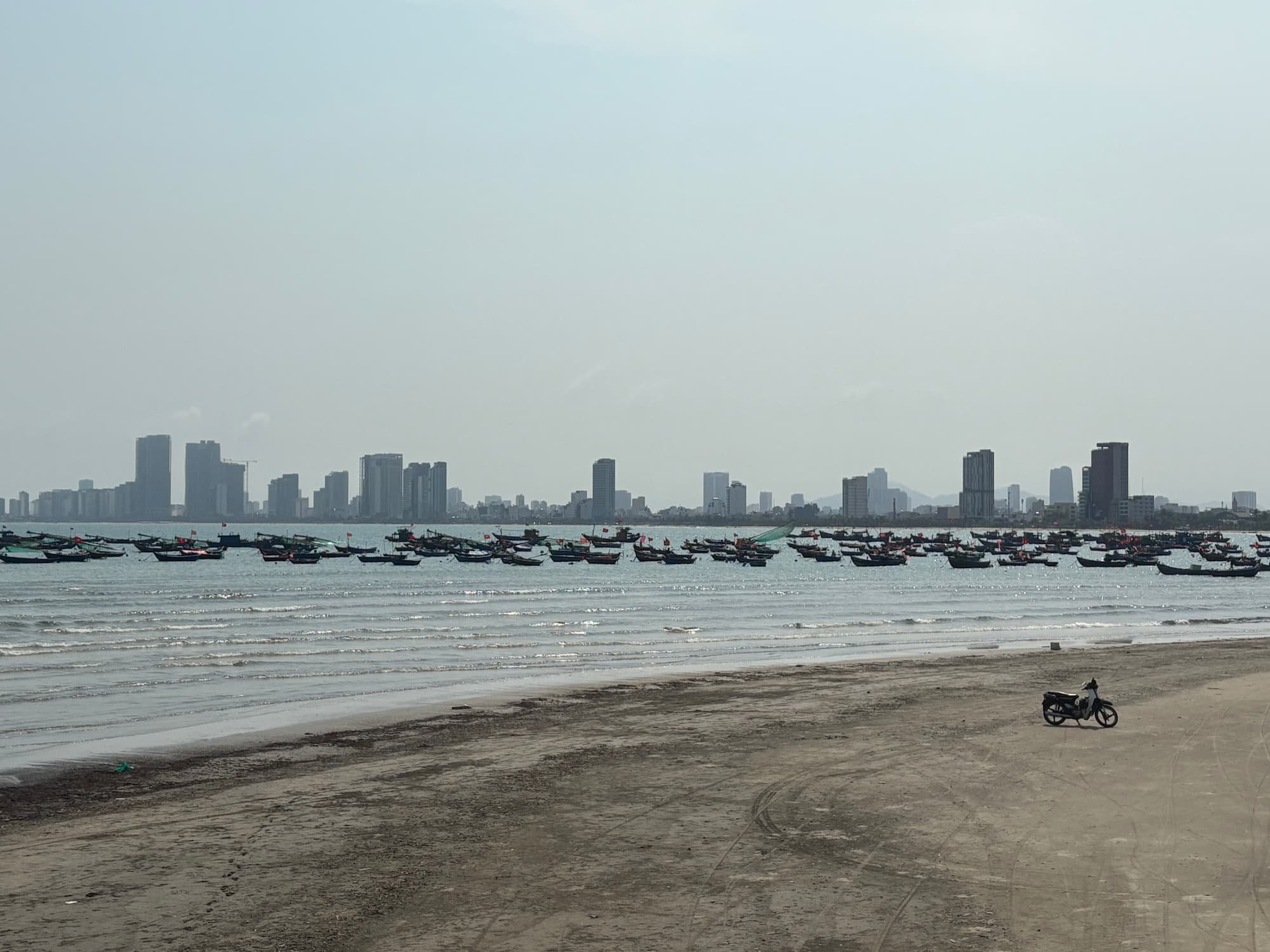
Some tall buildings on Da Nang’s coast.
How to get from Da Nang to Hoi An.
The journey from Da Nang to Hoi An is short, scenic, and very easy to organise.
The two cities are only around 45 minutes apart, which means you’ve got plenty of flexibility depending on how you want to travel.
🛵 Scooter (My Favourite Way).
Riding a scooter from Da Nang to Hoi An was one of my favourite travel moments in central Vietnam.
The coastal roads are flat, the traffic is manageable outside rush hour, and you pass beaches, fishing villages, and open stretches of road that feel a world away from Hanoi.
🚗 Private Transfer or Taxi (Easiest Option).
For most travellers, a private transfer or taxi is the simplest and most stress-free way to get to Hoi An.
You’ll be picked up directly from your hotel in Da Nang and dropped off at your accommodation in Hoi An, no changing transport, no waiting around.
👉 How to book: Compare prices and providers easily via 12Go.
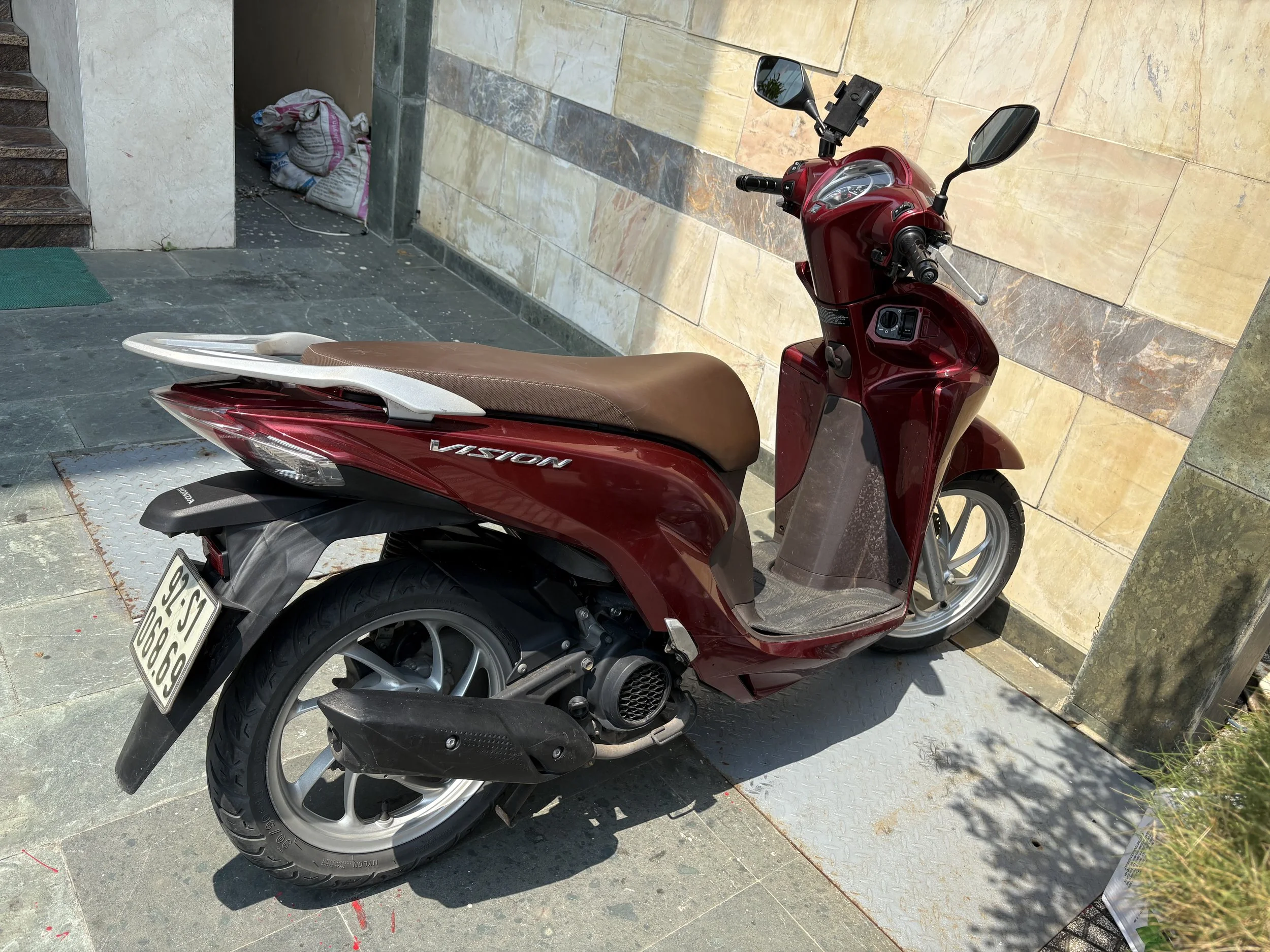
My trusty scooter in Da Nang.
🚌 Shuttle Bus (Best Budget Choice).
Shared shuttle buses run regularly between Da Nang and Hoi An and are a good compromise between price and comfort. They’re cheap, reliable, and popular with travellers staying in central areas.
👉 How to book: 12Go shows schedules, prices, and reviews in one place.
Guided Day Trip (Great if You Want to Sightsee).
If you’re not in a rush and want to turn the journey into an experience, a guided day trip from Da Nang to Hoi An can be a great option.
Many tours include stops at places like the Marble Mountains, coastal viewpoints, or craft villages before arriving in Hoi An, ideal if you want to see more without organising it yourself.
👉 Recommended option:
Check availability for guided Da Nang to Hoi An day trips here.
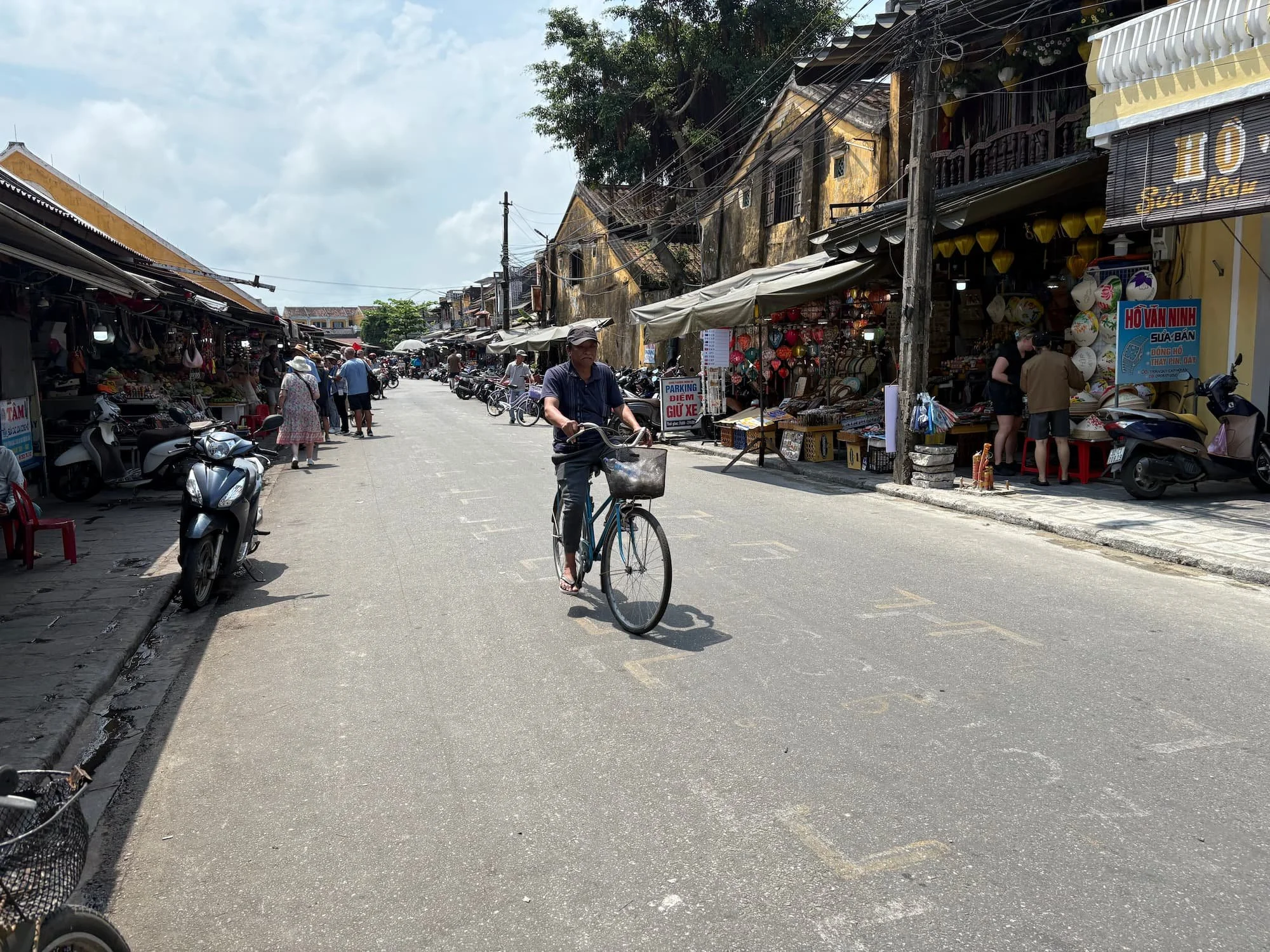
After first arriving in Hoi An.
Hoi An – How long to stay & what to do.
Recommended stay: 2–4 days.
Hoi An is where everything slowed down on my trip.
After the fast energy of Hanoi and the open spaces of Da Nang, arriving in Hoi An feels like stepping into a different world.
Riverside walking, alley wandering, and popping in some very quirky cafés.
For most travellers, 2–4 days is the perfect amount of time to experience Hoi An without rushing.
Two days lets you see the highlights. Three or four days is what I recommend though, as that is where the town really starts to work its magic

Acting like a local.
Exploring Hoi An’s Ancient Treasures.
Hoi An’s Ancient Town is compact, atmospheric, and best explored on foot.
Wandering its narrow streets, lined with mustard-yellow buildings and wooden shutters, is part of the experience, especially in the early morning or after sunset.
The Japanese Covered Bridge is my favourite spot in the Old Town.
It’s small, understated, and easy to miss if you rush, but it perfectly captures Hoi An’s history as a trading port where Japanese, Chinese, and Vietnamese cultures once met. I’ve passed through it countless times, and it still feels special every visit.
Throughout the day, you’ll stumble across old merchant houses, temples, and quiet courtyards that feel a world away from the crowds outside the centre.
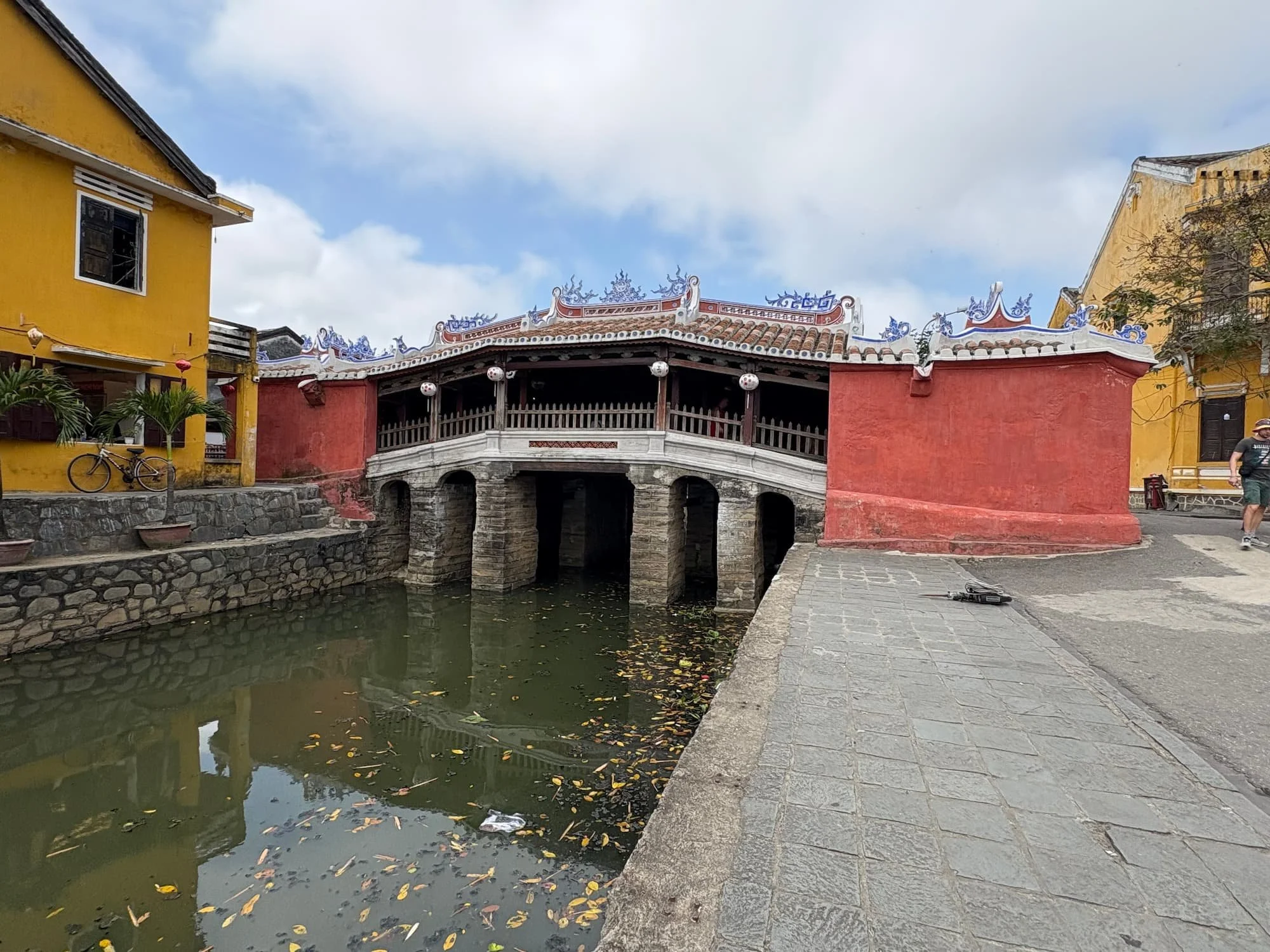
Japanese Covered Bridge.
Lanterns, Evenings & Riverside Walks.
As daylight fades, Hoi An transforms.
Lanterns light up the streets, the river glows, and the town takes on a softer, more romantic atmosphere. Even if you’re not normally drawn to ‘pretty”’ destinations, it’s hard not to be won over by Hoi An at night.
My evenings were best spent wandering without much planning.
I was crossing bridges, stopping for a drink by the river to watch the lantern boats drift past, and trying some of my favourite Vietnamese dishes.

Cooking schools are popular in Hoi An.
Beach Time at An Bang.
Hoi An isn’t just about history, it also offers easy access to the coast.
An Bang Beach is just a short ride from the Old Town and is one of the best places in central Vietnam to slow things down. Although I found the water to be choppy it was still fun spending my morning swimming, before a beach lunch at one of the relaxed beachfront cafés.
It’s the perfect contrast to the Old Town and one of the reasons I recommend staying a little longer in Hoi An.

An Bang Beach.
Coconut Basket Boats & Local Experiences.
For something a little different, the coconut basket boat tour in the nearby water coconut forests is a fun way to see another side of the region.
While it’s undeniably touristy, it’s still enjoyable, especially if you’re travelling with others or want a light-hearted experience away from the town centre.
There is a very fun twist at the end of the tour!
If you want to do it without organising transport or tickets yourself, you can check availability for the coconut basket boat tour here, with hotel pickup included and a few fun surprises at the end.

A very fun morning.
Sample Hanoi, Da Nang & Hoi An Itineraries.
7-Day Itinerary.
Days 1–3: Hanoi.
Day 4: Fly to Da Nang.
Day 5: Da Nang.
Days 6–7: Hoi An.
10-Day Itinerary (Best Balance).
Days 1–4: Hanoi.
Day 5: Travel to Da Nang.
Days 6–7: Da Nang.
Days 8–10: Hoi An.
14-Day Itinerary.
Days 1–5: Hanoi + Ha Long Bay.
Days 6–9: Da Nang.
Days 10–14: Hoi An + beaches.

The iconic Golden Bridge at Ba Na Hills near Da Nang.
Best time to visit Hanoi, Da Nang & Hoi An.
The best overall time to combine Hanoi, Da Nang, and Hoi An is February to April, when weather conditions are at their most balanced across both northern and central Vietnam.
During these months, you avoid the worst of Hanoi’s winter chill and the heavier rains that can affect central Vietnam later in the year, making it the easiest window for a smooth, stress-free itinerary.
Why February to April works so well.
Hanoi is cooler and drier, ideal for exploring the Old Quarter and café hopping.
Da Nang enjoys warm, sunny weather that’s perfect for beaches and coastal viewpoints.
Hoi An feels especially comfortable in the evenings, making lantern-lit walks through the Ancient Town far more enjoyable.
Months to be more cautious with
September to November: Central Vietnam can experience heavy rain and occasional flooding, particularly around Hoi An.
June to August: Hot and humid across much of the country, with higher prices and busier travel periods.
If you’re travelling outside the February–April window, it’s still very possible to do this route, you’ll just need to be more flexible with plans and expectations, especially in central Vietnam.
For a more detailed breakdown by month and region, see my guide to the best time to visit Vietnam and Cambodia.

Palm trees and skysrapers in Da Nang.
FAQs – Planning Hanoi, Da Nang & Hoi An.
Can you do Hanoi and Hoi An in one trip?
Yes. Hanoi and Hoi An are easy to combine, with Da Nang acting as the main transport hub in between. Adding Da Nang makes the journey smoother, breaks up travel time, and often reduces costs.
Is it better to fly or take the train from Hanoi to Da Nang?
Flying is best for speed and convenience, taking around 1 hour 20 minutes. The overnight train is slower but more scenic and suits travellers with extra time.
Is Da Nang cheaper than Hoi An?
Yes. Da Nang is generally cheaper for hotels, food, and cafés, while Hoi An, especially the Old Town, tends to be more expensive.
Is this route good for first-time visitors to Vietnam?
Absolutely. Hanoi–Da Nang–Hoi An is one of the most beginner-friendly Vietnam itineraries, offering culture, beaches, and history without complicated logistics.
What’s the best time of year to do this itinerary?
The best overall period is February to April, when weather conditions are generally good across both northern and central Vietnam. I found March to be the best time to visit Da Nang for beaches.
Is this itinerary safe to do solo?
Yes. Vietnam is very safe for solo travel, and transport between Hanoi, Da Nang, and Hoi An is reliable and easy to navigate.
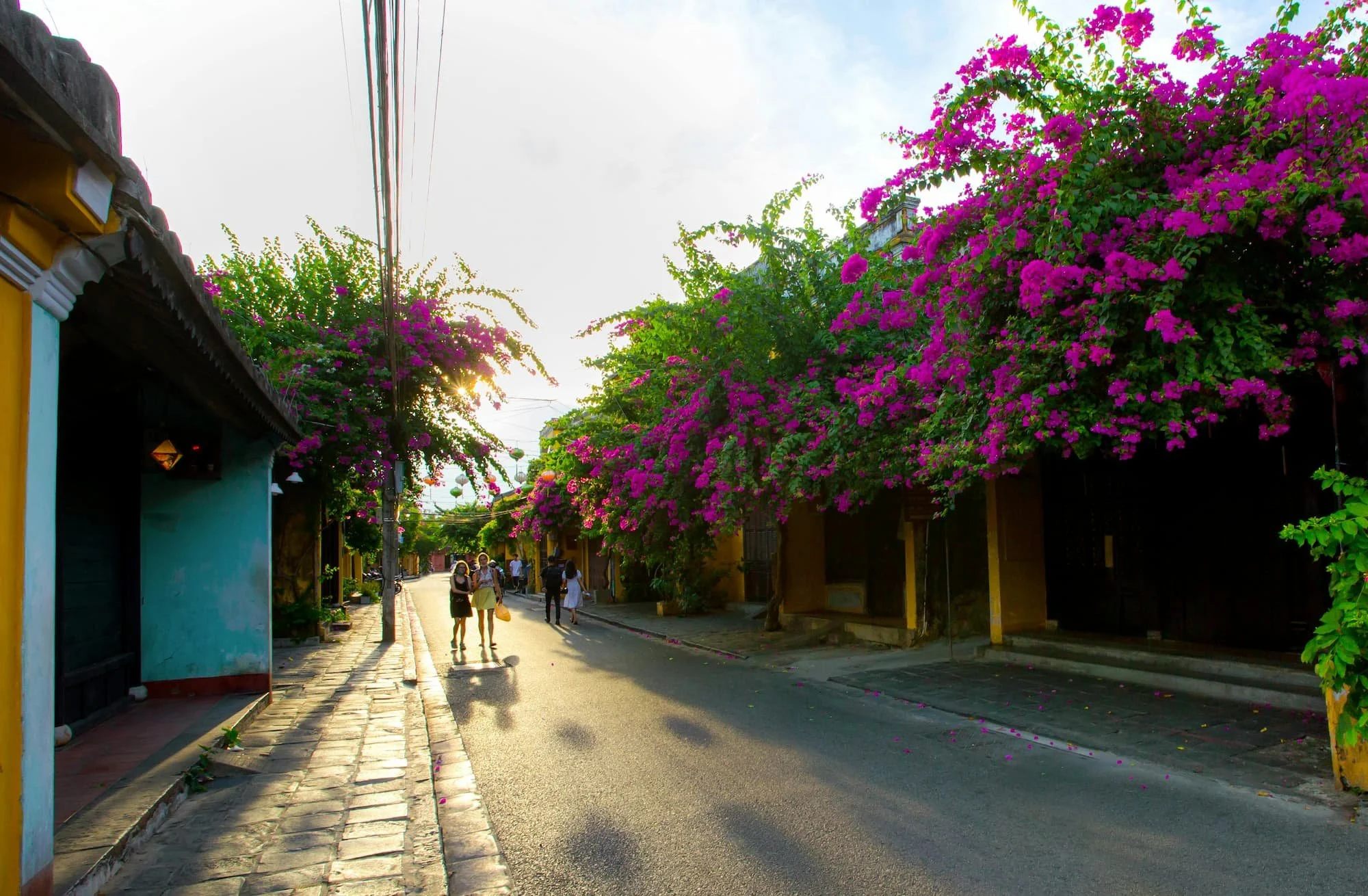
Hoi An is such a pretty town.
A Vietnam itinerary which ticks every box.
If you’re looking for a Vietnam itinerary that balances culture, food, beaches, and atmosphere, without constant travel stress, this route is hard to beat.
Combining Hanoi, Da Nang, and Hoi An gives you three very different experiences in one smooth journey, each flowing naturally into the next.
From the energy of Hanoi to the coastal calm of Da Nang, and finally the lantern-lit evenings of Hoi An, this itinerary shows you multiple sides of Vietnam without feeling rushed or overwhelming. It’s efficient, flexible, and ideal for first-time visitors — but as I learned on my last trip, it is just as rewarding even if you’ve been before.
Once you’ve settled on this route, the rest of the planning becomes much easier.
Decide how long you have, choose the transport that suits your pace, and build out each stop using the guides linked throughout this article.
Disclosure: I sometimes use affiliate marketing. This will not cost you anything, but helps with my travel costs. I only recommend companies I use myself.