
The Best Vietnam eSIM in 2026: Airalo Review for Tourists & First-Time Visitors.
Vietnam was one of those trips where my phone quickly became just as important as my passport.
From navigating Hanoi’s Old Quarter near Train Street, trekking through rice terraces in Sapa, riding scooters across Da Nang, to wandering the lantern-lit streets of Hoi An…
Having reliable mobile data made every part of the journey smoother and far less stressful.
I even had a signal deep underground while exploring the Cu Chi Tunnels, something I didn’t expect, but was quietly reassuring.
For this trip, I used Airalo, not sponsored, just my honest experience using what I believe is the best Vietnam eSIM for travellers in 2026.
If you’re searching for the best eSIM for Vietnam travel, this guide breaks down exactly how Airalo performed across the country, how much it costs, and whether it’s worth buying before you fly.
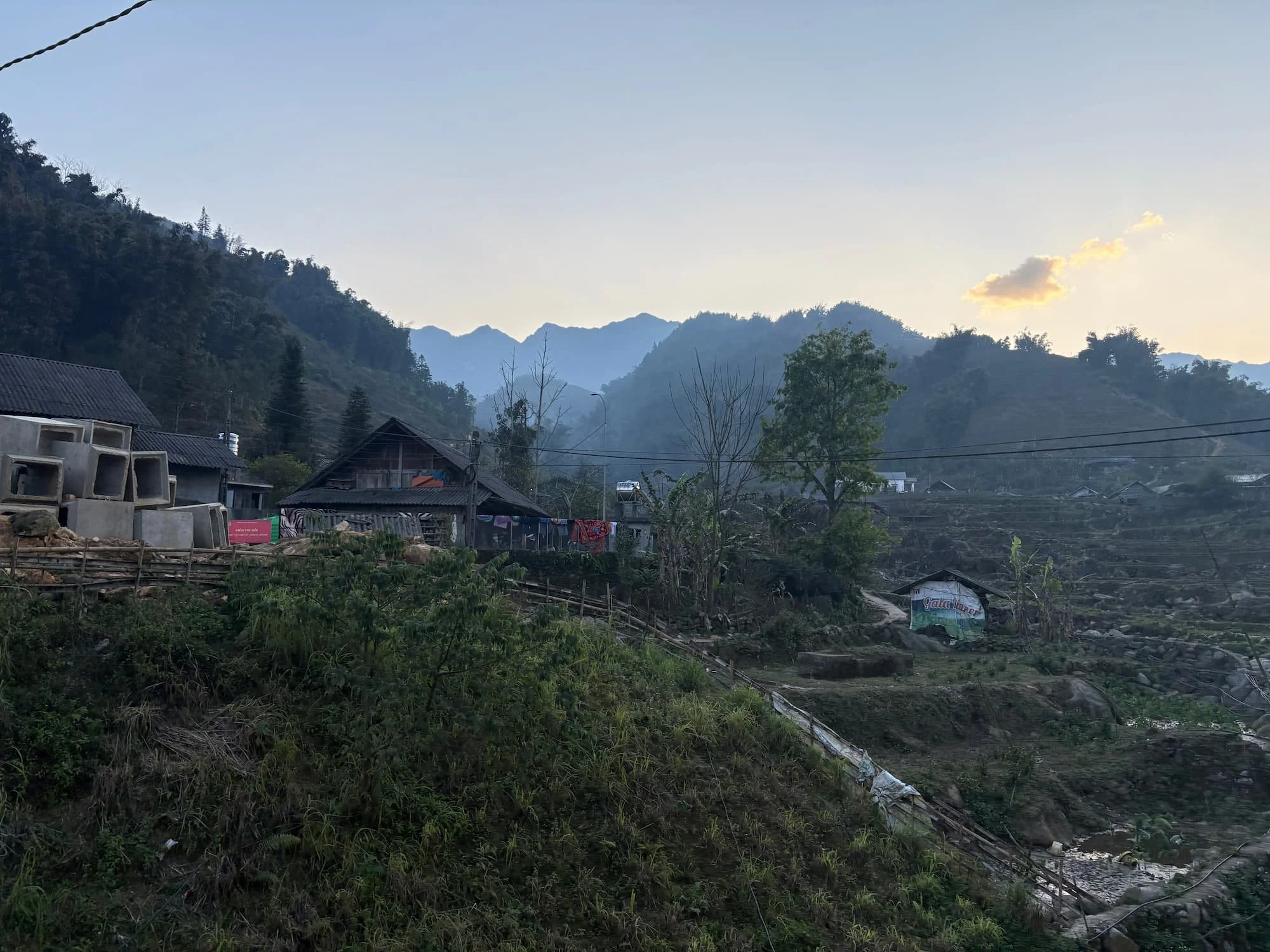
Using my data to navigate the villages near Sapa.
Disclosure: I sometimes use affiliate marketing. This will not cost you anything, but helps with my travel costs. I only recommend companies I use myself.
Lantern Towns, Limestone Bays & Jungle Escapes — Vietnam’s Most Aesthetic Stays 👇
Vietnam’s most beautiful hotels elevate the experience just as much as the destinations themselves:
Four Seasons Resort The Nam Hai (Hoi An) – Elegant beachfront villas with private pools, lotus-lined pathways, and open-air pavilions just minutes from Hoi An’s lantern-lit old town. Calm, refined, and effortlessly photogenic.
Topas Ecolodge (Sapa) – Remote stone bungalows perched high above terraced rice fields, with infinity pools spilling into the mountains and clouds rolling through at sunrise. One of Vietnam’s most jaw-dropping nature stays.
Paradise Elegance Cruise (Ha Long Bay) – A boutique overnight cruise gliding between limestone islands, offering polished cabins, sunset decks, and misty morning views over emerald water — the most atmospheric way to experience Ha Long Bay.
Hanoi Hotel Guide - Where to stay in Da Nang - Best Vietnam Day trips
Why staying connected in Vietnam matters.
Vietnam is one of those countries that always rewards curiosity.
I explored the back alleys of the Old Quarter of Hanoi on foot, drove around Da Nang on my hired scooter, and was constantly moving between ancient pagodas to modern cafés.
It’s a country where my plans change, very quickly, and getting lost is always a possibility as with all of the destinations on my South East Asia trip.
Vietnam can be very busy, spread out, and fast-moving, especially in cities like Hanoi and Ho Chi Minh City, which are intense.
Rural areas like Sapa, Hoi An’s countryside, and the Hai Van Pass are beautiful, but vast, so reliable data is essential.
This became even more important when planning and navigating Vietnam’s best day trips, where routes, timings, and access points often change depending on location and weather

Successful navigation to Linh Ung Pagoda.
After researching prior to the Vietnam part of my trip, I quickly learned that an Airalo Vietnam eSim had a very good reputation. So I opted to give it a try.
It proved to be faultless for my whole Vietnam itinerary, throughout the country.
In Da Nang alone, my days took me from modern cafés in the city to coastal temples like Linh Ung Pagoda, often within the same afternoon.
Having reliable mobile data meant I could:
Navigate confidently by scooter.
Reroute when roads were closed.
Find viewpoints and temples hidden off main routes.
Check opening times and access restrictions.
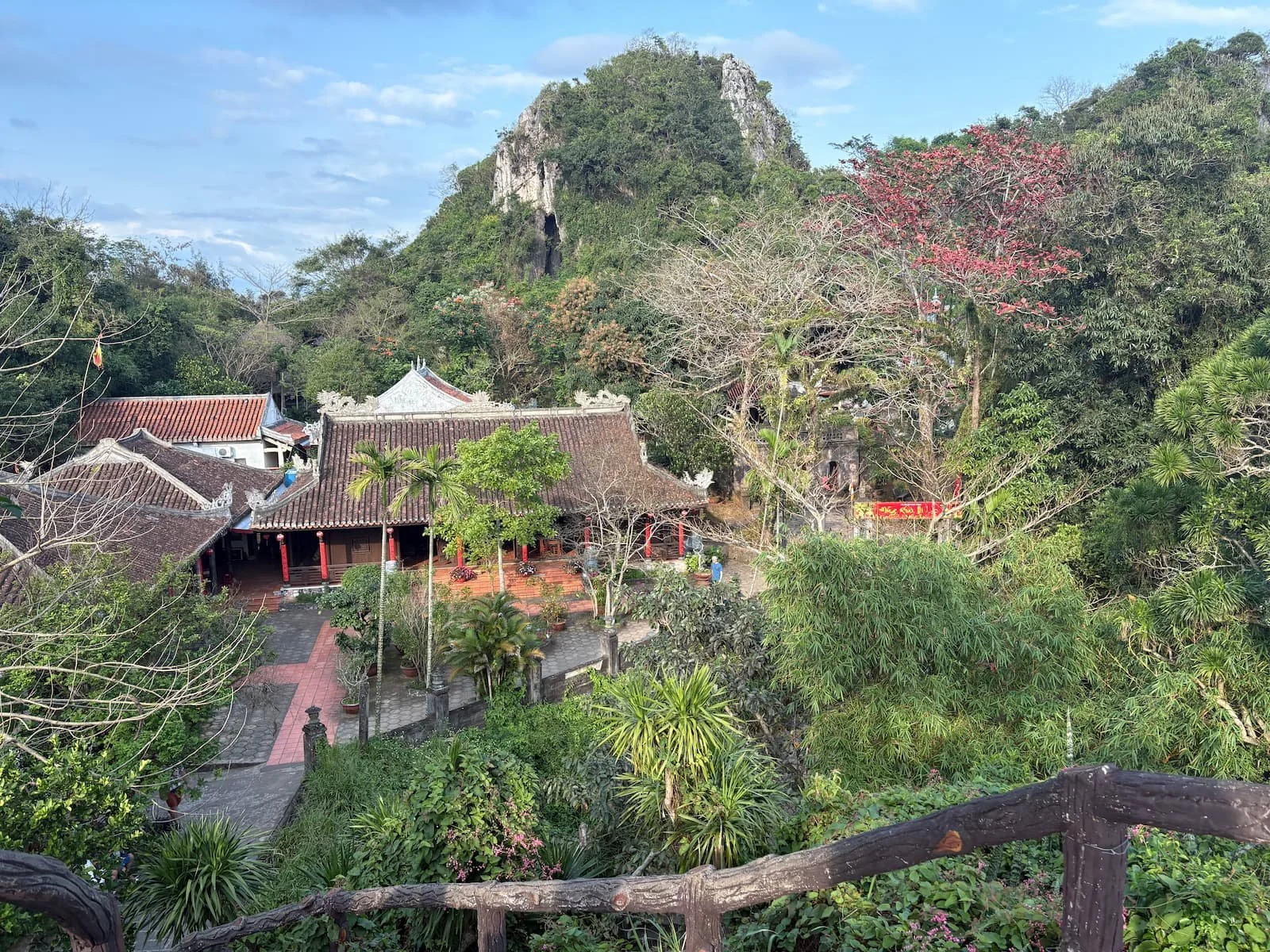
Another success with Google Maps - this time ‘Marble Mountain’.
In Hanoi, that same connection was just as important, especially when timing visits to places like Train Street Hanoi, where checking train schedules in real time makes all the difference between a great experience and missing it entirely.
Throughout my trip, my data stayed fast and reliable, even 5G from the middle of the popular cities, and in the villages near Sapa.
Want the same setup for Vietnam?
I used an Airalo Vietnam eSIM for this entire trip, installed before flying and ready the moment I landed.
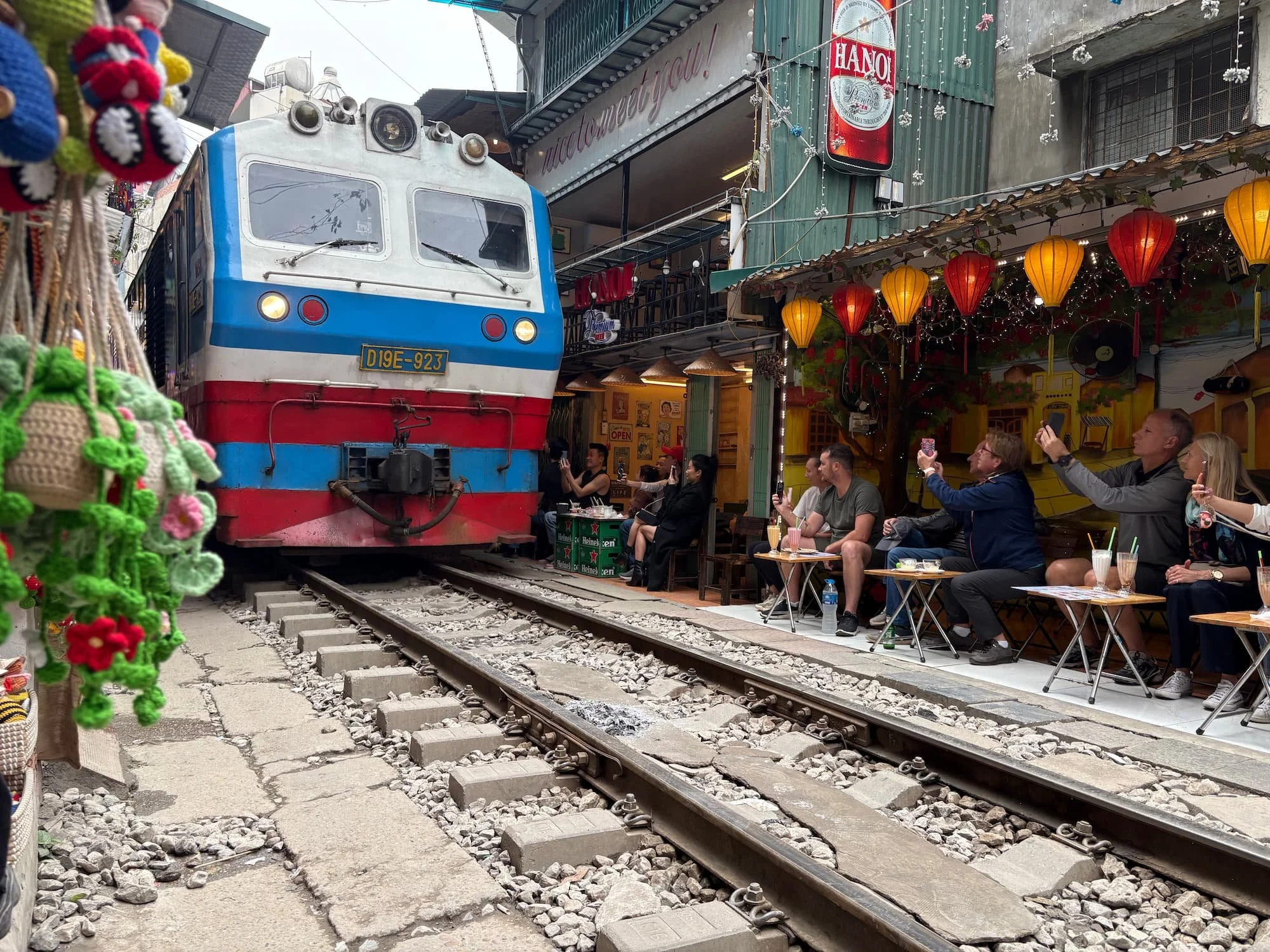
Timed it perfectly.
What is an eSIM (and why it’s perfect for Vietnam travel).
An eSIM is a digital SIM that installs directly onto your phone, so no physical card, no swapping SIMs, and no airport queues.
Instead of landing in Vietnam and immediately searching for Wi-Fi or a SIM kiosk, you connect automatically the moment you turn airplane mode off.
For travellers, a Vietnam travel eSIM is ideal because you can:
Buy a Vietnam eSIM online before departure.
Install everything at home.
Connect instantly on arrival.
Keep your main SIM active for banking and WhatsApp.
I found this especially useful when I was moving between Hanoi, Da Nang, and Hoi An on my multi-stop route, where staying connected made my whole journey far smoother.
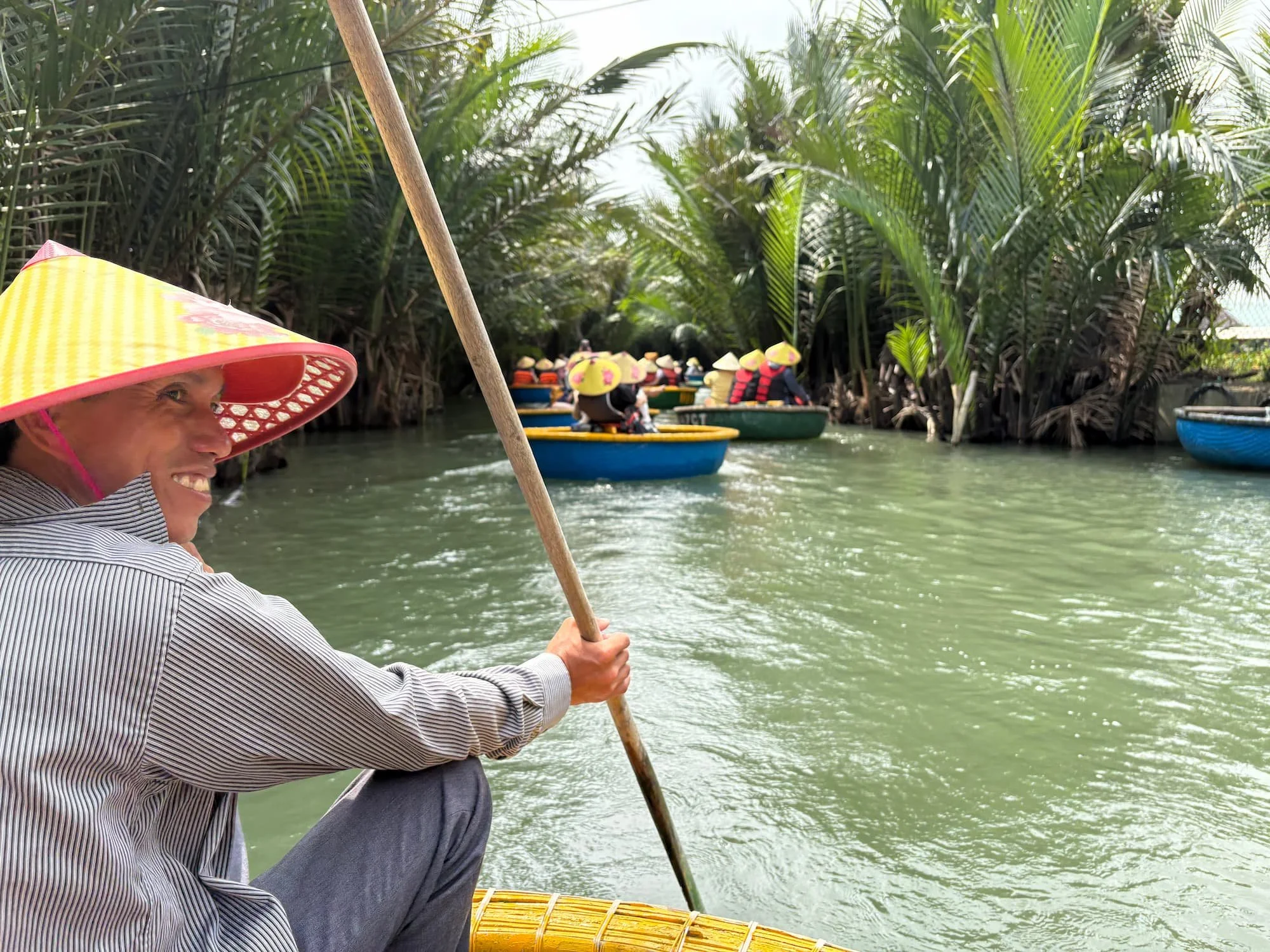
5G in the Vietnamese jungle.
Why I chose Airalo as my Vietnam eSIM.
I chose Airalo because I wanted a Vietnam eSIM that worked reliably everywhere, not just in major cities with strong infrastructure.
Vietnam isn’t a country where you stay put for long…
There too many awesome experiences awaiting you!
On this trip, I was constantly moving, from the chaotic streets of Hanoi to mountain regions in the north, down through central Vietnam, and on to the quieter edges of Hoi An.
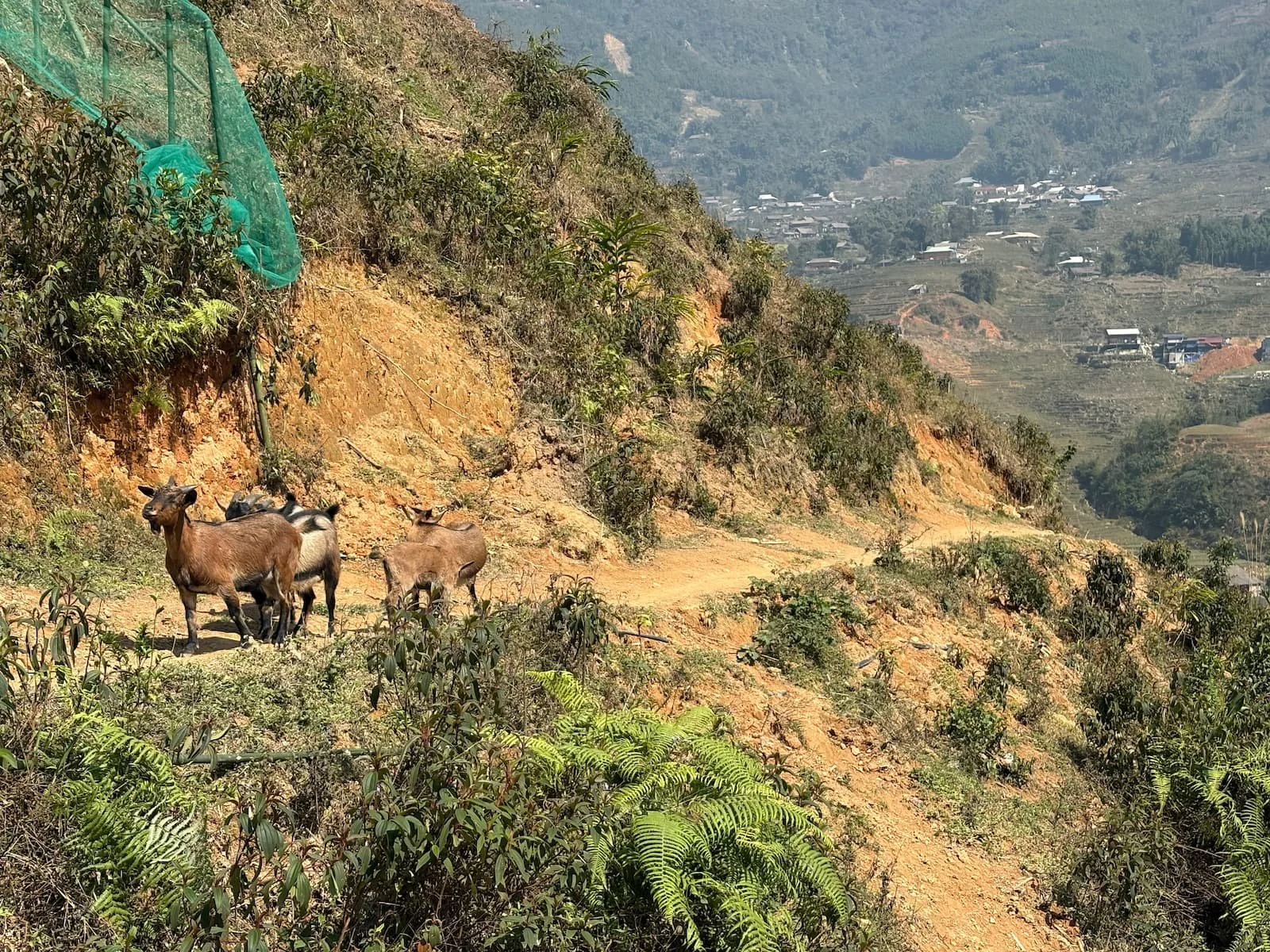
Exploring rural Sapa.
I needed something that would keep working as I travelled, without having to think about swapping SIM cards, hunting for Wi-Fi, or losing signal the moment I left a city centre.
After researching different options before the Vietnam leg of my trip, Airalo stood out for its strong reputation, simple setup, and consistent coverage.
It partners with major local Vietnamese networks, which gave me confidence that it wouldn’t just work in cities, but also on longer travel days and in more remote areas. That made it a strong Vietnam eSIM for tourists planning to move around and explore properly.
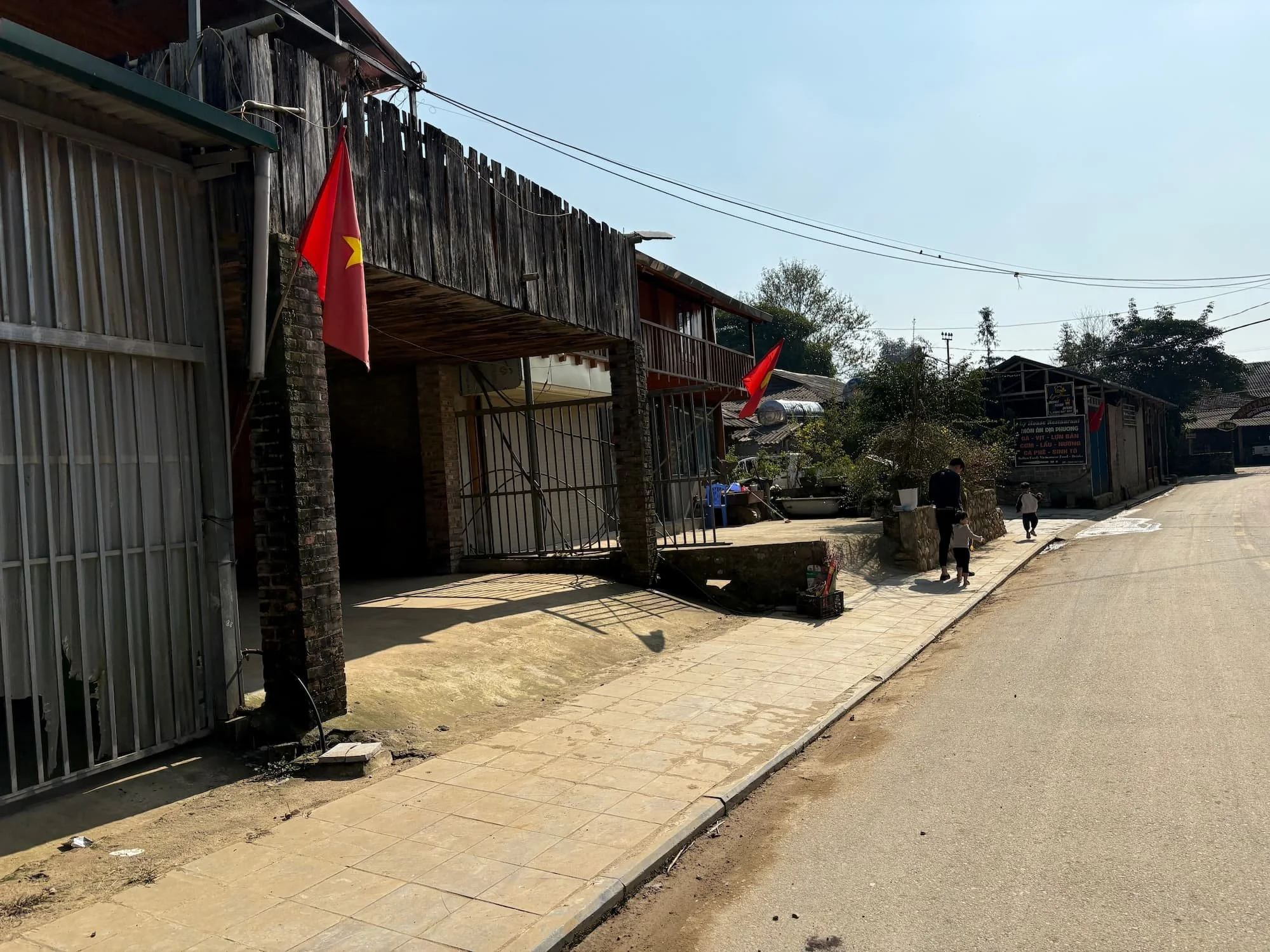
Street scenes in Sapa.
Throughout my trip, I used Airalo successfully in:
Hanoi, including day trips like Ha Long Bay, where it worked on board the cruise ship.
Mountain regions around Sapa, while trekking between villages.
Central Vietnam, following my Da Nang itinerary around the incredible city.
Hoi An, while exploring ancient highlights beyond the Old Town.
Even on longer travel days, including overnight journeys on a luxury sleeper bus where my connection stayed reliable to watch YouTube videos, and listen to podcasts…
Maps loaded, bookings went through, and I never felt limited by coverage or forced to rely on patchy public Wi-Fi.
That consistency was the biggest reason I stuck with Airalo. Once it was installed, it simply worked in the background, letting me focus on travelling rather than troubleshooting my connection, which, in a country as varied and fast-moving as Vietnam, made a huge difference.
👉 If you’re planning a similar route through Vietnam, you can check Airalo’s current Vietnam eSIM plans here and have everything set up before you fly.
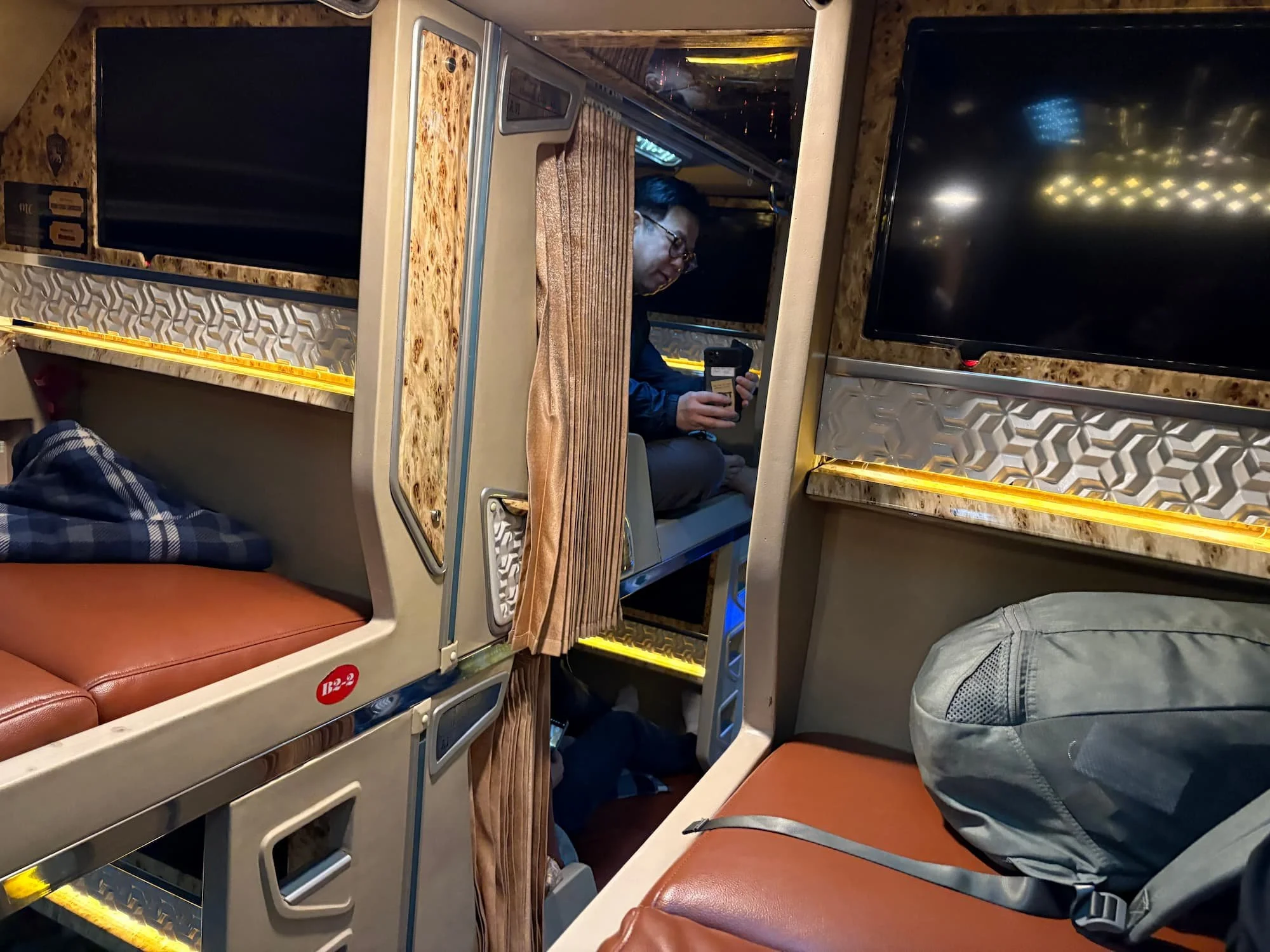
Ready for my long bus journey with Youtube to keep me busy.
Vietnam eSIM price: how much does Airalo cost?
One of the most common questions travellers ask.
On previous trips, I have paid £6–£7 per day for UK roaming. So as you can imagine my three week trip, that added up fast.
It meant I had to go flight mode for some of the trip, and rely on wifi, which is no good when you are at teh top of a mountain at a theme park.
By comparison, Airalo’s Vietnam eSIM for tourists costs a fraction of that, with plans suitable for short trips, long routes, and even Vietnam eSIM unlimited data options.
Most plans work out at less than £1 per GB, making Airalo one of the most affordable ways to stay connected in Vietnam.
I was in Vietnam for a full month on my last trip and I opted for 20GB for €27, which was fine for my whole trip.
👉 You can check the current Vietnam eSIM price on Airalo and choose a plan based on your trip length.
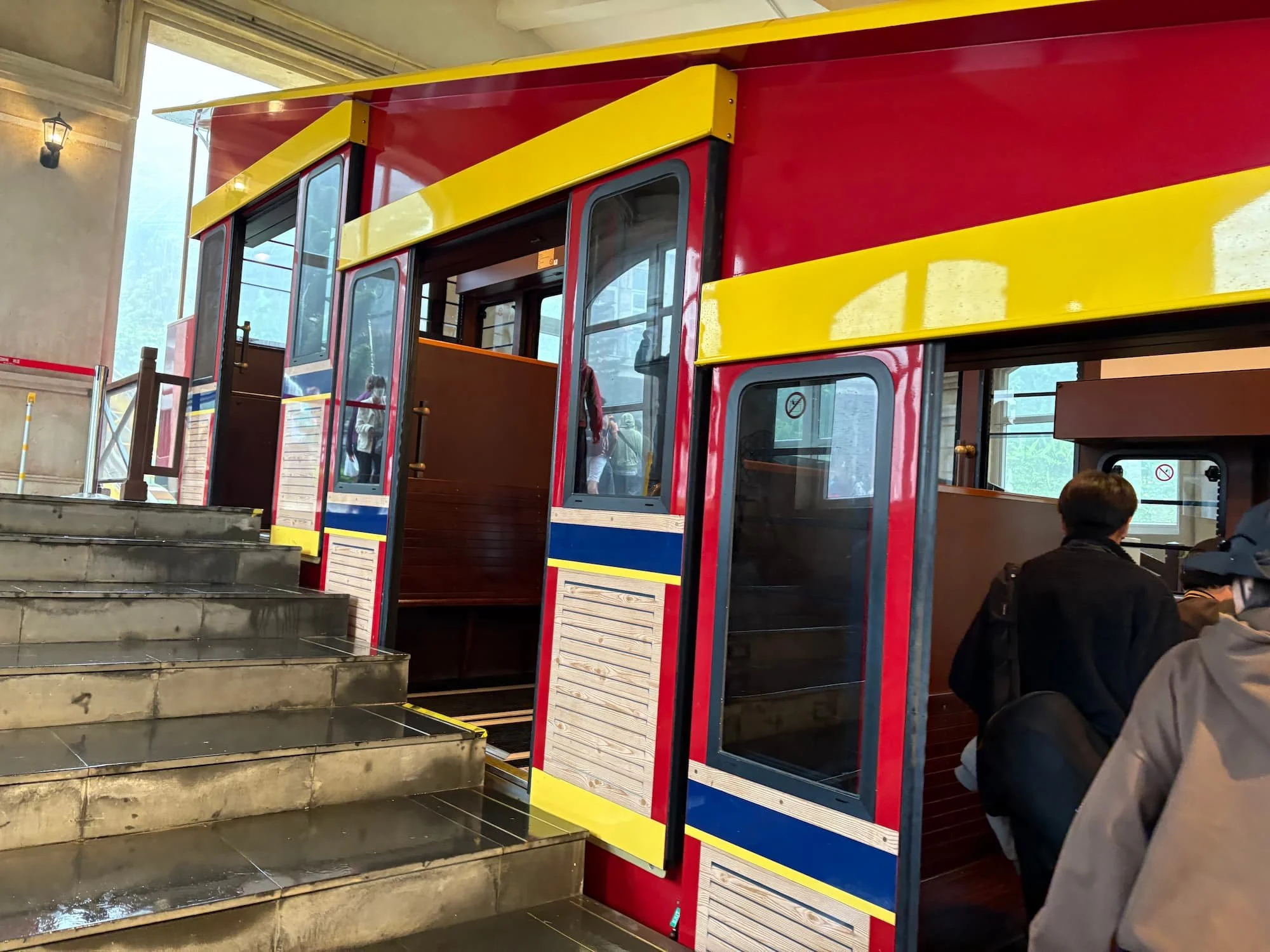
On my way up to Ba Na Hills by cable car.
Vietnam eSIM vs physical SIM card — which is better?
When choosing between a Vietnam eSIM vs physical SIM, the biggest difference comes down to convenience and stress levels, especially when you’ve just landed.
I still remember arriving at Hanoi Airport after a long flight, being approached by multiple SIM sellers almost instantly.
Everyone is friendly, but when you’re tired, jet-lagged, and just want to get into the city, it can feel overwhelming. You’re comparing prices on the spot, handing over your passport, and hoping everything gets set up correctly.
I’ve also had experiences during my arrival in Ho Chi Minh City where a physical SIM required cash only.
That meant withdrawing money immediately, accepting a poor exchange rate, and paying extra fees before I’d even left the airport, not exactly the best start to that trip.
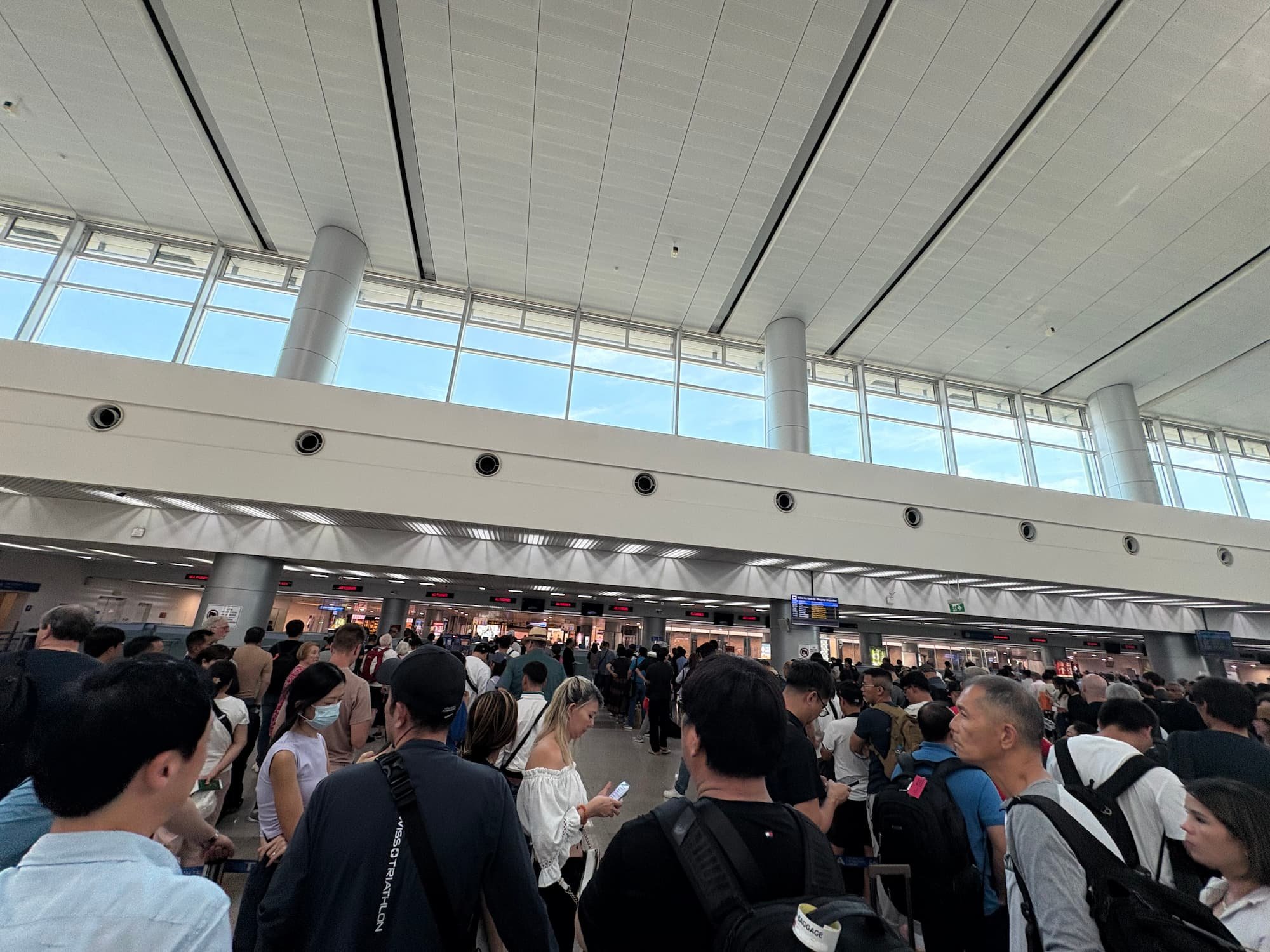
Ho Chi Minh City airport is always chaotic.
With a physical SIM in Vietnam, you usually need to:
Queue at the airport.
Hand over your passport.
Deal with multiple sellers competing for attention.
Swap SIM cards and store your original one safely.
Rely on someone else to configure everything.
Using a Vietnam eSIM completely removes that friction.
With an eSIM:
You buy the Vietnam eSIM online before you travel.
Install it at home, in your own time.
Keep your main SIM active for banking and messages.
Connect instantly on arrival, without speaking to anyone.
For me, that difference is huge. Instead of negotiating prices or worrying about setup, I can walk straight through arrivals, open Google Maps, and focus on actually starting my trip.
After years of dealing with physical SIMs across Southeast Asia, I now strongly prefer using an eSIM in Vietnam.
It’s calmer, quicker, and removes unnecessary stress at the exact moment you want things to be simple.
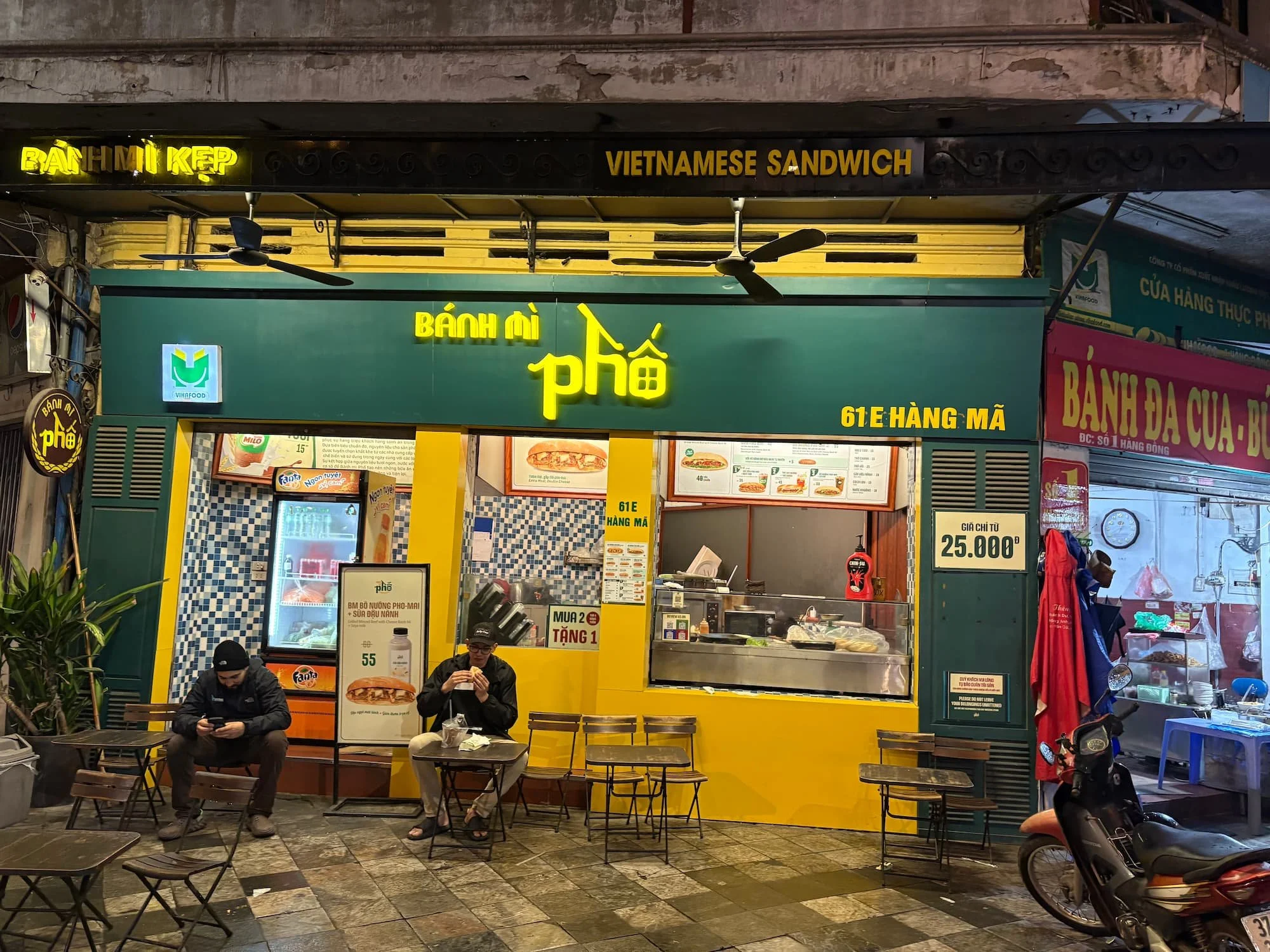
A local spot in Hanoi.
Setting up the Airalo Vietnam eSIM (step by step).
Setup took me less than 10 minutes:
Download the Airalo app (iOS / Android).
Choose Vietnam.
Purchase your plan.
Install the eSIM.
Enable data roaming for the eSIM profile
By the time I landed in Hanoi ready for my action packed itinerary, Google Maps, Grab, and WhatsApp were all working.
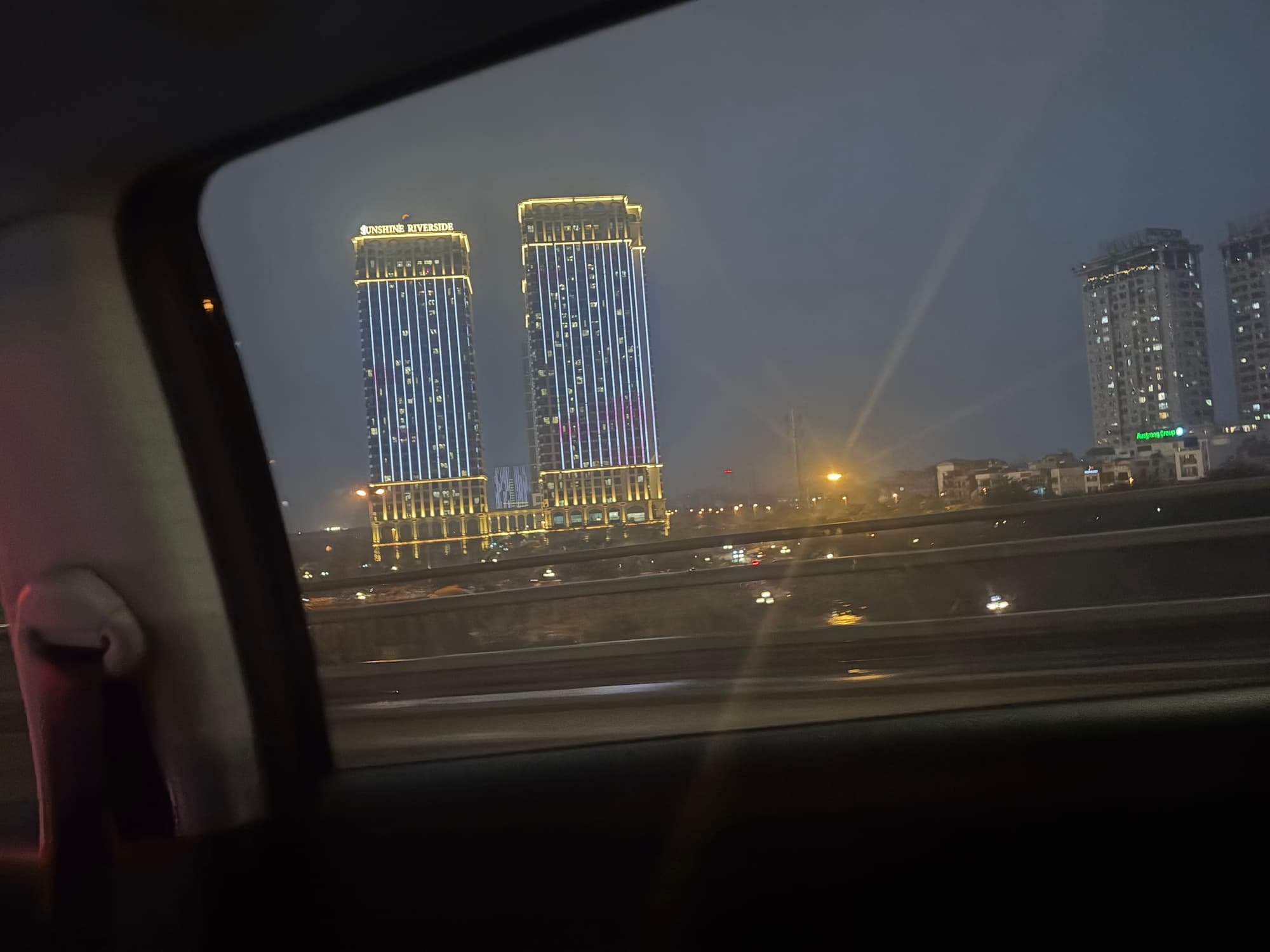
In my Grab from Hanoi airport to centre.
How my Airalo Vietnam eSIM helped me across the country.
Trekking in Sapa’s rice terraces.
Trekking in Sapa is one of those experiences where it’s very easy to underestimate distances.
What looked like a short walk between villages quickly turned into a full afternoon hike through rice terraces and mountain paths. Having my Vietnam eSIM meant I could:
Check my route on Google Maps.
Message ahead to confirm accommodation.
Book my return Hanoi to Sapa luxury bus without relying on guesthouse Wi-Fi.
Even in the mountains, my connection stayed reliable enough to keep everything running smoothly.
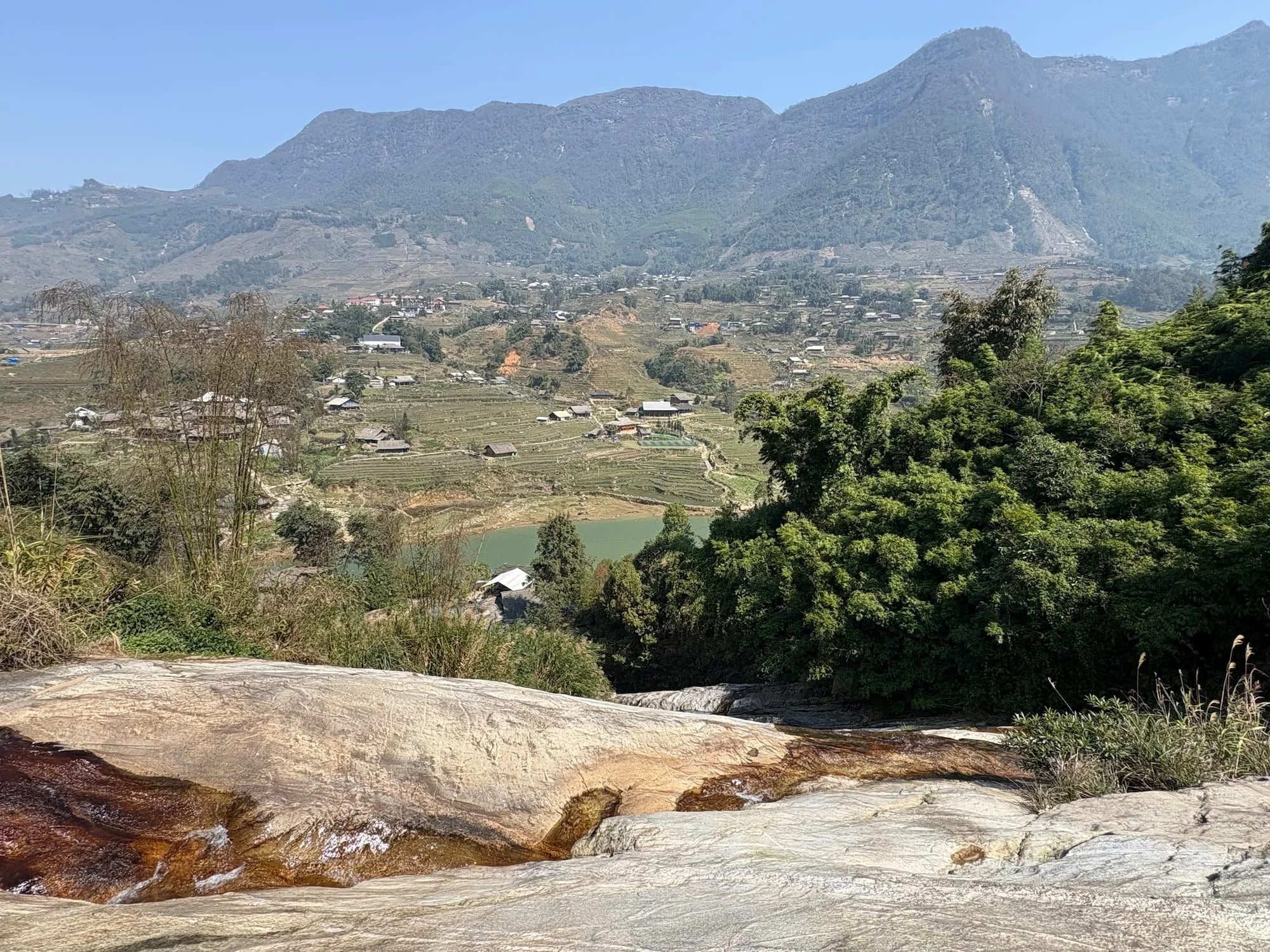
The mountains of Sapa.
Finding hidden gems in Hanoi.
Hanoi rewards curiosity, but knowing where to look helps massively.
Some of my favourite moments came from using my data to hunt down places like Note Coffee, Cafe Giang, Banh Mi 25, and Phung Hung Mural Street.
These are places you may miss without reliable mobile data.
In the Old Quarter it’s very easy to walk straight past these spots, as its chaotic, and a sensory attack constantly.
Staying in the best areas of the capital always helps, but with my Airalo eSIM, maps loaded instantly, directions were accurate, and I could explore deeper into the city without second-guessing myself.
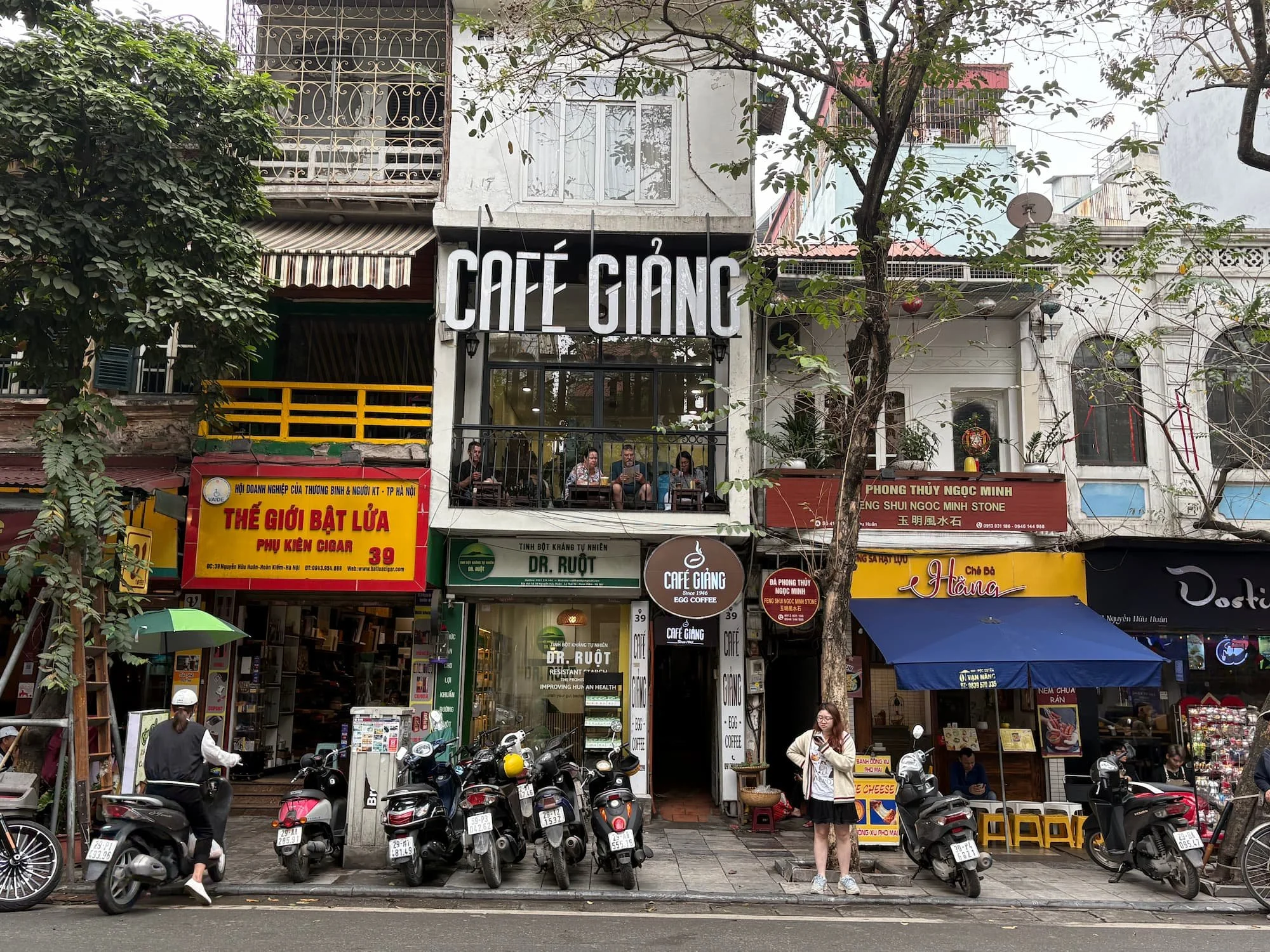
My favourite cafe in Hanoi.
Scootering around Da Nang.
Da Nang is one of the best places in Vietnam to explore by scooter, but only if you’re confident navigating on the fly.
Using my Airalo Vietnam eSIM, I could:
Ride out to Lady Buddha, Marble Mountain, and Ba Na Hills without worrying about getting lost
Reroute instantly when roads were closed or busy.
Find quieter coastal roads and viewpoints.
Choose the best area to stay in Da Nang.
Instead of constantly stopping to ask for directions, I could stay in the flow and enjoy the ride.
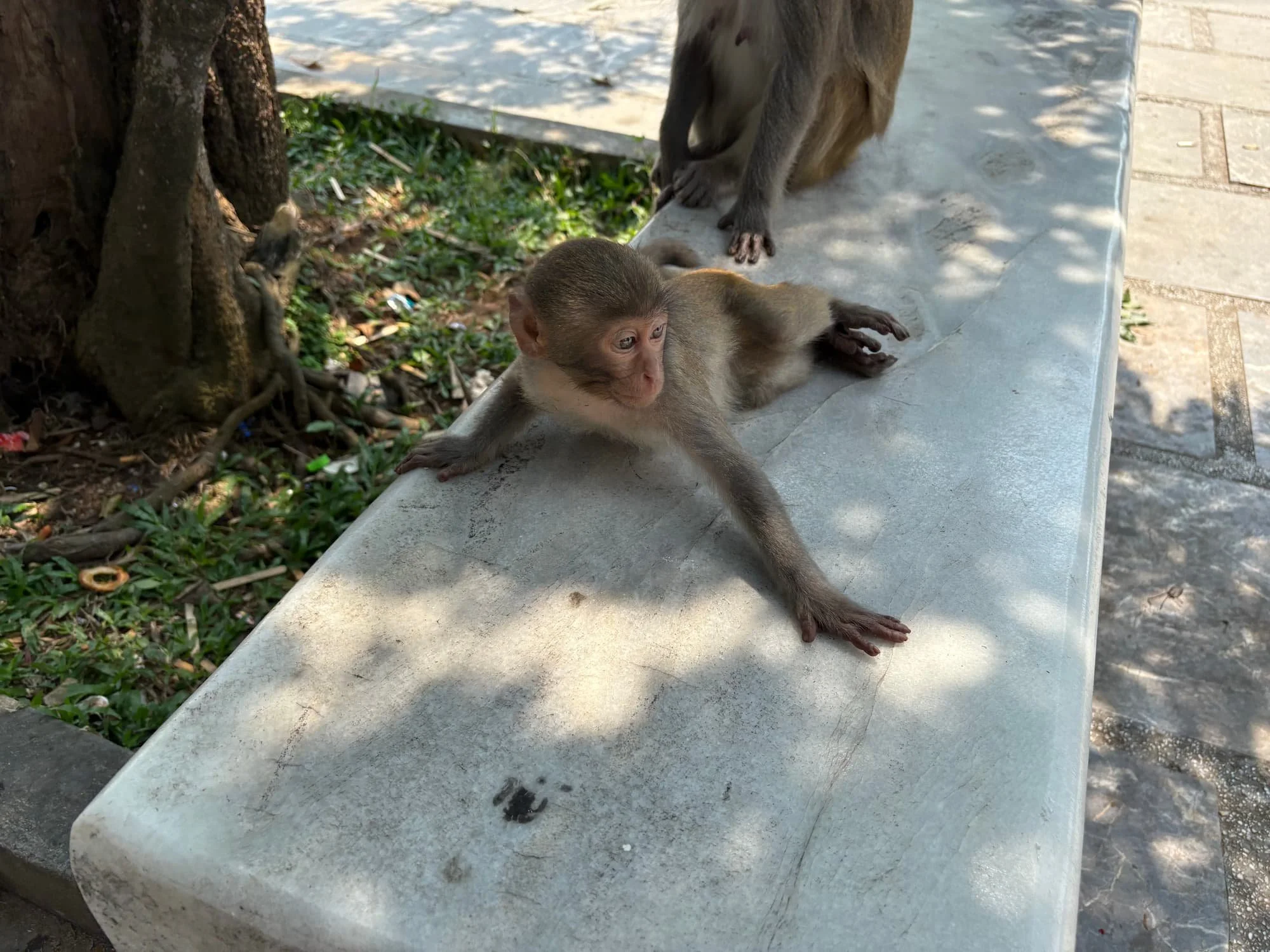
A very cheeky local at Lady Buddha Statue.
Exploring Hoi An using my phone as a map.
Hoi An is best explored without a strict plan.
I used my phone as a live map to wander side streets, find ancient relics, and explore areas beyond the Old Town. Having reliable data meant I could:
Drift away from the crowds.
Find cafés and temples just outside the main tourist zones.
Follow my Hoi An itinerary without sticking rigidly to it.
It confirmed once again that Hoi An is absolutely worth visiting, especially when you’re free to explore at your own pace.
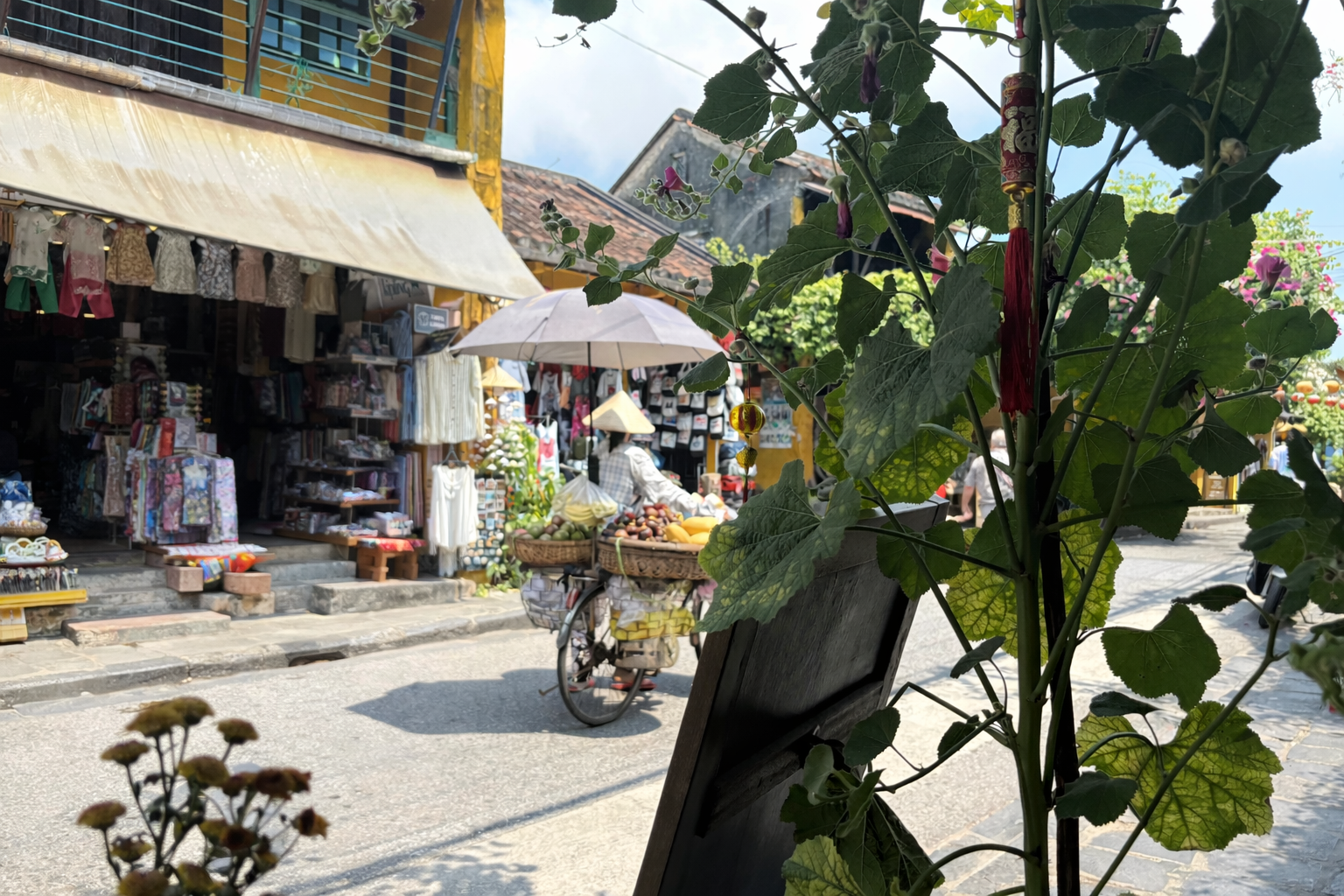
Hoi An is such a beatiful town.
Vietnam eSIM for iPhone and Android users.
Airalo works perfectly as a Vietnam eSIM for iPhone and Android devices.
Compatible phones include:
iPhone XR and newer.
Samsung Galaxy S20 and newer.
Google Pixel 3 and newer.
Your phone just needs to be unlocked.
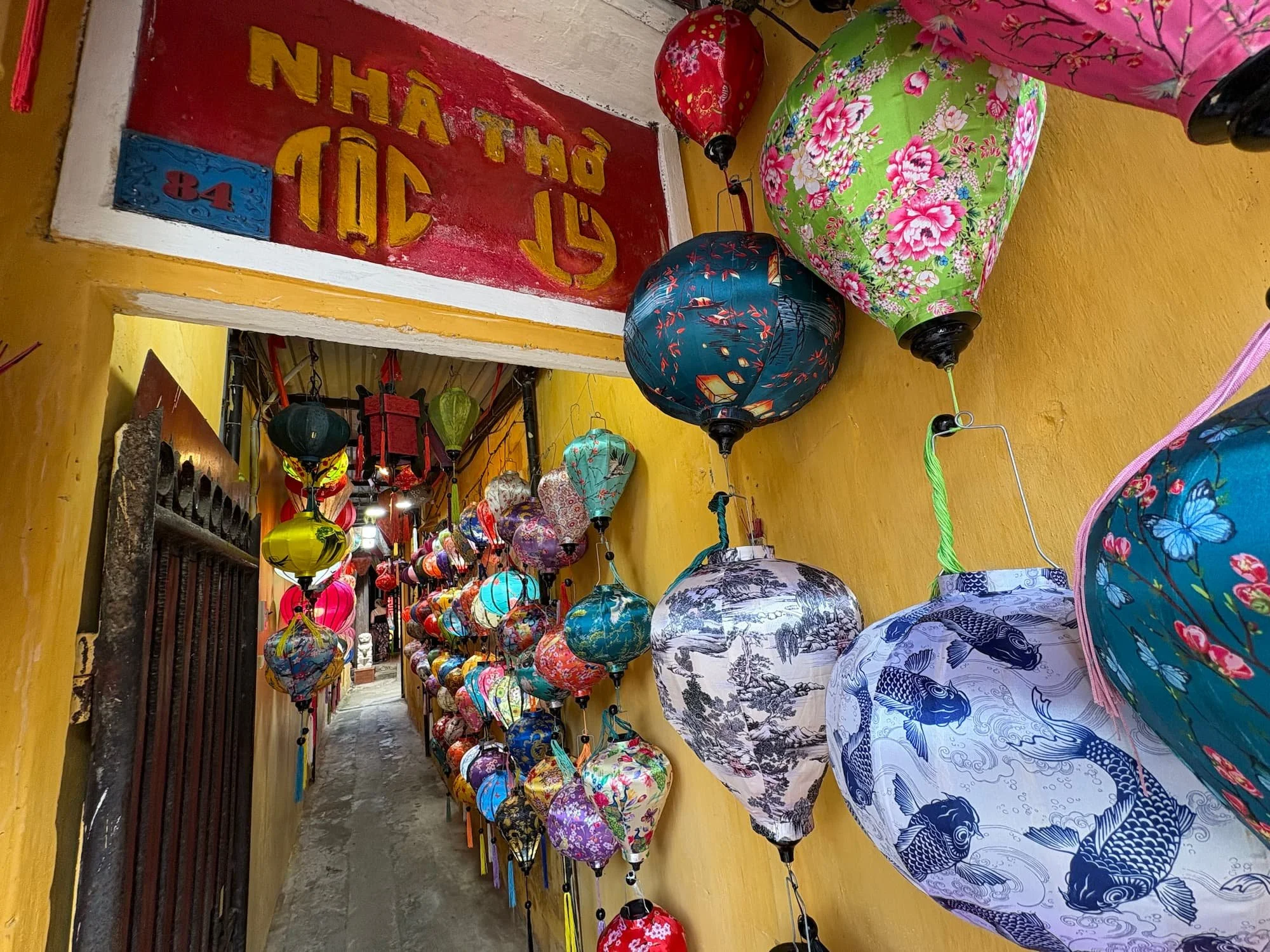
Finding the quirky alleys in Hoi An.
FAQ — Vietnam eSIMs for Travellers (Using Airalo).
If you’re new to using an eSIM, you probably still have a few questions, I know I did before trying one for the first time in Vietnam. Here are some quick answers that should help you decide whether Airalo is the right choice for your trip:
Can I use an Airalo eSIM in Vietnam?
Yes. Airalo works across Vietnam by connecting to major local networks, giving you reliable 4G and 5G coverage in cities like Hanoi, Da Nang, and Ho Chi Minh City, as well as more rural areas such as Sapa and the countryside around Hoi An.
During my trip, I had consistent signal everywhere I travelled, including on longer travel days and outside city centres, making it a strong Vietnam eSIM for tourists.
Do I need an unlocked phone to use a Vietnam eSIM?
Yes. To use an Airalo Vietnam eSIM, your phone must be eSIM-compatible and unlocked.
Most modern devices work perfectly, including:
iPhone XR and newer.
Samsung Galaxy S20 and newer.
Google Pixel 3 and newer.
If your phone supports eSIMs and isn’t locked to a network, you’re good to go.
Does Airalo offer unlimited data in Vietnam?
Airalo offers a range of Vietnam eSIM plans, including high-data and unlimited-style options, depending on availability.
Some plans include daily high-speed data allowances, which are more than enough for maps, transport apps, browsing, and social media during normal travel days. It’s worth checking current plans to find the best Vietnam eSIM unlimited data option for your trip length.
Can I top up more data if I run out?
Yes. If you run out of data on your Vietnam eSIM, you can easily top up directly through the Airalo app.
This is particularly useful if your trip changes or you end up travelling longer than planned, no need to buy a new SIM or visit a store.
Can I use my Airalo Vietnam eSIM as a hotspot?
Yes. Airalo allows hotspot and tethering on its Vietnam eSIM plans.
I regularly used my phone as a hotspot to:
Upload those famous Vietnam Instragram photos.
Book transport.
Watch videos on longer journeys.
It worked smoothly and reliably throughout my trip.
What if the Airalo Vietnam eSIM doesn’t work?
If you run into any issues, Airalo offers customer support through the app and clear setup instructions.
In the unlikely event that something doesn’t work as expected, Airalo also has a refund policy, which adds extra peace of mind when buying your Vietnam eSIM online before you travel.
Disclosure: I sometimes use affiliate marketing. This will not cost you anything, but helps with my travel costs. I only recommend companies I use myself.