
Best eSIM for Egypt: Staying Connected from Cairo to Abu Simbel with Roambit.
I remember sitting in my hotel room in Cairo, halfway through watching an Arsenal match on my phone, when the lights suddenly cut out…
Everything went dark…
No WiFi, no TV — nothing. Another one of the city’s regular power cuts.
But my phone stayed connected.
Instead of waiting around, I just carried on watching using my Roambit eSIM.
A few days later, I was on the overnight train from Cairo to Luxor, lying in a small sleeper cabin with no WiFi and no chance of sleep. The train rattled through the night, but I still had signal the entire way.
I could scroll, check Luxor routes, message friends, even stream — all while moving through remote parts of Egypt.
That’s when I realised.
In a destination like Egypt, where WiFi is unreliable, power cuts happen, and getting around can be chaotic, having reliable mobile data isn’t optional.
In this guide, I’ll show you how I used a Roambit eSIM across Egypt, and why it made a huge difference.
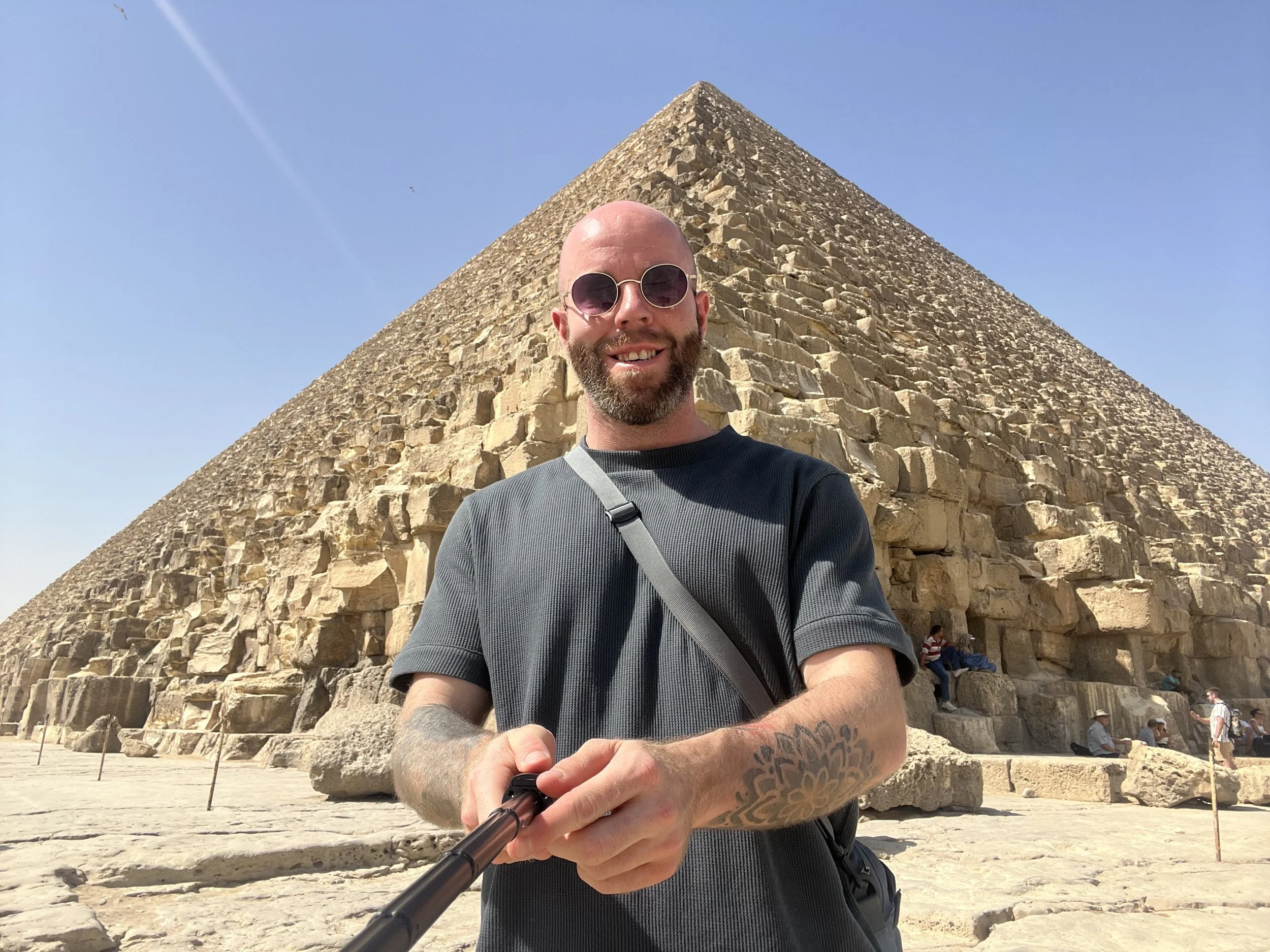
Found my way to one of the greatest wonders.
Disclosure: I sometimes use affiliate marketing. This will not cost you anything, but helps with my travel costs. I only recommend companies I use myself.
Recommended Roambit eSIM Plans for Egypt.
If you’re not sure which plan to choose, these are the best options based on how long you’re travelling:
👉 Most popular.
Perfect for everything in Egypt.
➡️ 20 GB plan - 30 days.
👉 Cheapest.
Still covers the essentials.
➡️ 3GB plan - 30 days.
Is an eSIM worth it in Egypt?
Yes. If you want reliable internet in Egypt, an eSIM is absolutely worth it.
With a Roambit eSIM, you can activate your data instantly and use apps like Uber, Google Maps and translation tools without relying on airport SIM cards or patchy hotel WiFi.
I didn’t experience any connection issues anywhere on my Egypt trip.
If you’re planning a full trip across the country, I break this down in further in my detailed Egypt itinerary.
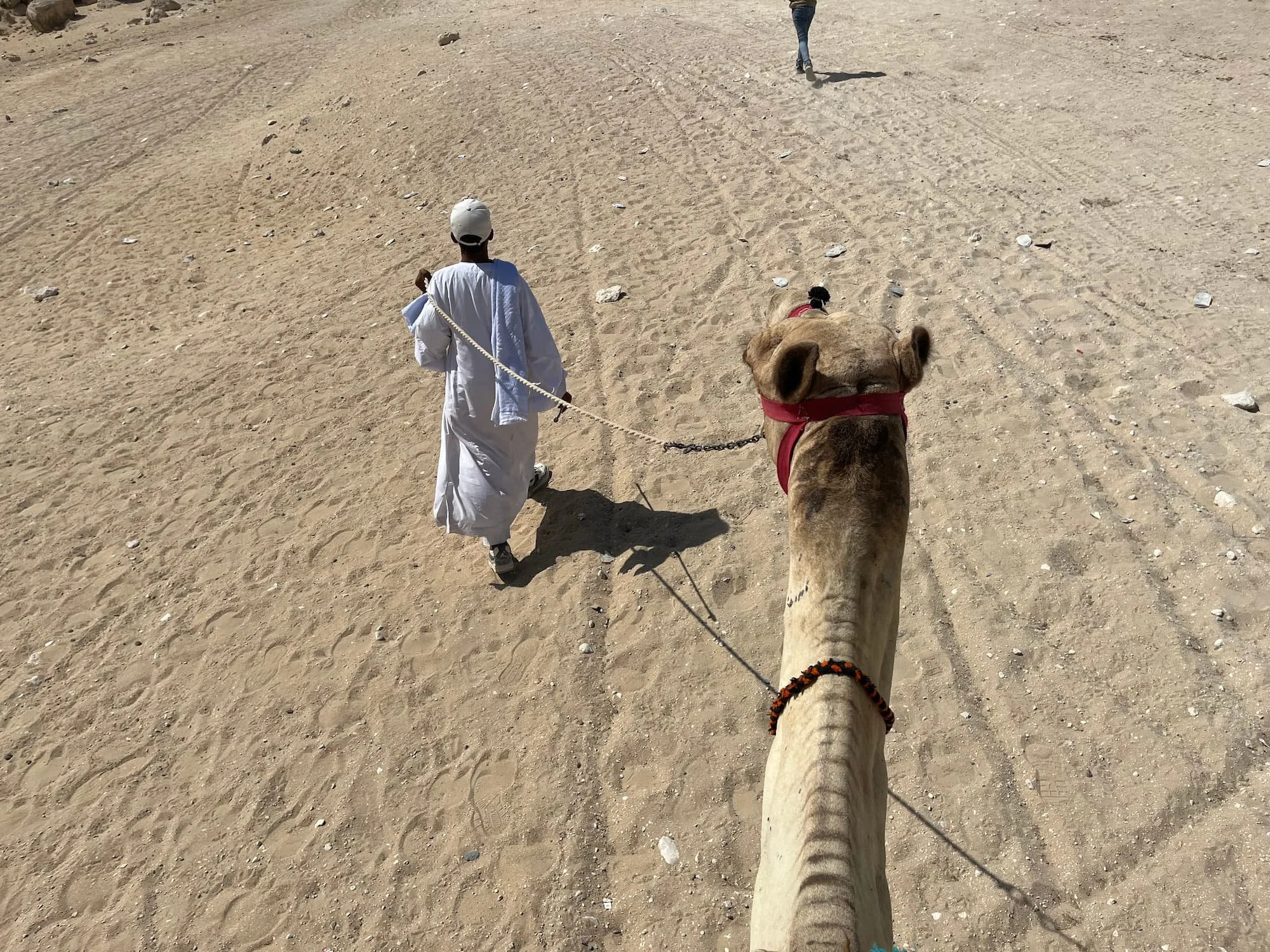
Having data in the most random places.
My Experience using a Roambit eSIM in Egypt.
Using a Roambit eSIM in Egypt ended up being one of the most useful tools as I explored the different cities in Egypt.
From the moment I landed in Cairo, I had instant access to data without needing to find a SIM card or rely on airport WiFi.
It meant I could book transport, check directions, and stay connected straight away, which made those first few hours in a new country feel far more straightforward.
As the trip went on, I realised just how often I relied on it.
Whether it was navigating busy streets, travelling between cities, or exploring major sites, having a consistent connection made everything smoother.
Here’s exactly where it made the biggest difference….

Booking an Uber from Cairo Airport (Avoiding Taxi Scams).
Arriving in Cairo can feel a bit overwhelming at first.
As soon as I stepped outside the airport, I was met with a rush of taxi drivers offering rides, prices being called out, and no real sense of what I should actually be paying.
It’s one of those moments where things can feel slightly chaotic — especially after a long flight.
Beyond that, getting around a new city as a solo traveller for the first time can feel a little intimidating, and staying near busy central areas took some getting used to.
That’s where having mobile data made a big difference for me.
Instead of negotiating or second-guessing prices, I simply opened Uber, booked a ride within seconds, and knew exactly what I was paying upfront.
I could track the driver in real time, see the route clearly, and get to my accommodation without any uncertainty.
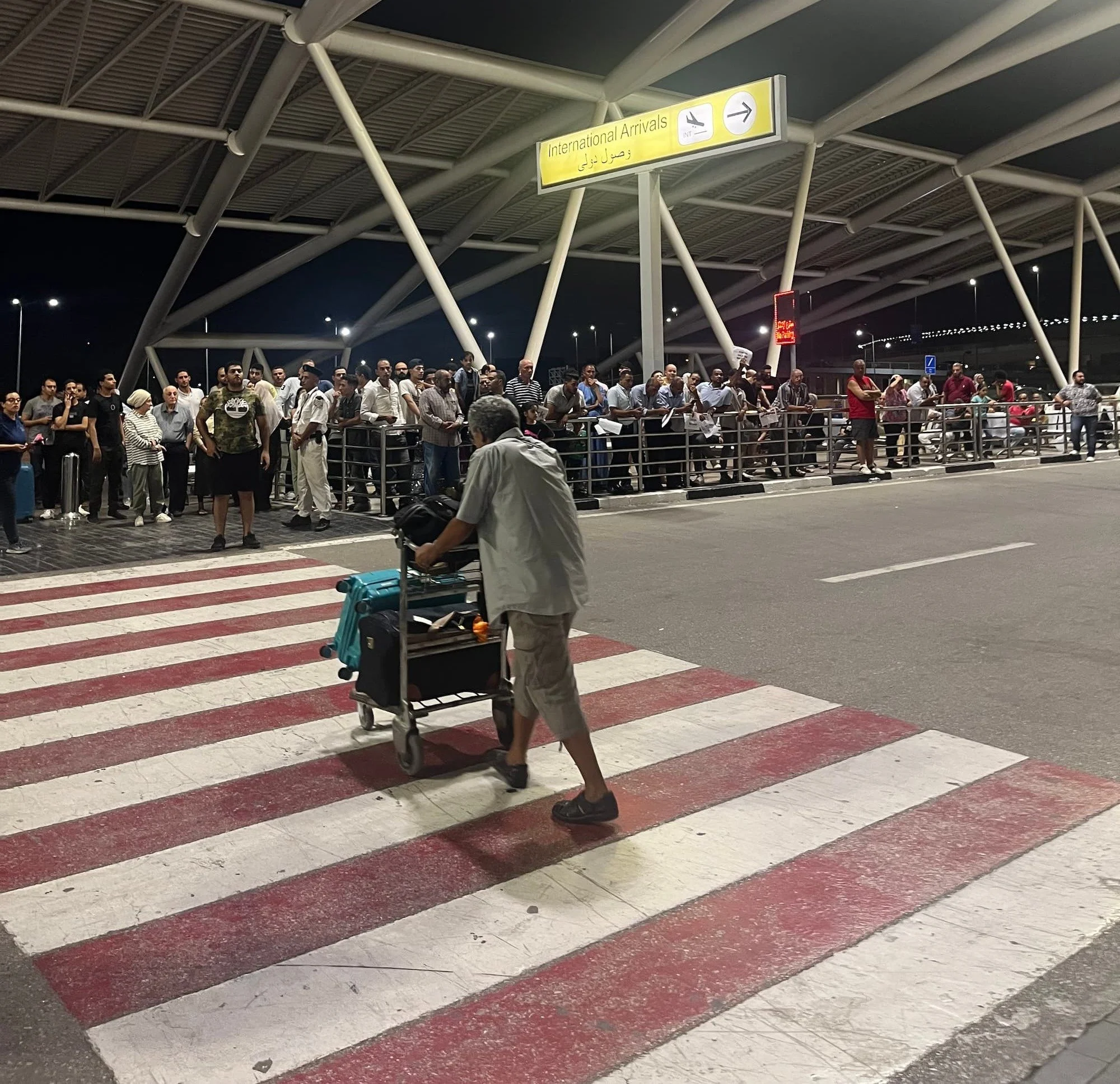
Chaos and anxiety that can be reduced if you plan well and are connected in advance.
Navigating Cairo’s traffic and famous streets.
Cairo’s traffic is something that very nearly ruined my bucket list experience at the Pyramids.
Heading from central Cairo to the Pyramids of Giza, a distance of around 6 miles ended up taking close to 90 minutes.
At times it felt like we were barely moving. That easy journey on paper turned into a slow, unpredictable journey, as many do in and around the capital.
Being able to follow the route in real time, and check alternative options is a game changer in some parts of Egypt. So having that strong connection is alwasy important.
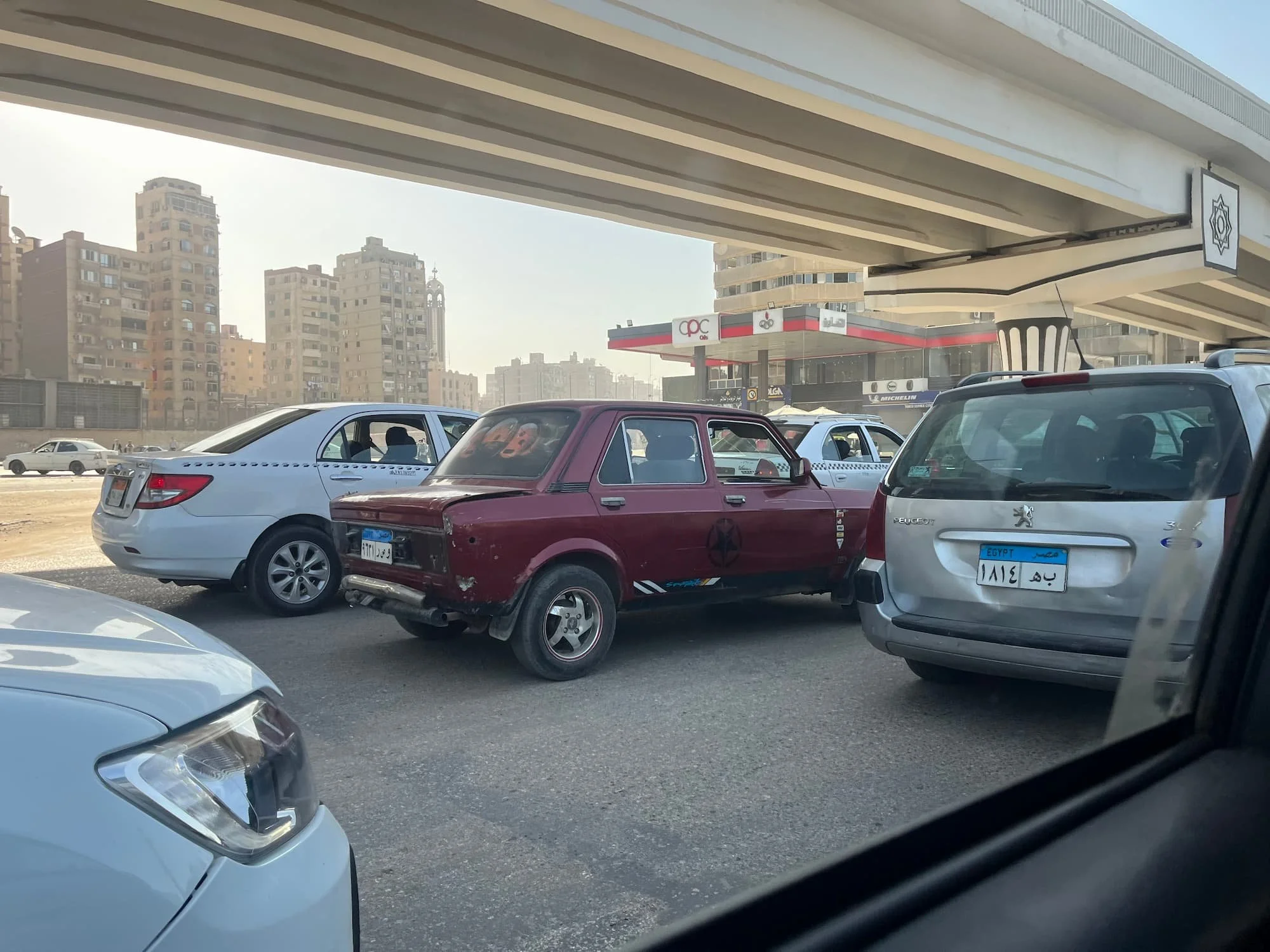
Taking forever to get to Giza.
I also noticed the beenfit of Google Maps when exploring Coptic Cairo by foot.
On paper, it looks like a compact area filled with historic religious landmarks, but it didn’t take long for me to get a bit lost and distracted by daily life in the capital
Streets connect in ways that aren’t always obvious, and key sites aren’t always clearly signposted.
I managed to use the online assistance to visit the Hanging Church, the Coptic Museum and the Church of St. Sergius and Bacchus.
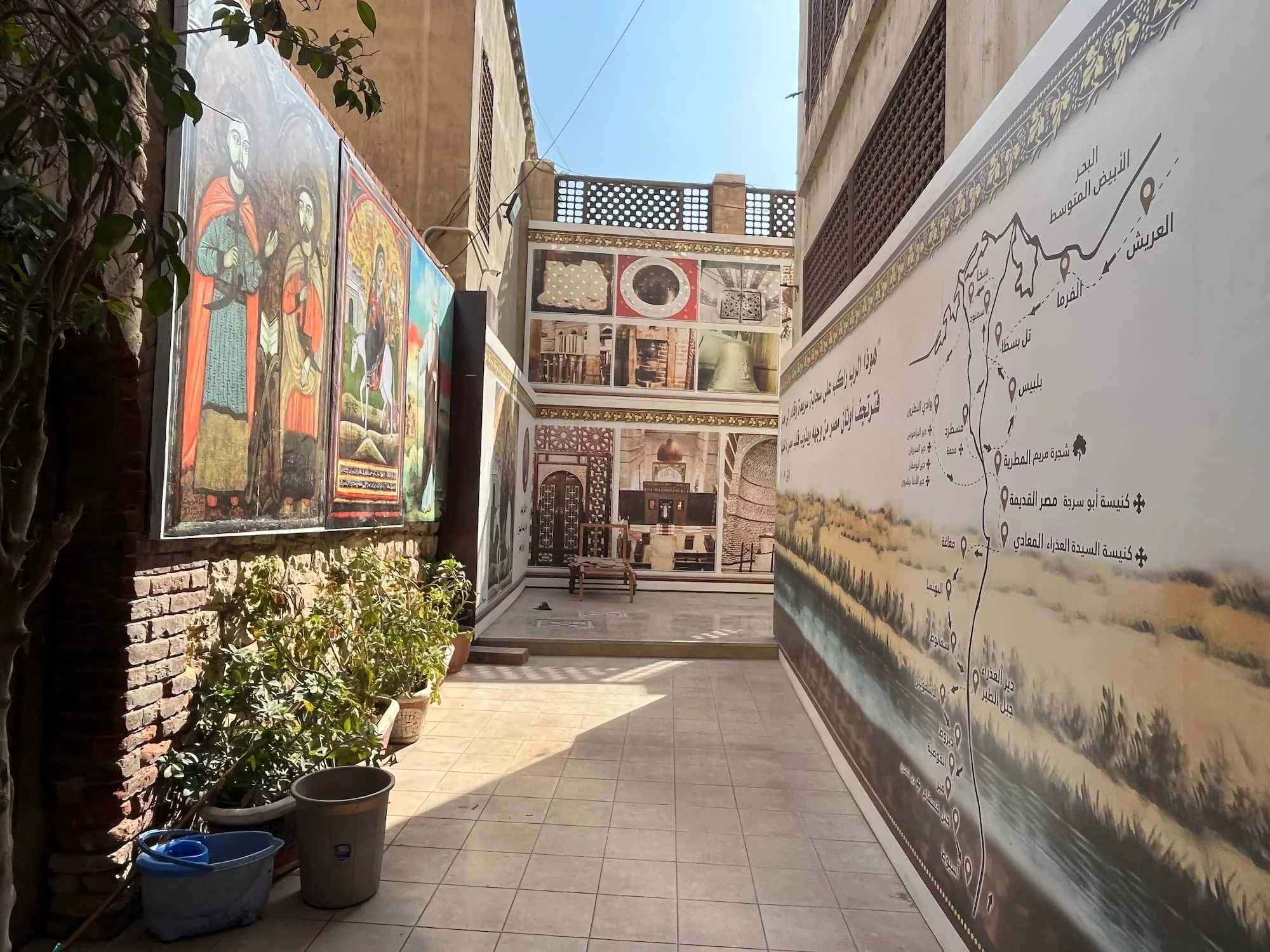
Navigating myself around Coptic Cairo.
Hotel WiFi, power cuts & why data matters.
One thing I didn’t expect in Cairo, especially staying near Tahrir Square, was how often the WiFi would drop out.
On paper, the hotel looked solid. But in reality, the connection was inconsistent at best, and completely unusable at times.
The main reason? Power cuts.
They weren’t constant, but they happened several times throughout the day. And every time the power went, so did the WiFi.
It meant at times when I was chilling and watching the Arsenal match, the connection instantly dropped.
At first, it was frustrating, but my Roambit eSIM had a solid connection, so there weren't any major issues.
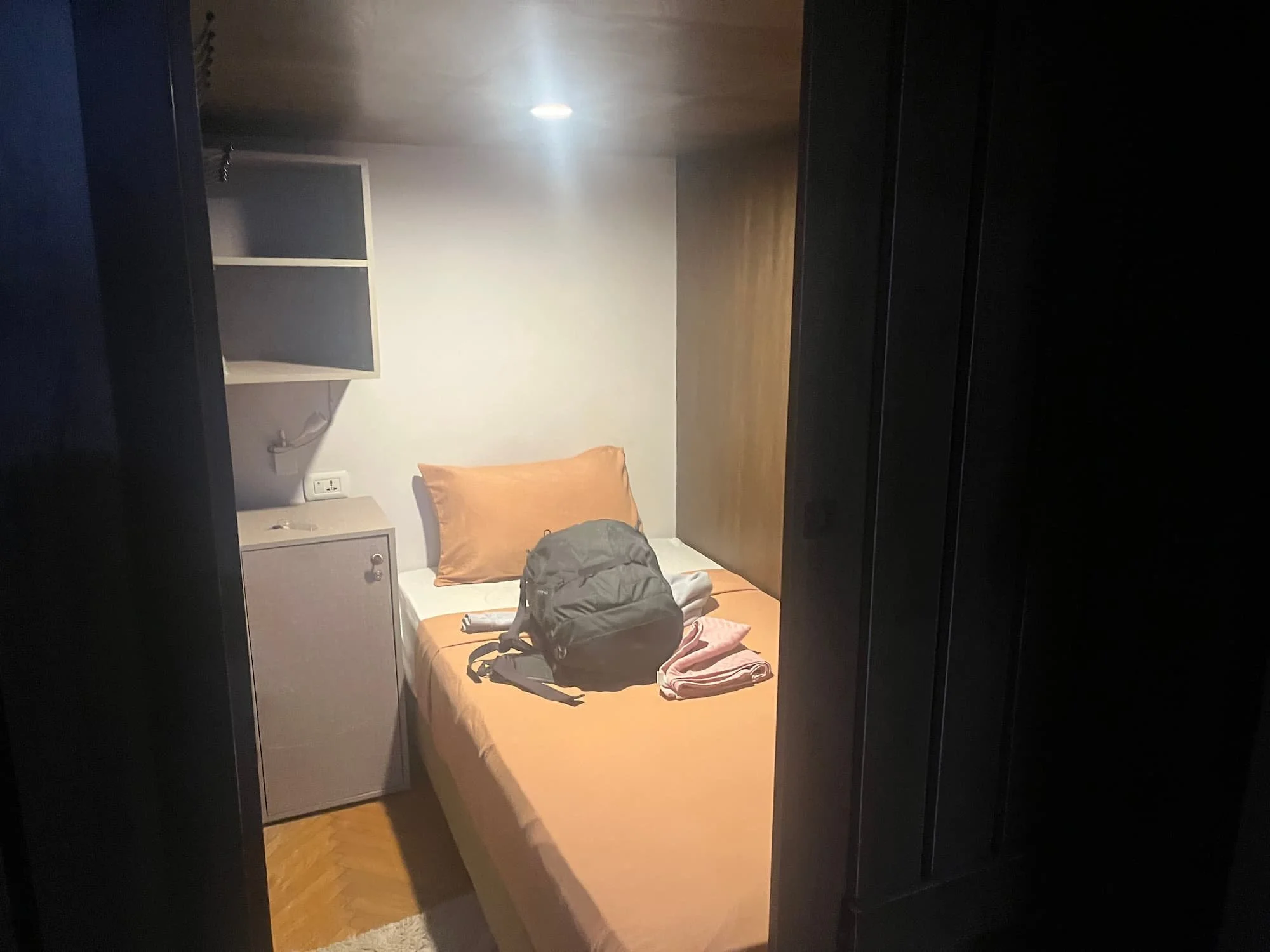
While the power was still on.
Staying connected on the overnight train to Cairo.
The overnight train from Cairo to Luxor was one of those experiences that sounds better on paper than it feels at the time.
The cabin was small, the train rattled constantly, and at times it felt more like a rollercoaster than something you’d comfortably sleep on.
Getting a full night’s rest wasn’t really an option - so this is where having a good signal helped me.
Instead of just lying there wide awake, I was able to put a podcast on, scroll for a bit, and eventually switch off enough to get some rest.
Travelling through the night in an unfamiliar setting is not ideal, but having that connection makes it feel far more manageable. Ten hours is a long time when you can’t sleep.
The signal held consistently throughout the journey.
Which, for a route that passes through more remote parts of Egypt, I didn’t expect it to work as well as it did.
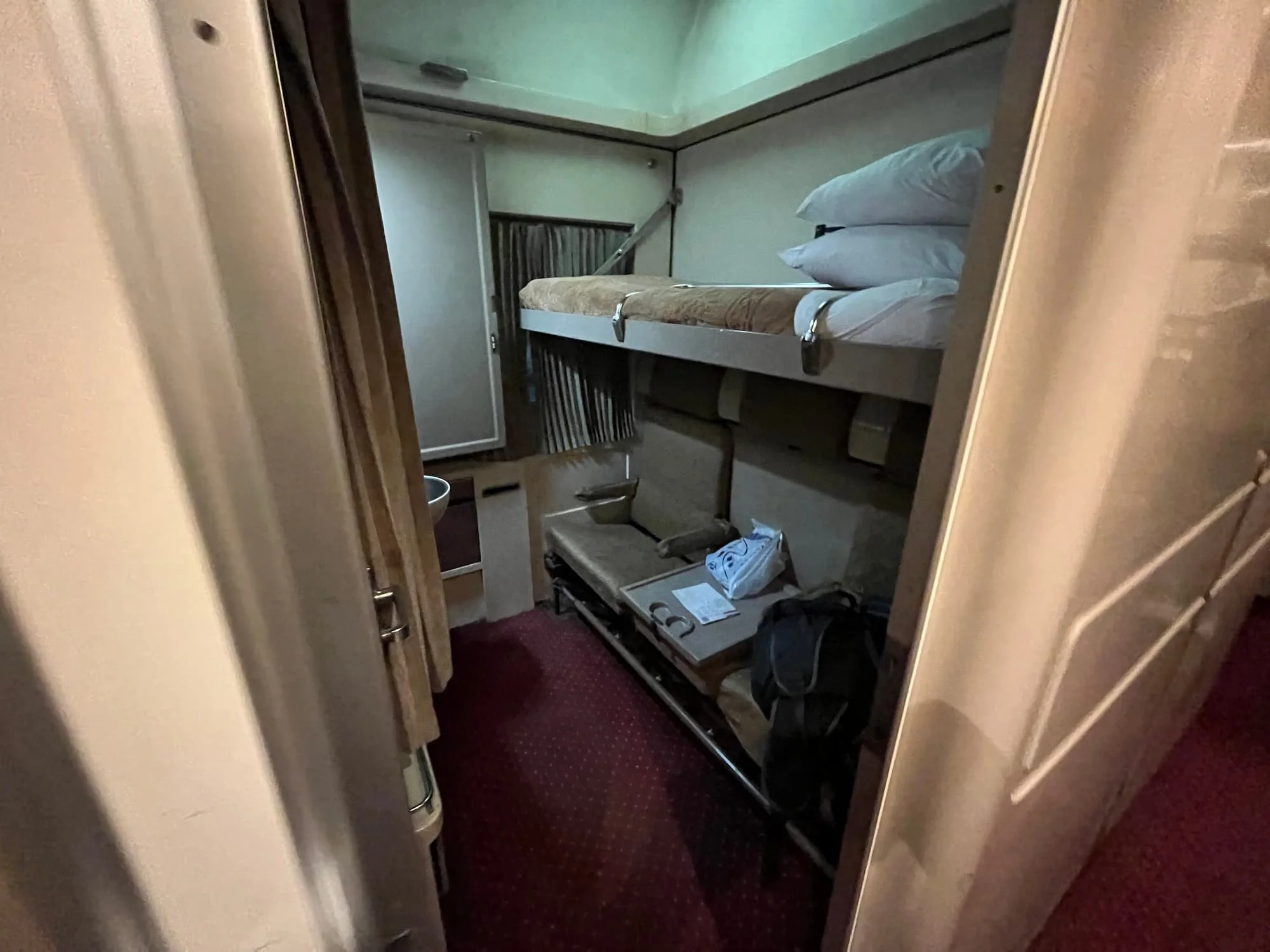
A long ten hours ahead.
Using data to navigate Luxor (East Bank Chaos & West Bank Tombs).
Luxor is one of the most popular cities in Egypt, but it is a different level of chaos.
Especially on the East Bank side of the Nile.
Around Luxor Temple, things change quickly. Streets fill up, traffic builds, and what felt manageable one minute, suddenly got overwhelming.
Instead of sticking to one plan, I could quickly find quieter streets, check reviews before stopping somewhere, or adjust my route to avoid the busiest areas.
It also helped with simple things like finding better places to eat or taking a more relaxed route back towards the river.
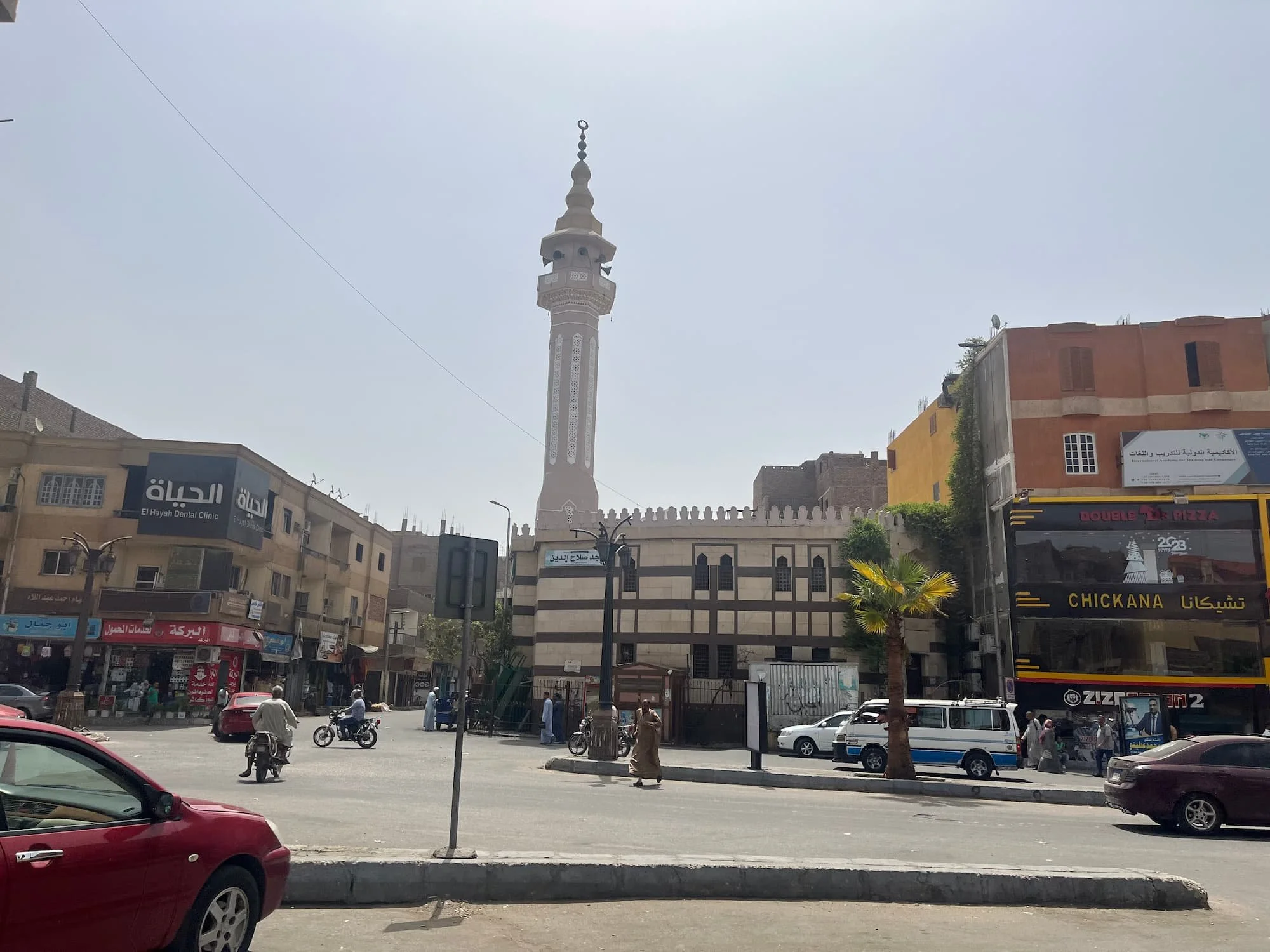
Luxor’s East Bank is chaos.
Signal in remote Egypt (Aswan to Abu Simbel).
The signal passed another test, and that is how well it held up outside the main cities, especially down south.
While in Aswan, I took a boat trip along the Nile, passing landmarks like Philae Temple, and still had a strong connection the entire time.
Even out on the water, I could check maps, browse, and stay connected without any issues.
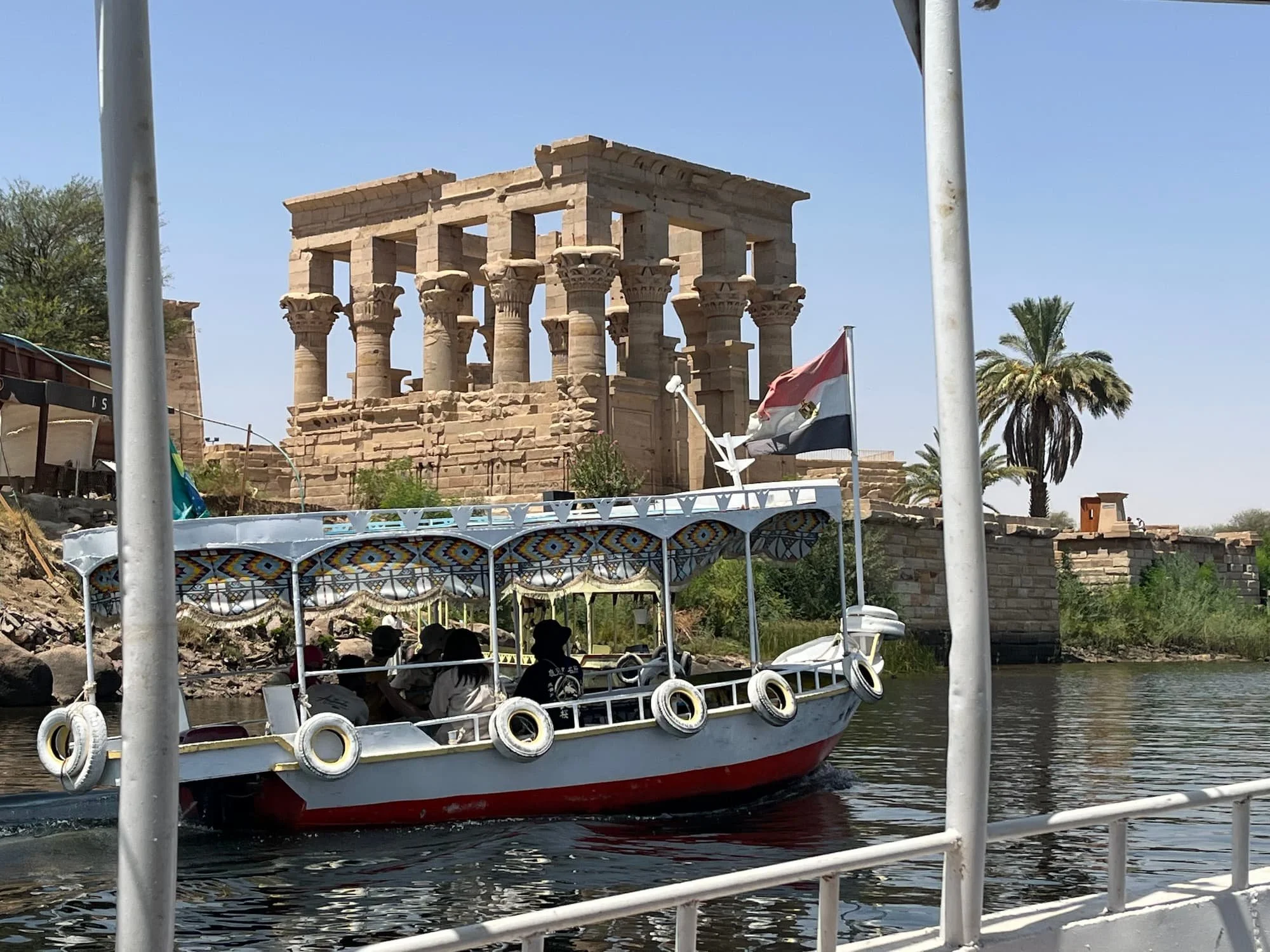
Philae Temple.
But the real test came on the early morning trip to Abu Simbel.
It’s a long drive south, heading towards the Sudanese border, with large stretches of completely empty desert in between.
There’s very little around, just long, open roads and remote landscapes.
Despite that, I still had signal for most of the journey.
It wasn’t something I was relying on constantly, as I was with other tourists on the bus, and a very fun local tour guide.
But it was nice to know it was there, ready for my Instagram posts when we reached the iconic temple.
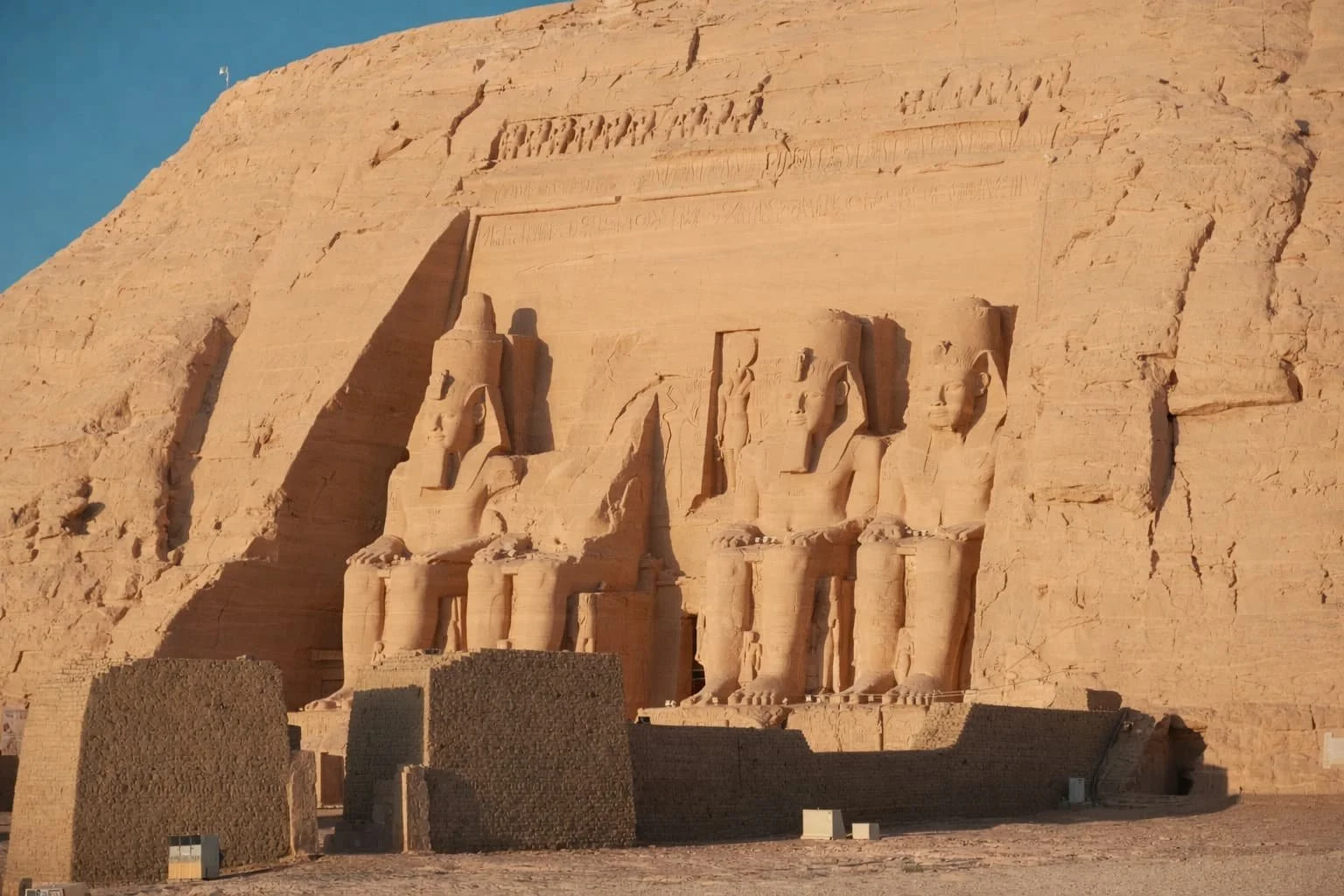
Visiting the iconic Abu Simbel Temple, with full signal.
Why do you actually need mobile data in Egypt?
It’s easy to assume you can get by using hotel WiFi or just figuring things out as you go, but in Egypt, it’s not always that simple.
Between moving around cities, visiting large historical sites, and dealing with day-to-day travel logistics, you end up relying on your phone far more than you might expect.
It’s not just about staying connected, it’s about making things easier, quicker, and less stressful as you go.
Believe me, Egypt is a stressful place, especially as a solo traveller. I didn’t realise how important it would be until I was actually there.
Here are some of the situations where having mobile data made a real difference:
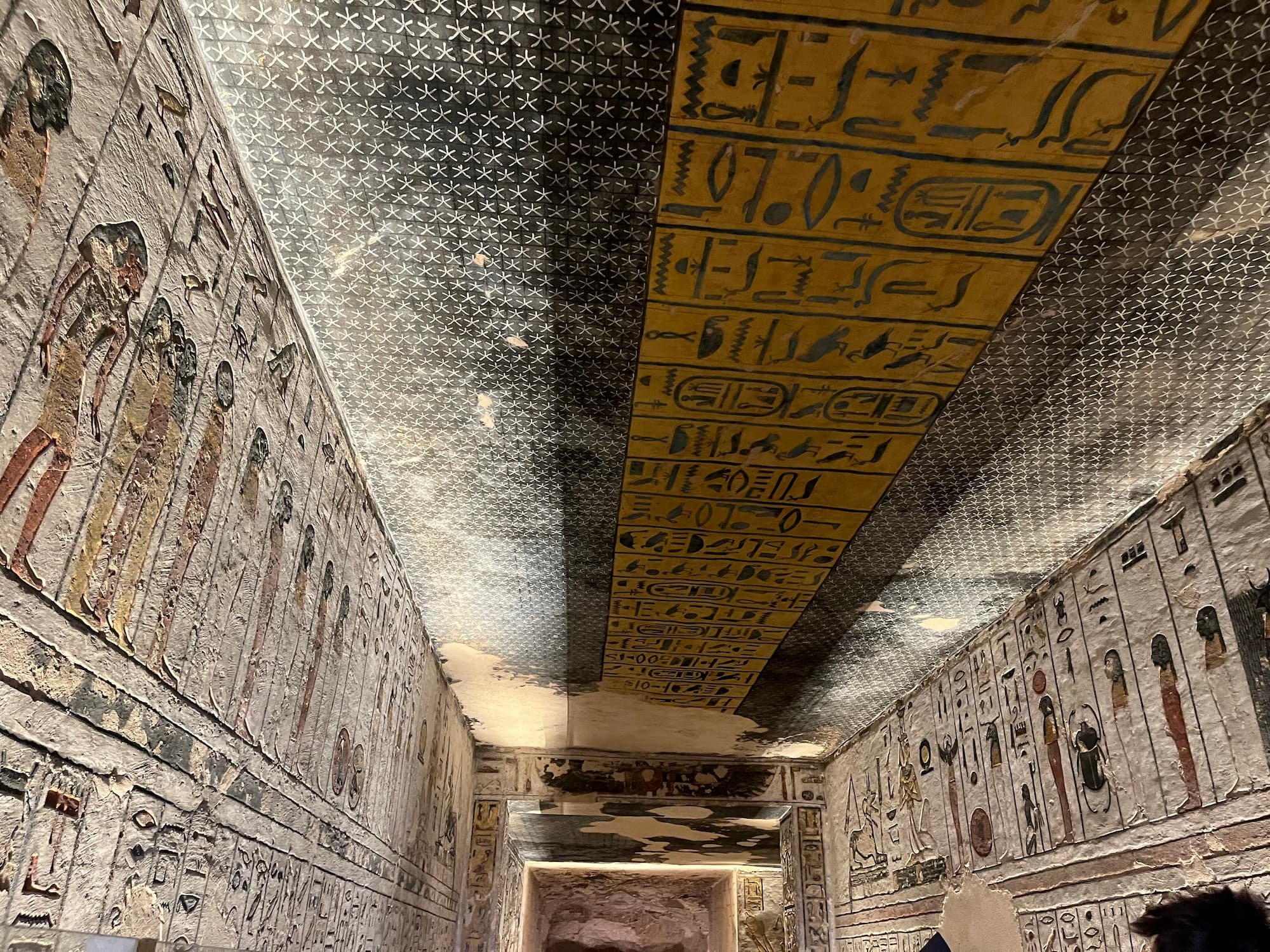
Exploring the tombs of the Valley of the Kings.
Communicating with the locals (especially in markets).
One of the most enjoyable parts of travelling around Egypt was interacting with locals, especially in places like Khan el-Khalili Bazaar during my time in Cairo, and the markets in Luxor.
But the language was a bit of a barrier for me, especially in Luxor Market, where I had a random experience with a local trader. Plenty of tea and fun was had.
While many people speak some English, on my visit many conversations often turned into a mix of gestures and guesswork, particularly when it came to prices and bargaining.
That’s where having mobile data really helped.
I found myself quickly using translation apps to understand what was being said, respond properly, and even have a bit more fun with the whole experience.
It made haggling feel less stressful and more like a genuine back-and-forth, rather than just trying to guess the right number.
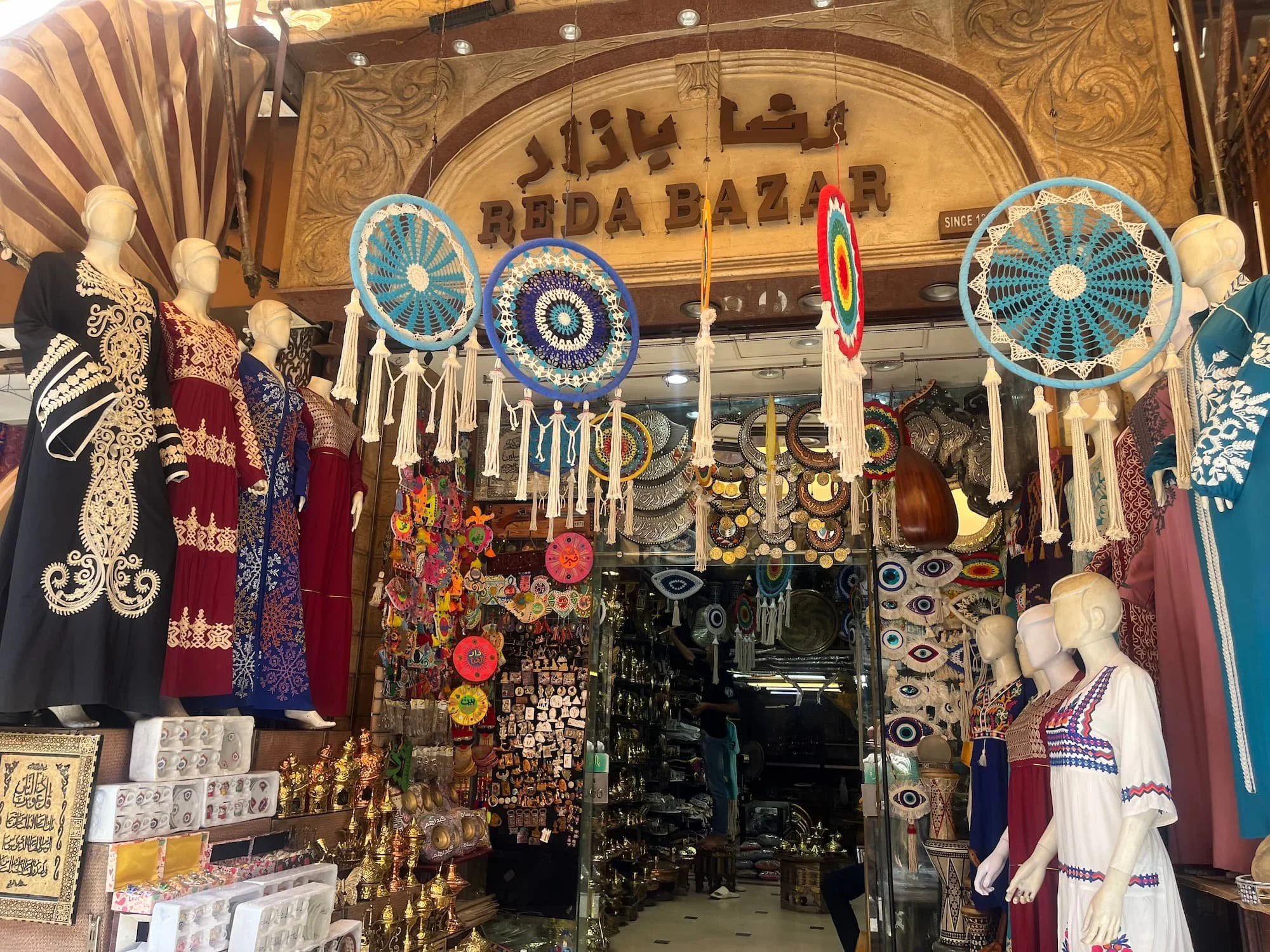
Khan el Khalili in Cairo.
It also helped with smaller moments, reading signs, menus in the famous Luxor restaurants, or understanding directions when things weren’t immediately clear.
Instead of feeling slightly lost in those interactions, having data meant I could engage more confidently and actually enjoy them.
I now always make it a priority in every country, to make sure I have a strong connection, translator app, and Chat GPT handy.
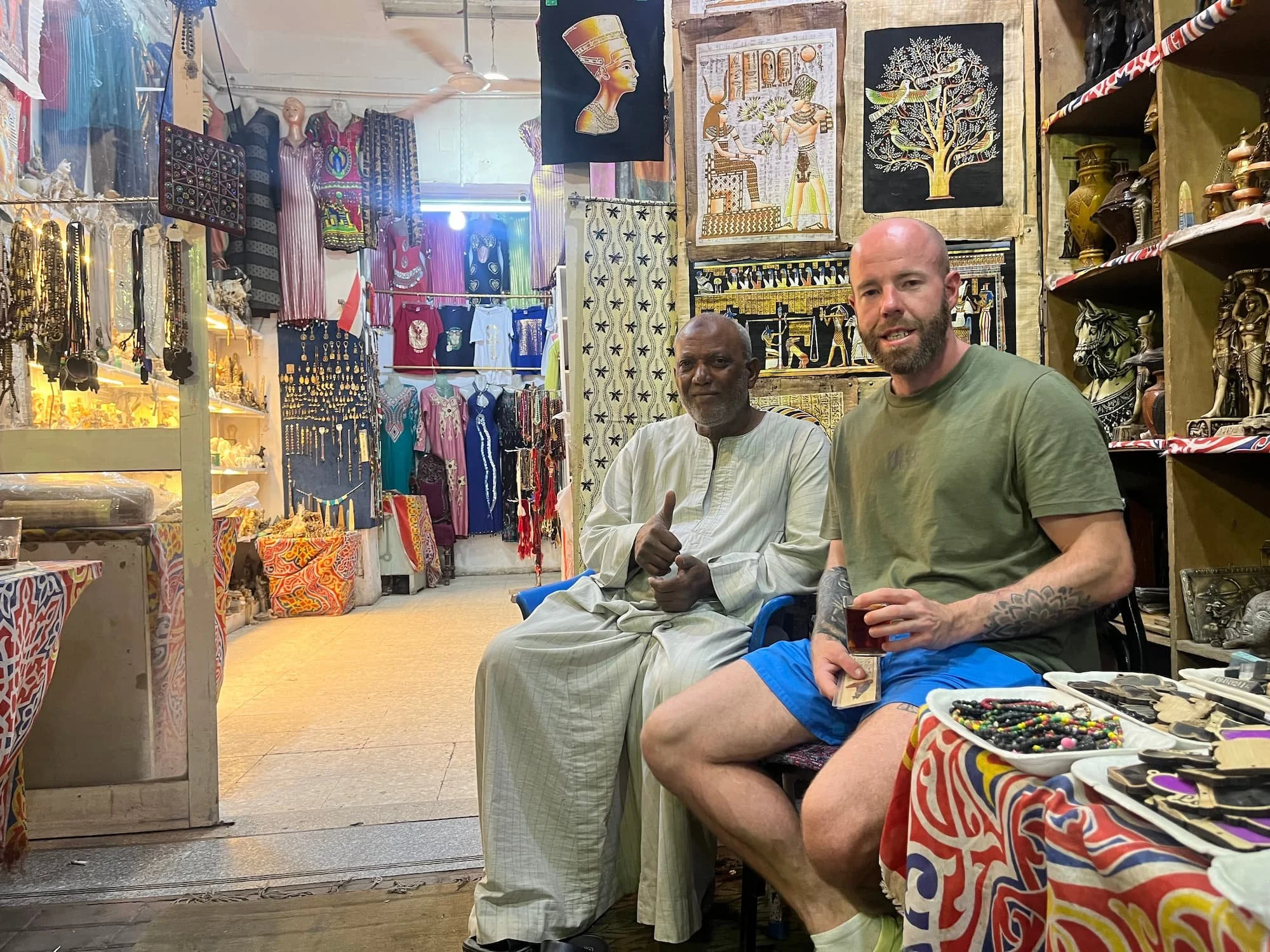
Finding our own way to communicate in the markets.
Accessing tickets and bookings on the go.
One thing that caught me off guard in Egypt was how dependent many major sites are on digital systems, especially for ticket payments.
At places like the Pyramids, Karnak Temple and other key attractions, card payments are now the norm, and cash isn’t always accepted.
It became a real issue when we arrived at Memphis, only to find the ticket office internet was down. With no way to process card payments, entry wasn’t possible at all, and we had to skip it entirely.
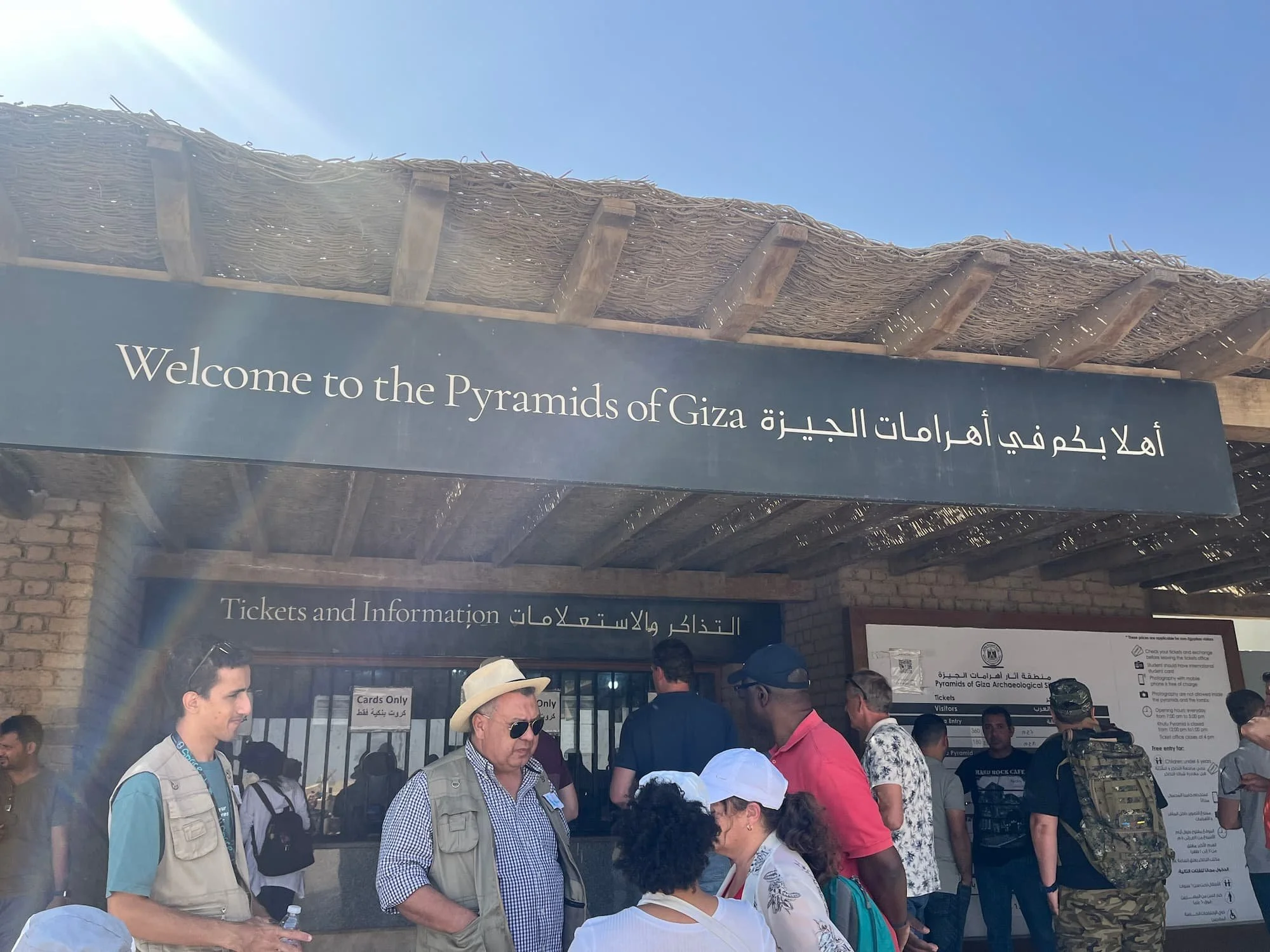
Cards only throughout the sites in Egypt, but you are relying on their systems constantly.
After that, I changed how I approached things.
For the rest of the trip, I made sure to book tickets online in advance using my phone, often just before arriving at each site. Having mobile data meant I could quickly secure entry, pull up confirmations, and avoid any last-minute issues at the gate.
It also made things smoother when arriving at busy places like the Pyramids or Karnak Temple, where being able to show tickets instantly saves time.
It’s only a small detail, but in Egypt, it can make the difference between getting in, or missing out completely - like I did with Memphis.
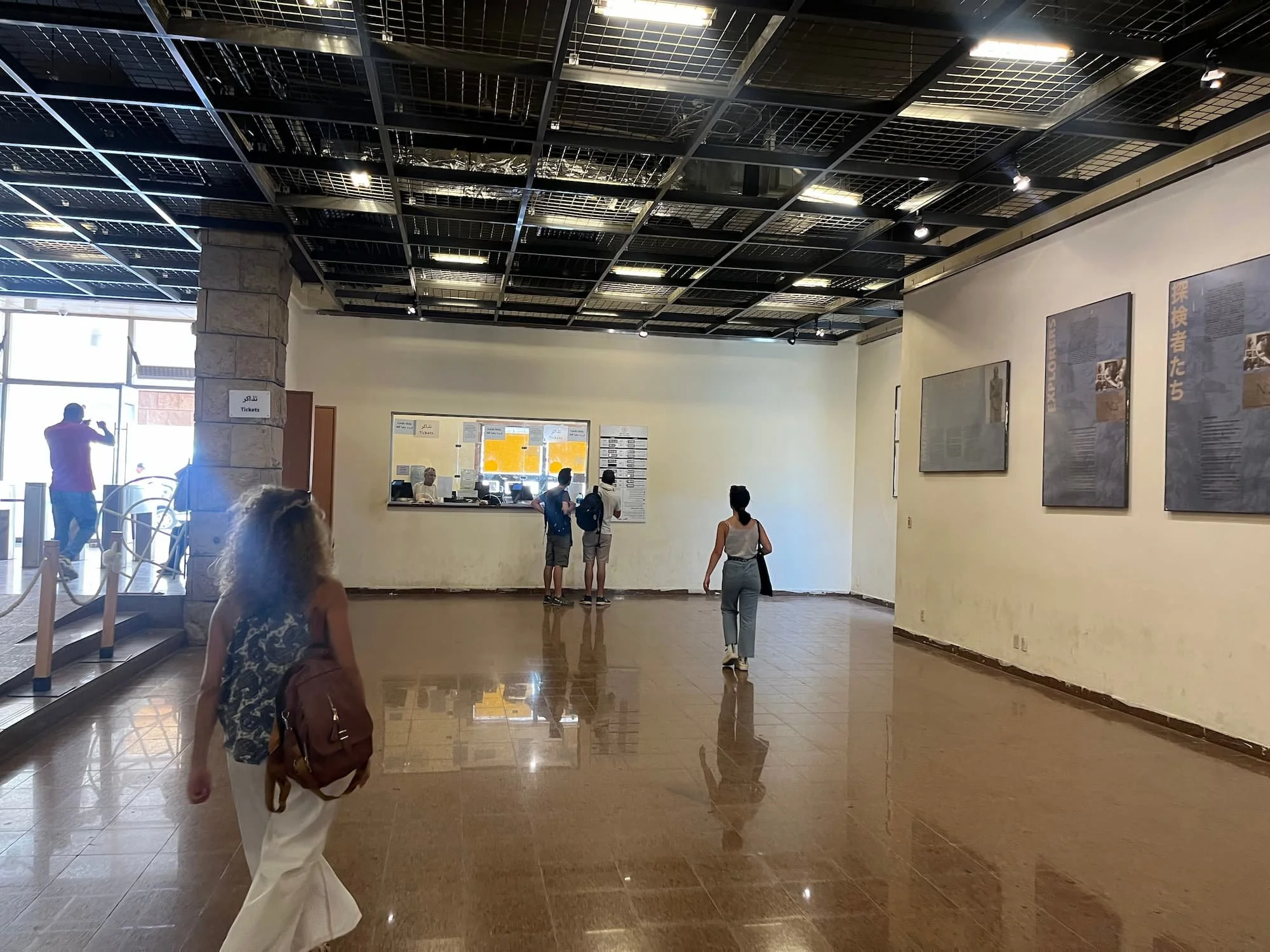
Ticket office at the Valley of the Kings.
Navigating large Archaeological Sites.
It’s not just cities that can be tricky to get around, many of Egypt’s archaeological sites were far bigger and more complex than they first appeared.
Places like the Temple of Hatshepsutand Medinet Habu on Luxor’s West Bank aren’t just quick walk-throughs.
They’re spread across multiple levels, sections, and hidden corners that aren’t always clearly signposted.
I found this most when trying to track down specific viewpoints and photo spots. Some of the best Instagram locations in Egypt aren’t obvious when you arrive, you have to know where to go.
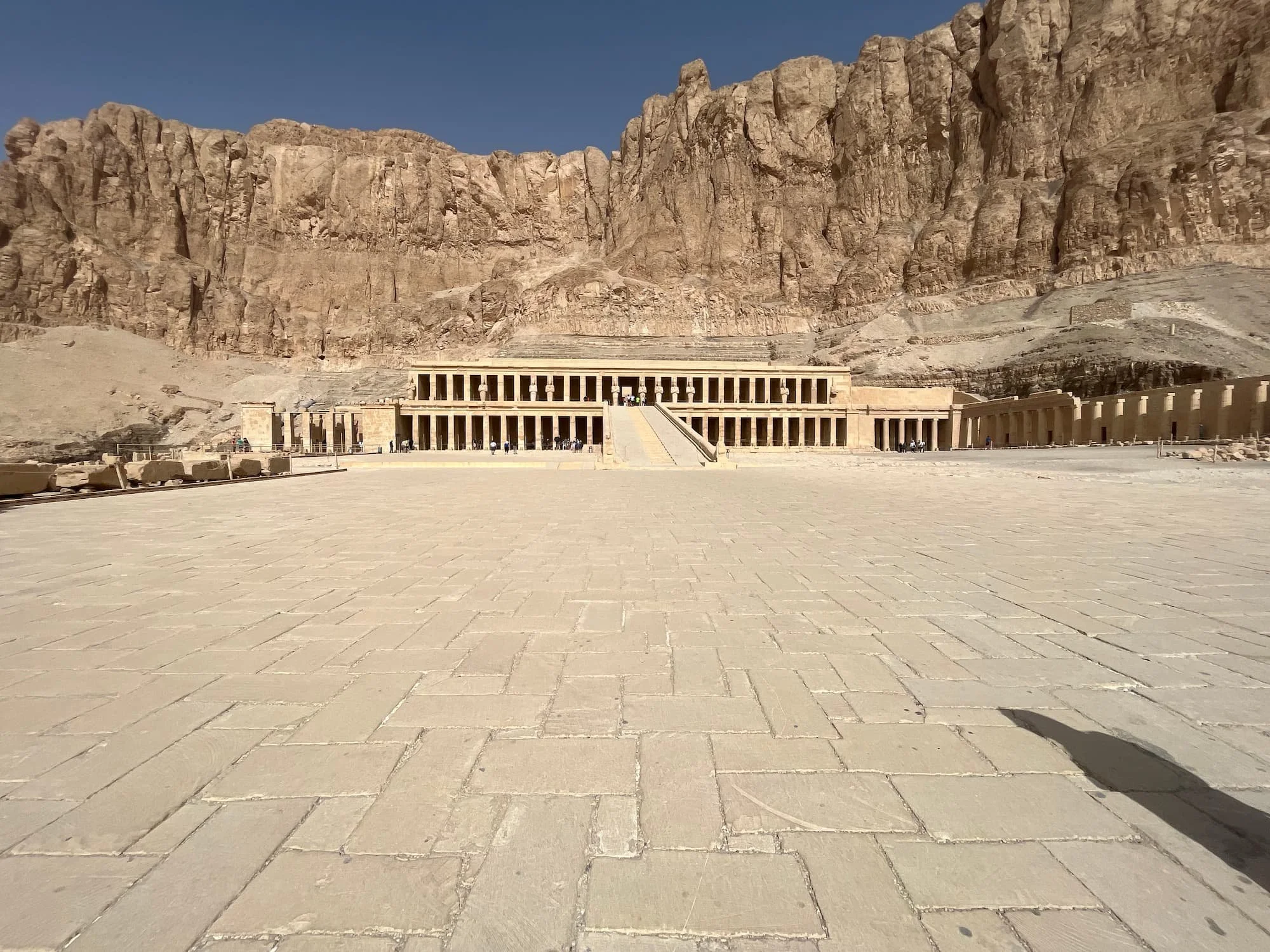
The Temple of Hatshepsut spans multiple floors.
At the Temple of Hatshepsut, for example, moving between the different terraces and levels wasn’t as straightforward as it looks from a distance. And at Medinet Habu, some of the most colourful hieroglyphics are tucked away in quieter areas that are easy to miss
Having mobile data meant I could quickly check maps, saved spots, and guides to make sure I was heading in the right direction, especially when trying to find the best viewpoints.
That became even more important at the Pyramids of Giza.
One of the most iconic photo spots, where you can see all three pyramids lined up together, isn’t immediately obvious when you arrive. Using my phone, I was able to navigate straight to it, and even rode a camel out there for a bit of extra fun.
It ended up being one of the highlights of the entire trip.
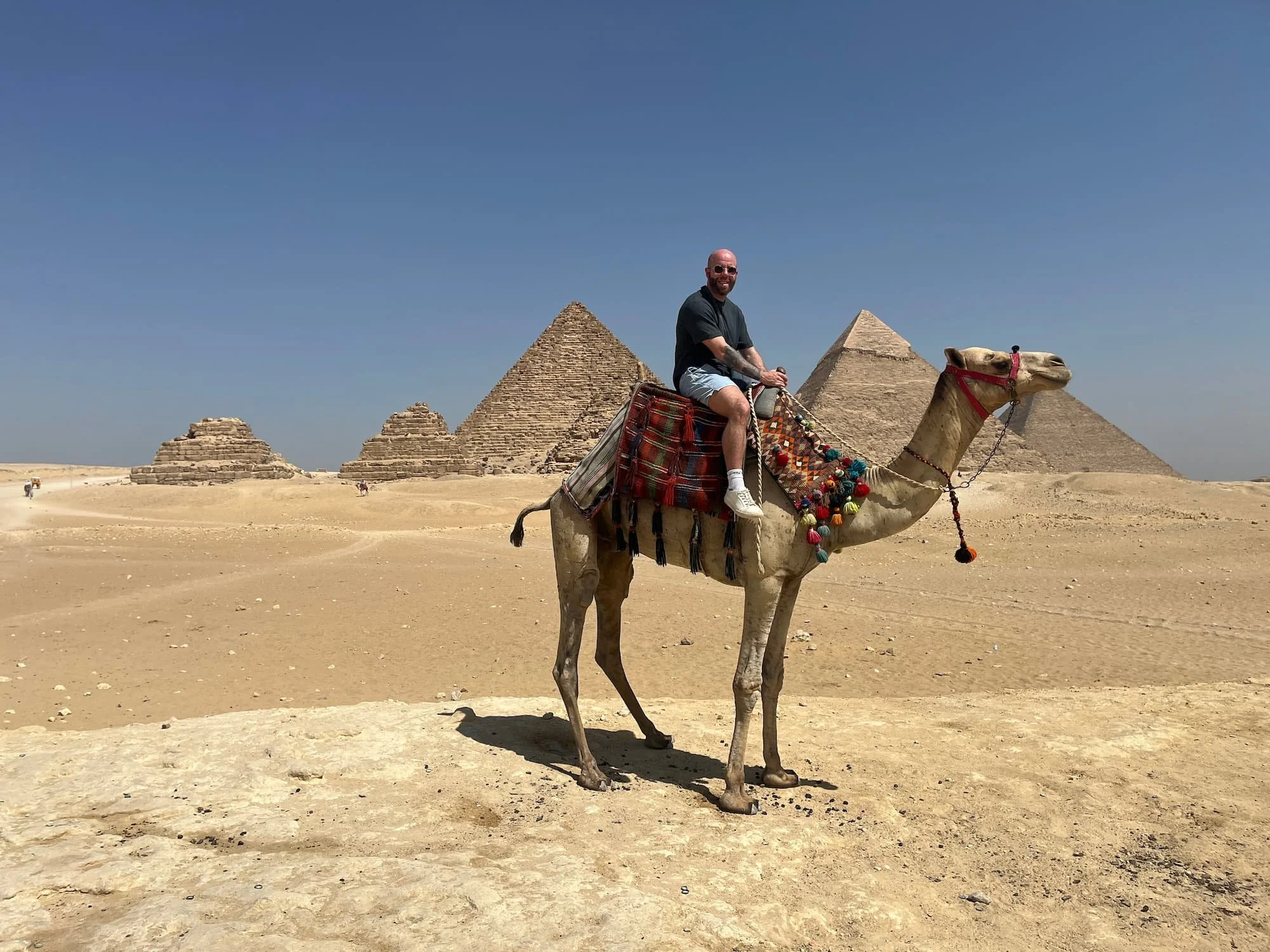
The best spot fro photos.
Staying flexible with your plans.
One of the biggest advantages of having mobile data in Egypt is the ability to stay flexible, because it is a country where things don’t always go to plan.
To say the least.
In Aswan, I originally stayed along the main corniche, which looked great on paper. But once I arrived, it was far louder and busier than I expected, especially late into the evening.
Instead of just putting up with it, I was able to quickly look up alternatives, check availability, and move over to Bob Marley Guest House on Elephantine Island that same night.
A much quieter spot with a completely different atmosphere and a real taste of Nubian life.
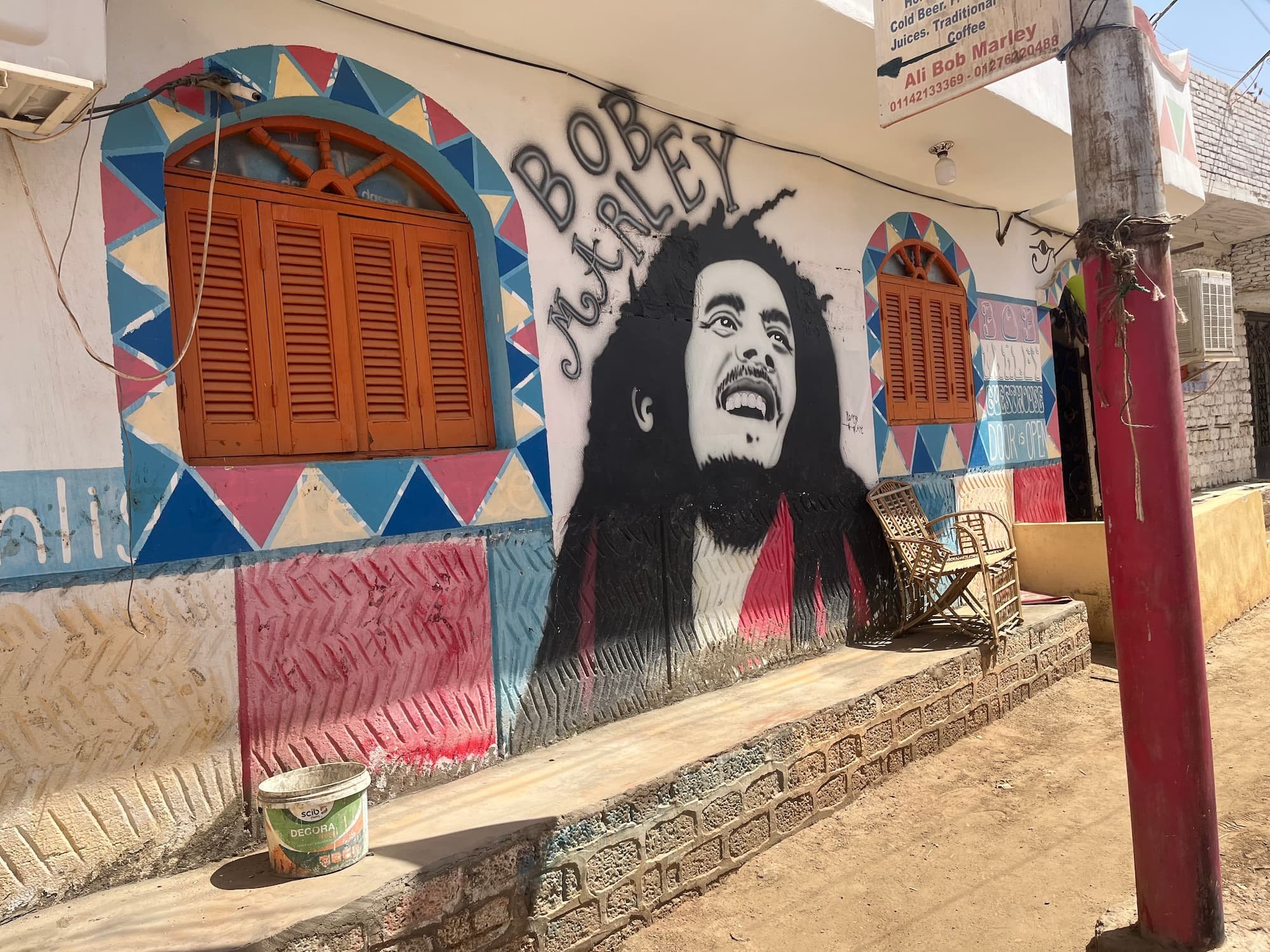
My quieter Nubian accomodation.
A few days later, I had a tour booked to Gharb Soheil Village, but temperatures were pushing close to 50°C on the day I’d planned to go.
Rather than cancelling or risking it, I logged into my GetYourGuide booking using mobile data and rescheduled it for a cooler day later in the week.
Having mobile data meant I wasn’t locked into a fixed plan, I could adapt, make better decisions on the go, and ultimately enjoy the experience a lot more.
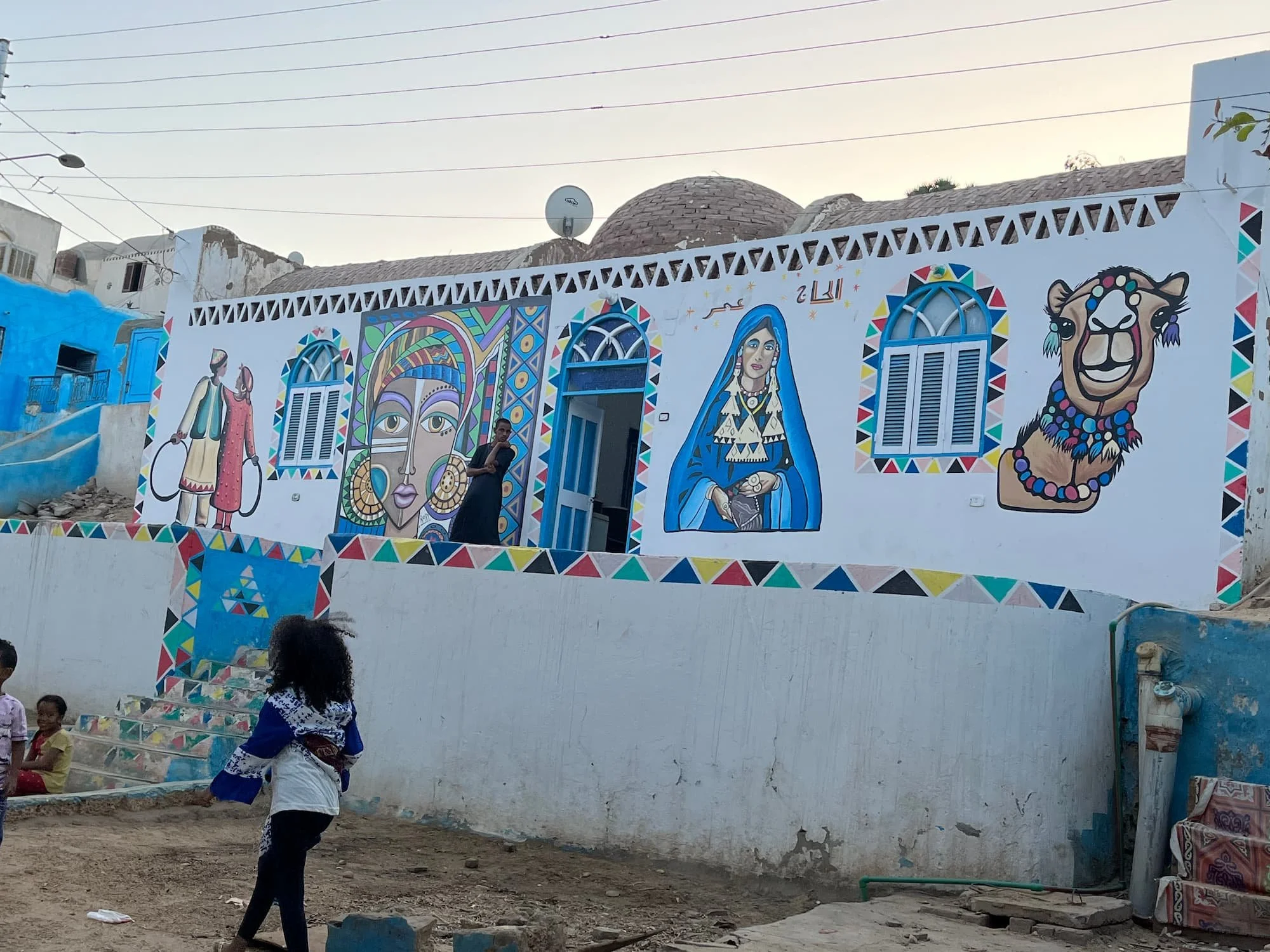
A colorful hous at Gharb Soheil Village near Aswan.
Why I used Roambit eSIM in Egypt.
After looking at a few different options before the trip, I ended up going with a Roambit eSIM mainly for the convenience.
I didn’t want to land in Cairo and deal with SIM card queues, swapping out my UK SIM, or trying to figure things out after a long flight. Being able to set everything up in advance and have data ready the moment I arrived just made things a lot easier.
The setup itself was straightforward. The eSIM was delivered by email within seconds, and activation took less than a couple of minutes using a simple QR code.
Once it was up and running, it worked alongside my normal SIM, so I could still keep my number active while using data abroad.
Throughout the trip, the connection was consistent across Cairo, Luxor and Aswan, running on a Tier-1 local network, with no hidden fees or unexpected charges.
It just worked in the background seemesley.
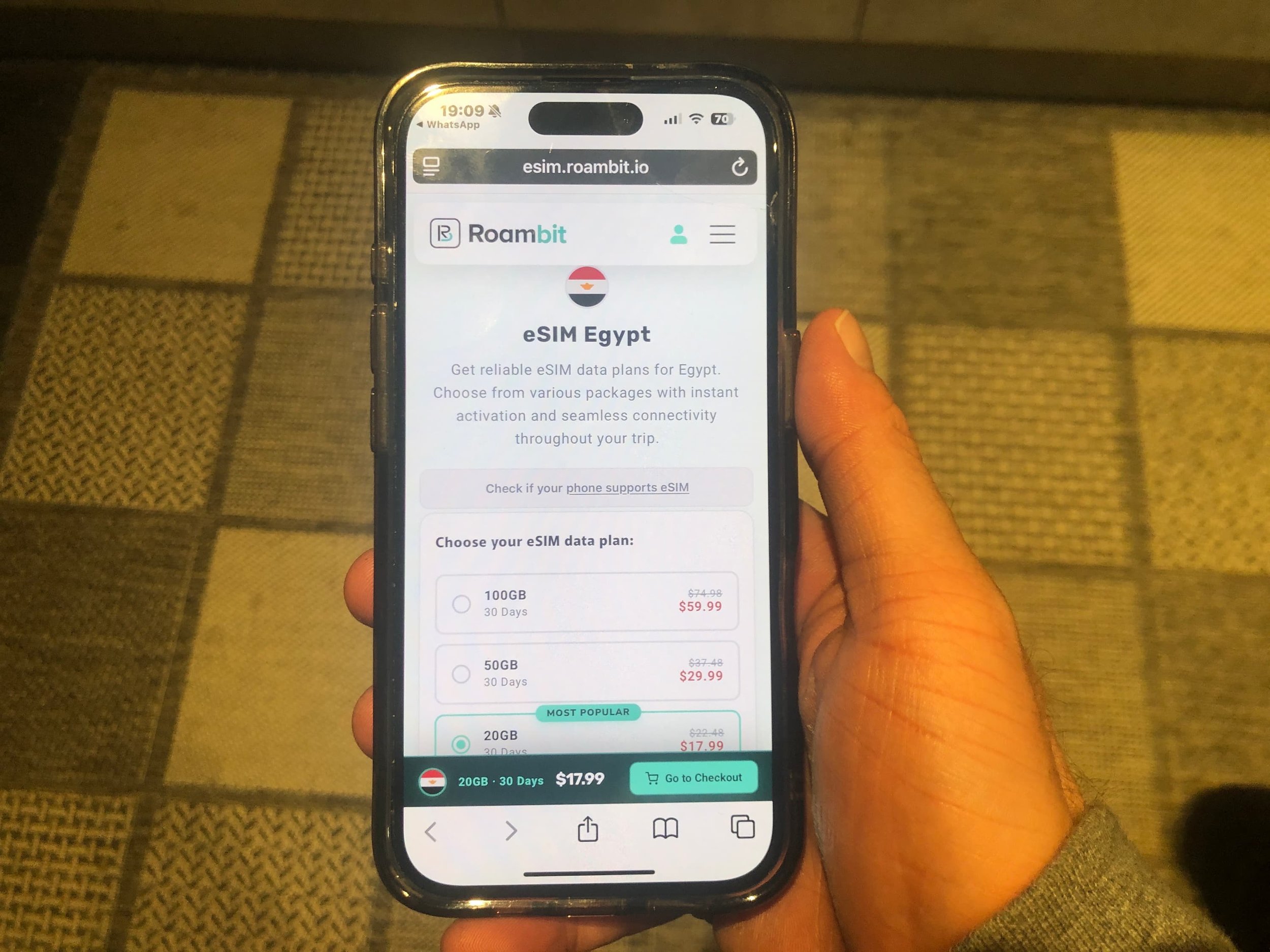
Very easy to set up in advance.
eSIM vs Local SIM Card in Egypt.
When travelling to Egypt, you’ve generally got three options for staying connected, buying a local SIM card at the airport, using an eSIM set up before you arrive, or relying on your home network’s roaming.
A local SIM can work well, and it’s often slightly cheaper. But it usually means queueing at the airport, showing ID, swapping out your SIM card, and setting everything up after a long flight.
Roaming with your home network is the easiest option on paper, but it’s usually the most expensive. Charges can add up quickly, especially if you’re using maps, booking transport, or staying connected throughout the day.
With an eSIM, everything is done in advance.
By the time I landed in Cairo, I already had data on my phone. There was no need to find a shop, no waiting around, and no changing SIM cards, I could just get moving straight away.
It was one less battle I had to face in Cairo airport .
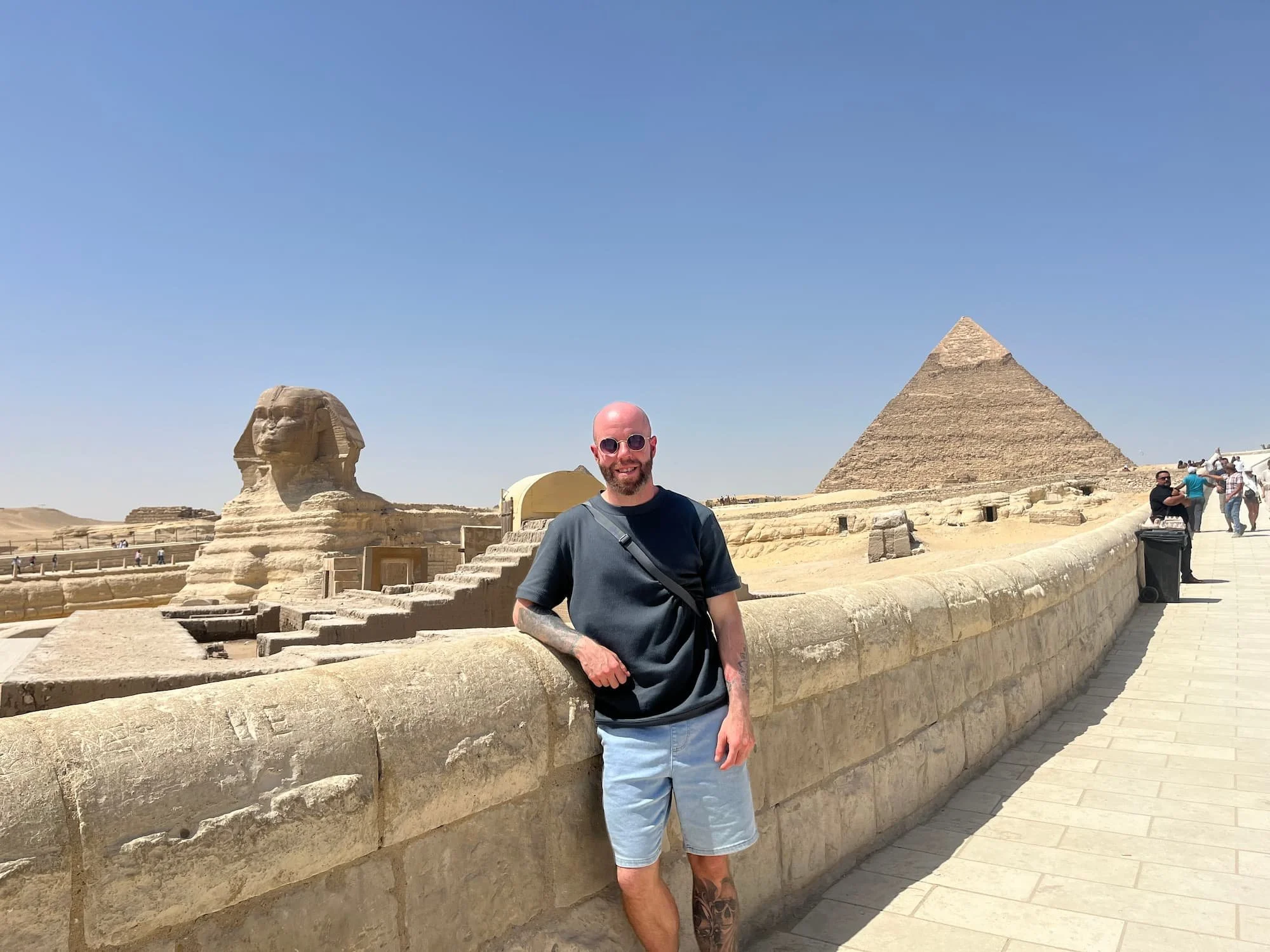
My favourite spot in Egypt.
Some key features of using Roambit eSIM.
After comparing the different options, what stood out to me with Roambit was how simple and reliable everything felt from start to finish. There’s no need to swap SIM cards, visit airport kiosks, or figure things out after landing, everything is set up digitally before your trip.
✅ Key features:
Instant delivery by email.
Your eSIM arrives within seconds, ready to install before you travel.Quick QR code activation.
Setup takes just a couple of minutes with a simple scan.Works alongside your existing SIM.
Keep your UK number active while using data abroad.Coverage in 190+ destinations.
Useful if you’re travelling beyond Egypt as well.Reliable local network in Egypt.
Consistent connection across major cities and travel routes.Transparent pricing.
No hidden fees or unexpected charges.
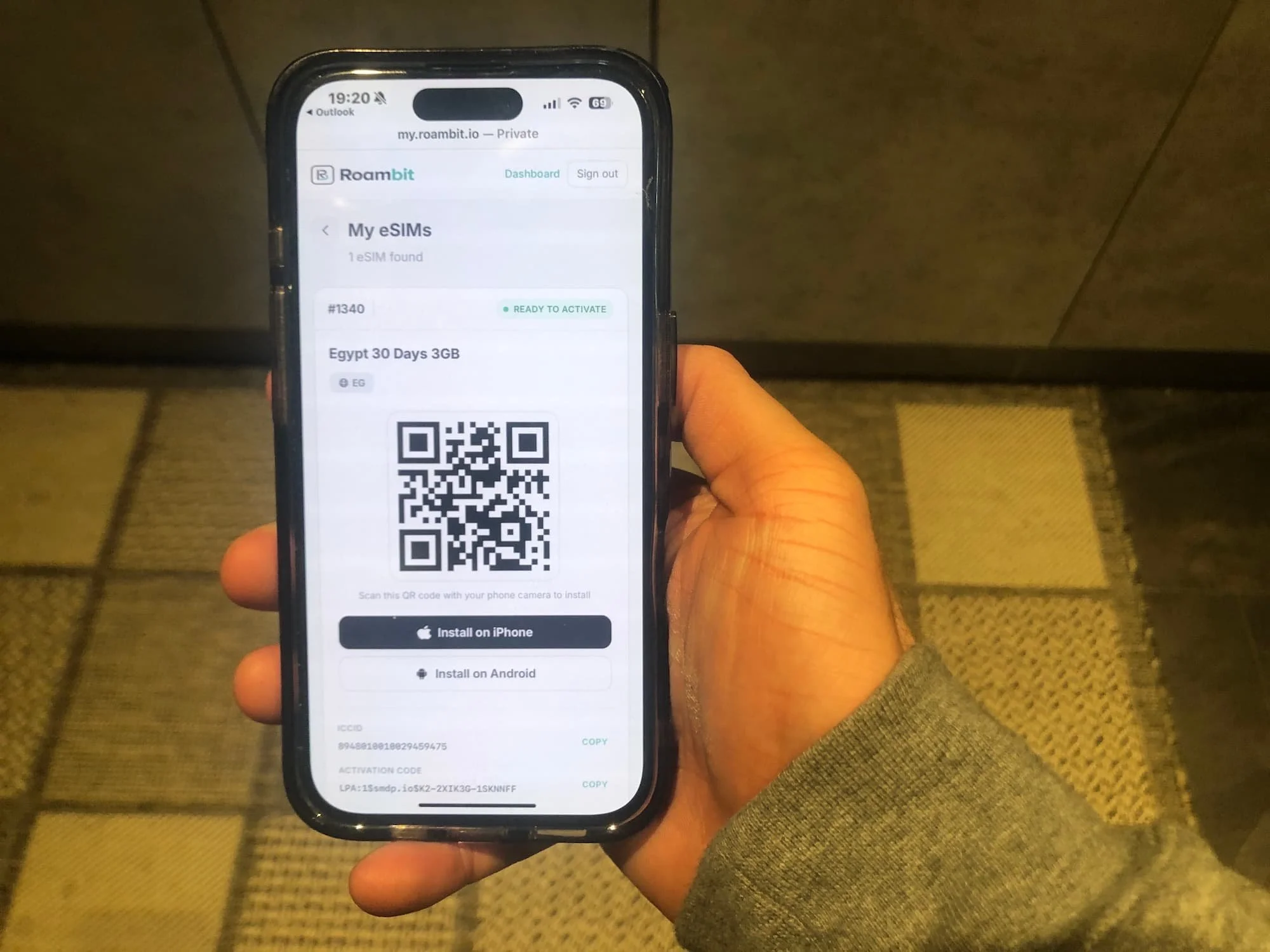
Activating before heading to Egypt again on a shorter trip.
FAQs about using an eSIM in Egypt.
Before you decide whether a Roambit eSIM is right for your trip, here are some of the most common questions about using an eSIM in Egypt — based on my experience travelling across the country:
Does an eSIM work well in Egypt?
Yes — eSIMs work reliably across Egypt, especially in major destinations like Cairo, Luxor and Aswan. From my experience, I had consistent coverage for maps, transport apps and bookings throughout the trip.
Is Roambit eSIM good for Egypt?
From my experience, the Roambit eSIM worked consistently across multiple locations in Egypt — including cities, historical sites and even more remote areas. Setup was quick, and I stayed connected throughout the trip without needing a local SIM card.
Can I use an eSIM at the Pyramids of Giza and other tourist sites?
Yes, mobile data works well at major tourist sites like the Pyramids, Karnak Temple and the Valley of the Kings. I was able to access maps, tickets and guides without any issues.
Is an eSIM better than buying a SIM card in Egypt?
For most travellers, yes. An eSIM lets you set everything up before you arrive, so you can avoid queues at Cairo airport and get connected instantly. It’s also easier than swapping physical SIM cards during your trip.
Will an eSIM work in remote areas of Egypt?
In most cases, yes. I had a strong signal in places like Aswan and while travelling between destinations, including on the overnight train. Coverage may vary slightly in very remote areas, but it was reliable for everyday use.
Do I need mobile data in Egypt, or is WiFi enough?
WiFi alone isn’t reliable enough in Egypt, especially when you’re moving between locations. Mobile data is essential for navigation, bookings, translation and transport, making an eSIM a much more practical option.
Disclosure: I sometimes use affiliate marketing. This will not cost you anything, but helps with my travel costs. I only recommend companies I use myself.