
Is Casa Batlló worth visiting in Barcelona? My immersive experience.
As I reached ground level on the escalator from the metro station, it caught my attention immediately.
Among the elegant buildings lining Passeig de Gràcia, Casa Batlló somehow manages to stand out from everything around it. Its colourful façade, unusual balconies and dragon-like roofline make it impossible to ignore, even on one of Barcelona's busiest streets.
If you're visiting Barcelona for the first time and wondering which Gaudí attraction is truly worth your time, Casa Batlló should be high on your list.
Widely regarded as one of Antoni Gaudí's greatest masterpieces, it has become one of the city's most iconic landmarks and was even named Europe's Best Immersive Experience after completely reinventing its visitor experience.
I expected beautiful architecture. What surprised me was how immersive the experience felt.
From walking through the stunning Noble Floor and gazing out of the famous stained-glass windows to stepping inside the futuristic Gaudí Cube, Casa Batlló feels less like a traditional museum and more like entering the mind of Gaudí himself.
In this guide, I'll share what it's really like to visit Casa Batlló, my favourite parts of the experience, and whether this Barcelona icon deserves a place on your itinerary.
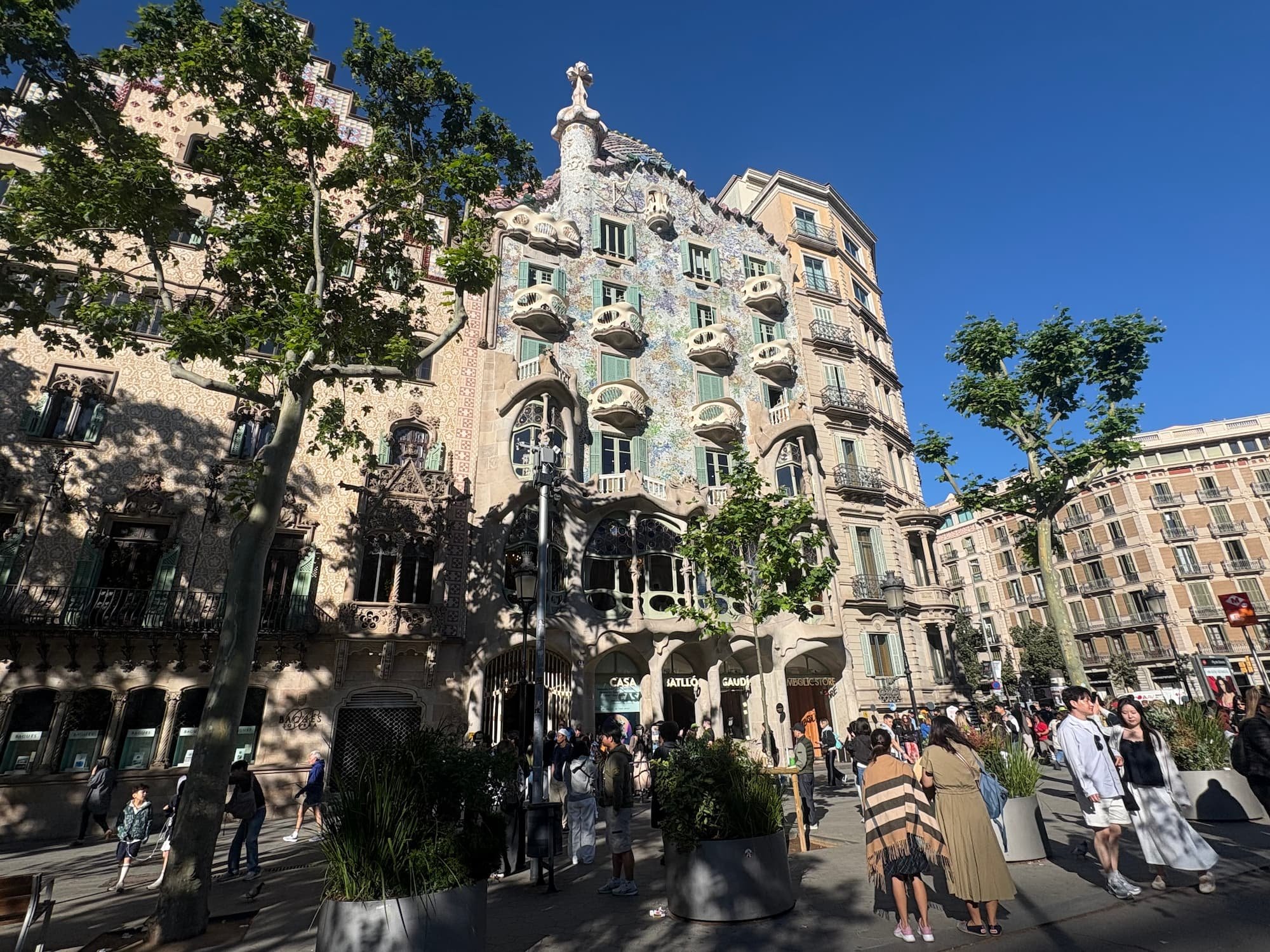
The iconic façade of Casa Batlló is one of the most recognisable sights in Barcelona and draws crowds throughout the day.
Disclosure: I sometimes use affiliate marketing. This will not cost you anything, but helps with my travel costs. I only recommend companies I use myself.
Quick Answer: Is Casa Batlló worth visiting?
Yes, absolutely.
If you're visiting Barcelona for the first time, Casa Batlló is one of the city's true must-see attractions.
While the colourful façade is impressive from the street, I found the real magic happens inside, where Antoni Gaudí transformed an ordinary townhouse into one of the most imaginative buildings in Europe.
Stunning architectural spaces, interactive exhibits and modern installations such as the incredible Gaudí Cube help bring Gaudí's creative vision to life, which makes for a very fun experience.
Visit Casa Batlló if:
It's your first time in Barcelona.
You want to experience Gaudí beyond the Sagrada Família.
You enjoy architecture, photography and design.
You are looking for one of Barcelona's most unique attractions.
You want an experience that combines history, art and technology.
My verdict: Casa Batlló isn't just one of the best things to do in Barcelona — it's one of the attractions that defines the city. If you only visit one of Gaudí's houses during your trip, make it this one.
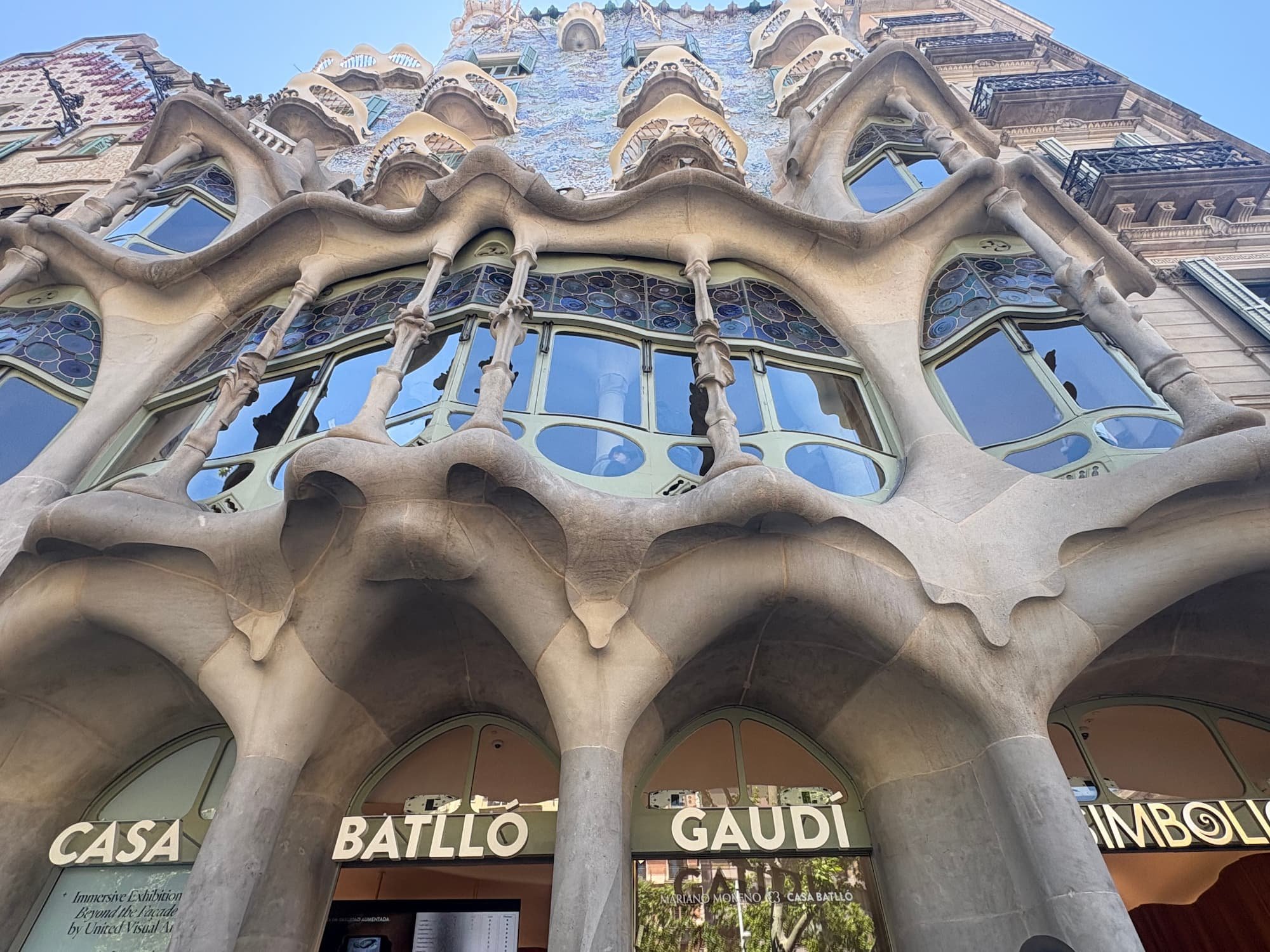
The iconic façade of Casa Batlló is one of the most recognisable sights in Barcelona and draws crowds throughout the day.
What is Casa Batlló?
Casa Batlló is one of Barcelona's most famous landmarks and is widely considered to be one of Antoni Gaudí's greatest architectural masterpieces.
Located on Passeig de Gràcia, the building originally existed as a fairly conventional townhouse before being completely transformed by Gaudí between 1904 and 1906. Rather than demolishing the structure, he reinvented it from top to bottom, creating the extraordinary building that millions of visitors come to see today.
Before visiting Barcelona, I already had a growing appreciation for unusual architecture.
During a trip to Vienna, I visited Hundertwasserhaus, one of the most distinctive buildings in Europe. Its colourful façade, flowing lines and rejection of traditional architectural rules immediately caught my attention.
Looking back, it was probably my first introduction to architecture that felt more like art than engineering.
And it was through this experience I found Gaudi.
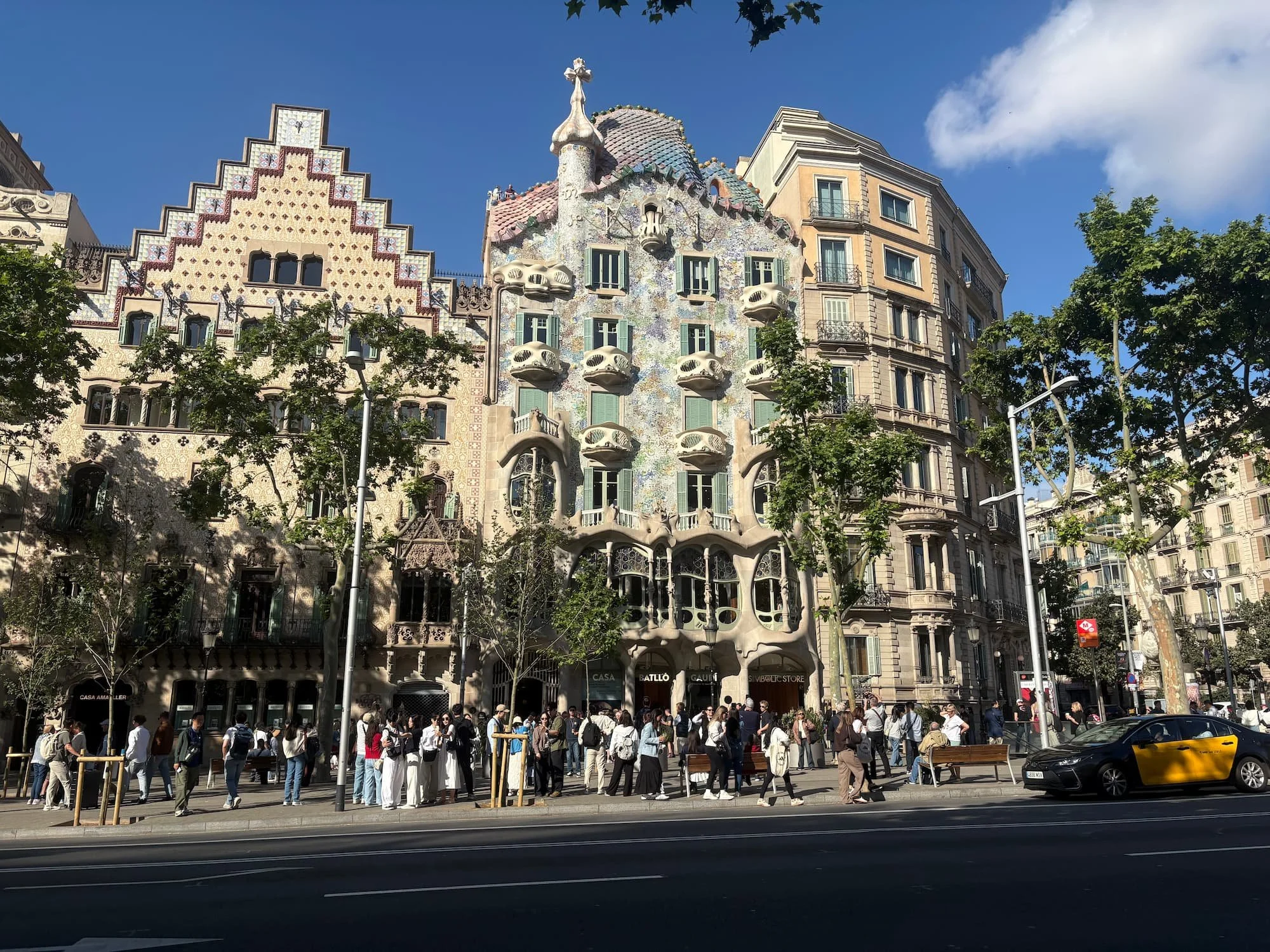
Crowds regularly gather outside Casa Batlló on Passeig de Gràcia to admire one of Barcelona's most iconic façades.
That's why I was particularly excited to visit Casa Batlló.
While the two architects worked in different eras and styles, I could see some similarities in the way they drew inspiration from nature and avoided rigid, straight lines.
Many people consider Casa Batlló to be Gaudí's most complete work because it showcases everything that made him unique as an architect. The creativity, attention to detail and organic forms that later became famous in the Sagrada Família are all on display here.
I learned all of this through the immersive tour I enjoyed, which I will explain soon.
More than a century after its transformation, Casa Batlló remains one of the most remarkable places to visit in Barcelona and offers one of the best introductions to Gaudí's extraordinary imagination.
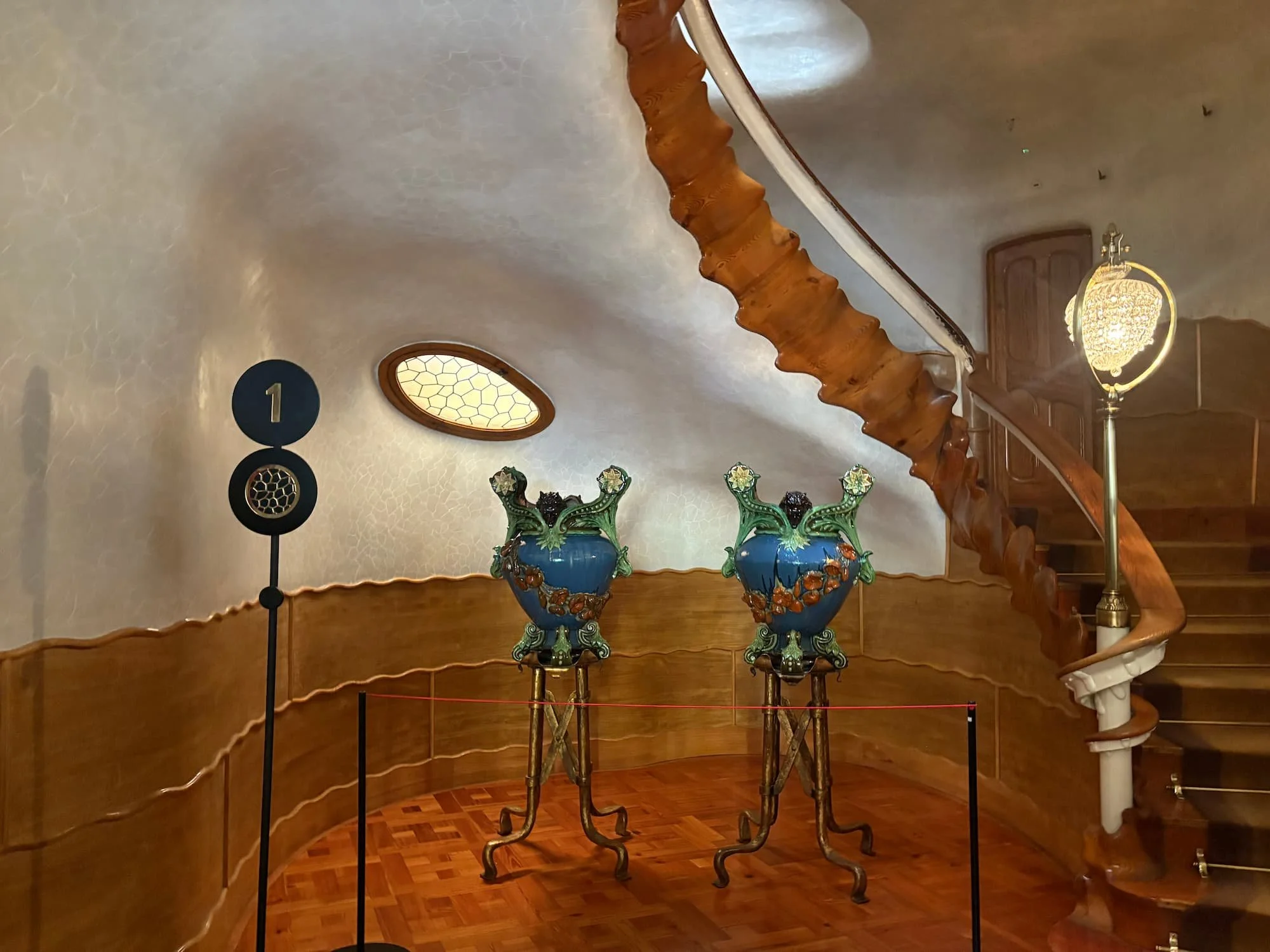
The flowing staircase and curved walls inside the Noble Floor perfectly showcase Gaudí's nature-inspired approach to architecture.
What makes Casa Batlló different?
What stood out to me most wasn't a single room or feature…
It was how often my attention was pulled in different directions.
One minute I was looking at colourful stained-glass windows, the next I was staring at a ceiling that looked like a whirlpool or noticing how even the door frames seemed to flow like waves.
Everywhere I looked, there was another unusual detail, shape or splash of colour that I hadn't noticed before.
Most attractions have one or two standout moments. Casa Batlló felt like a constant stream of them.
It's quirky, creative and unlike anywhere else I've visited.
Even after nearly two hours inside, I was still spotting small details that made me stop and take a second look. That's what makes Casa Batlló such a memorable experience.
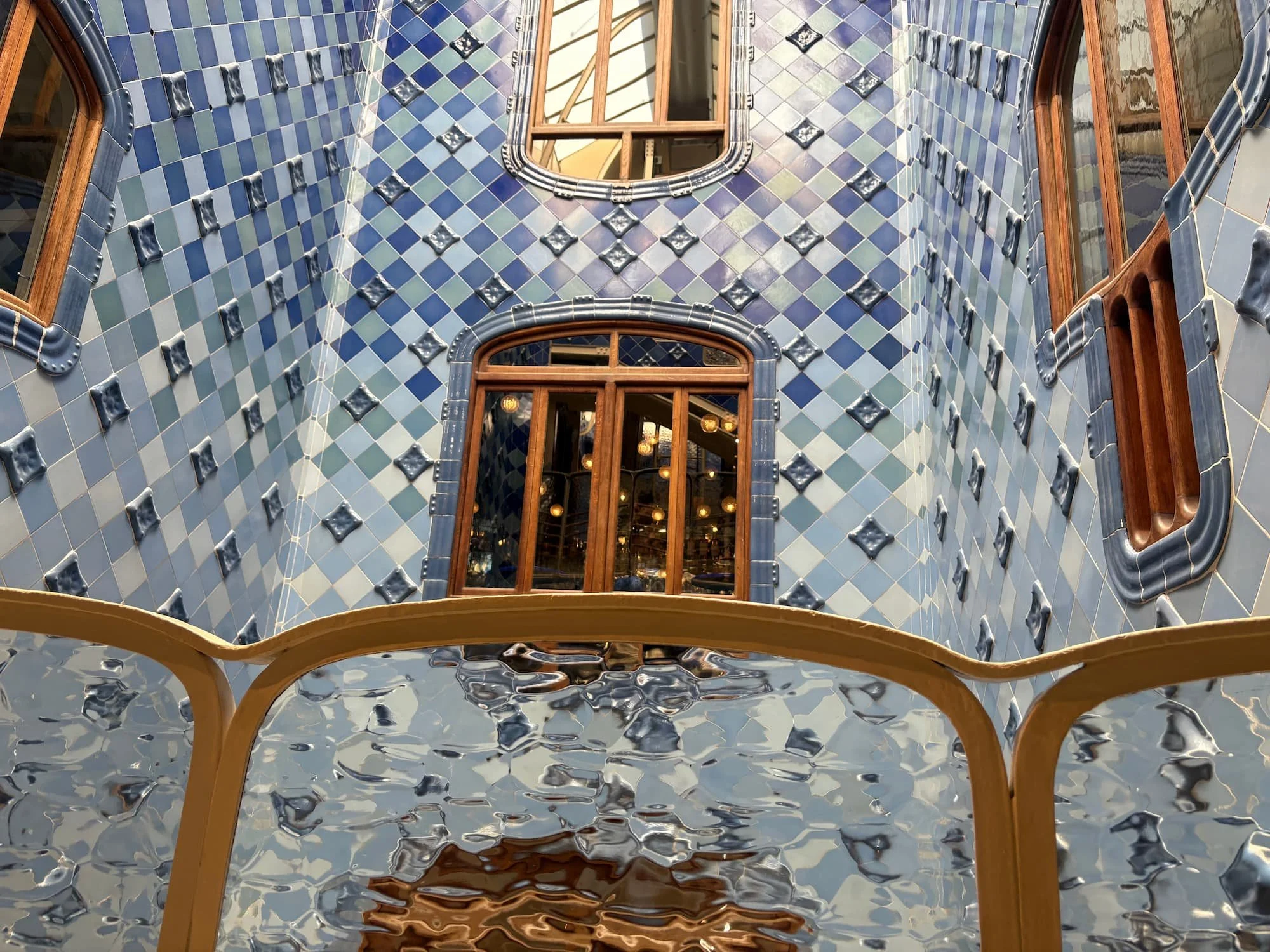
The famous light well uses gradually changing shades of blue tile to distribute natural light evenly throughout Casa Batlló.
An immersive experience to remember.
One of the things that surprised me most about Casa Batlló was how interactive the experience felt.
Your ticket includes an immersive tablet and audio guide, which adds a completely different layer to the visit.
Rather than simply walking through the rooms and admiring the architecture, the tablet helps bring Gaudí's ideas to life.
By pointing it at different parts of the house, I could see animations, hidden details and visual reconstructions that explained the inspiration behind many of his designs.
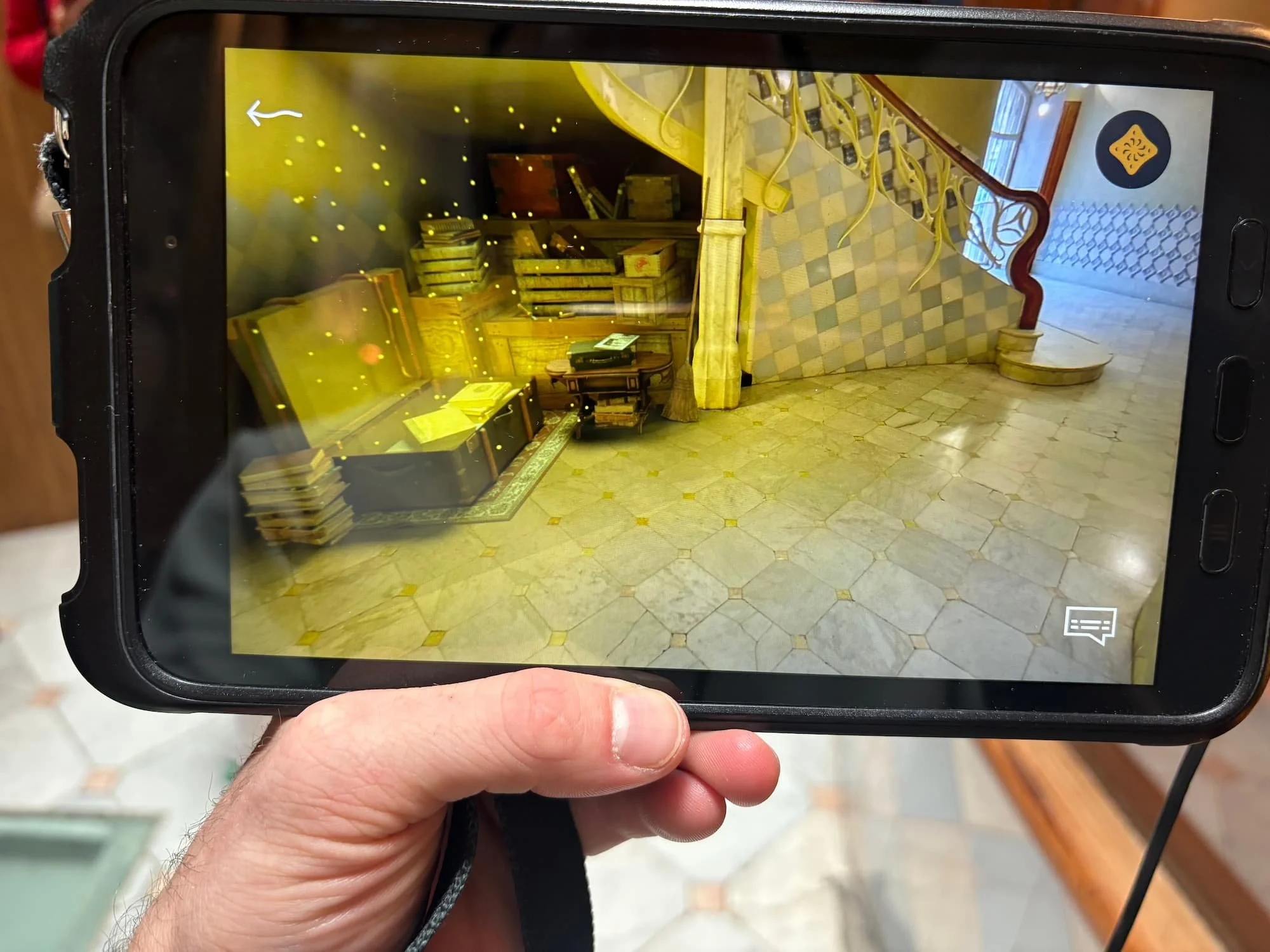
The immersive tablet experience helps bring Casa Batlló to life by revealing hidden details and visual reconstructions throughout the house.
In other places, I have rushed through museums or audio guides. I remember at ‘Hanoi Hilton’, or the ‘Berlin Bunker Museum’. It felt like I didn’t absorb all the info.
But this one was different.
I found myself using it throughout the visit because it genuinely improved the experience, and It helped me understand what parts of the house were used by the family.
Combined with the architecture itself, the immersive technology helps explain why Casa Batlló was named Europe's Best Immersive Experience.
It doesn't replace Gaudí's work, but it goes a long way to helping you appreciate it on a much deeper level.
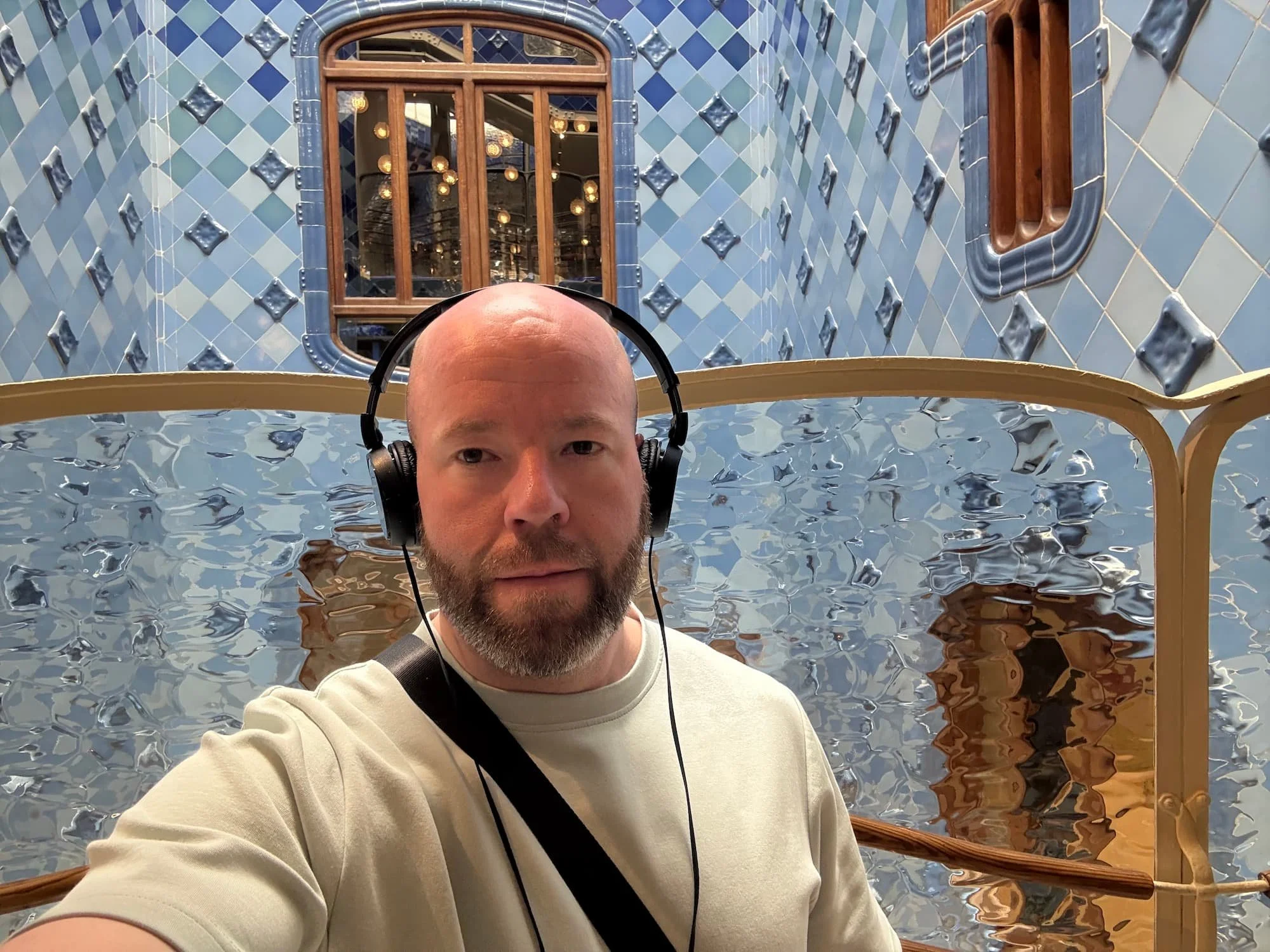
The immersive audio guide helps visitors understand the inspiration and symbolism behind Gaudí's unique designs throughout Casa Batlló.
My favourite parts of Casa Batlló.
One of the things I enjoyed most about Casa Batlló was how every part of the house felt completely different from the last…
Rather than following a typical museum layout, the experience flows naturally between colourful rooms, open courtyards, immersive spaces and rooftop viewpoints, with each area revealing a different side of Gaudí's imagination.
These were the parts of Casa Batlló that stood out to me the most during my visit:
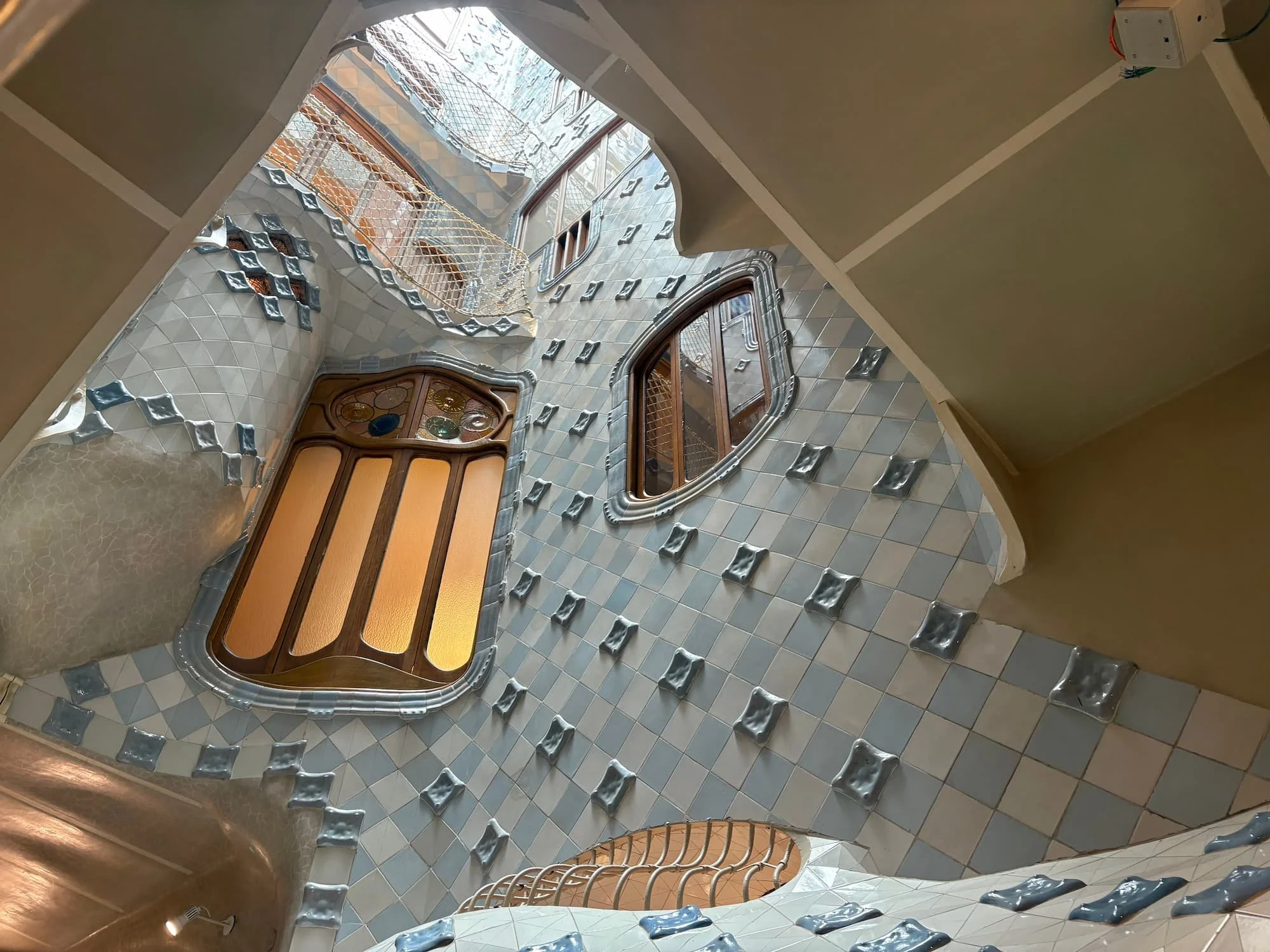
Looking up through the light well reveals Gaudí's flowing architecture and clever use of blue tiles to maximise natural light throughout the house.
The Façade.
Even before I entered Casa Batlló, I spent a few minutes standing across the street watching people stop and stare at the façade.
In a city full of impressive architecture, Casa Batlló still managed to grab my attention immediately.
Its colourful mosaics, curved balconies and unusual shapes make it look completely different from the surrounding buildings.
Many people compare the roof to the back of a dragon, while others see masks, skulls or bones in the balconies. That's part of what makes it so fascinating…
Everyone seems to notice something different.
More than 100 years after Gaudí redesigned the building, the façade remains one of Barcelona's most photographed landmarks. Whether you're interested in architecture or not, it's almost impossible to walk past without stopping for a closer look.
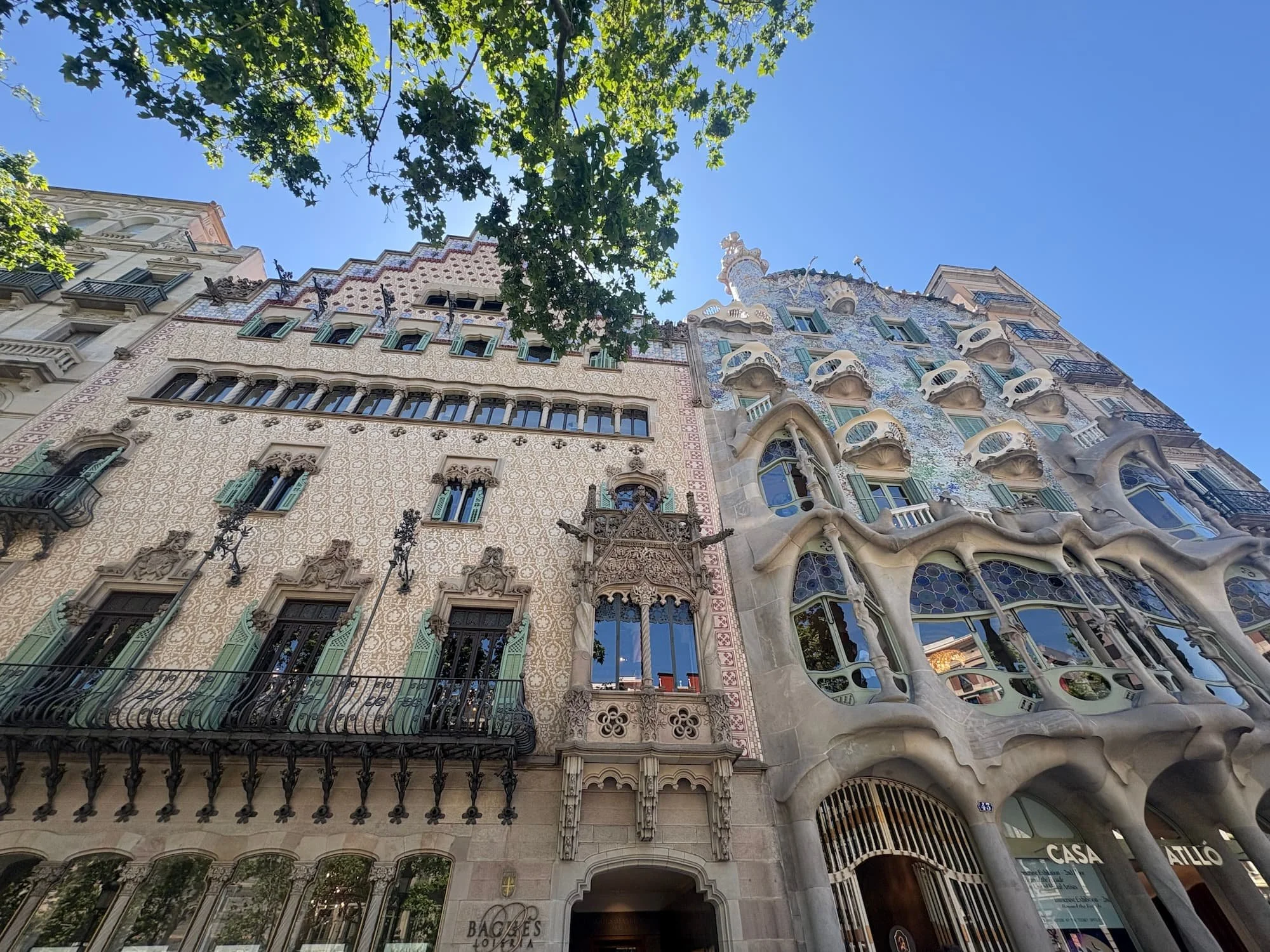
Casa Batlló stands out instantly on Passeig de Gràcia thanks to Gaudí's flowing façade and colourful, nature-inspired design.
The Noble Floor.
The Noble Floor was probably my favourite room inside Casa Batlló.
Standing beside the famous stained-glass bay window overlooking Passeig de Gràcia, I found myself watching the crowds outside, thinking back to an hour earlier when I was in that very crowd admiring the building.
What makes the Noble Floor so special is how different it feels from a typical historic home.
The curved wooden frames, flowing walls and colourful glass make it feel as though the room has been shaped by nature rather than built by hand. This was Gaudi’s mission, and all these decades later, it still gives first time visitors that impression.
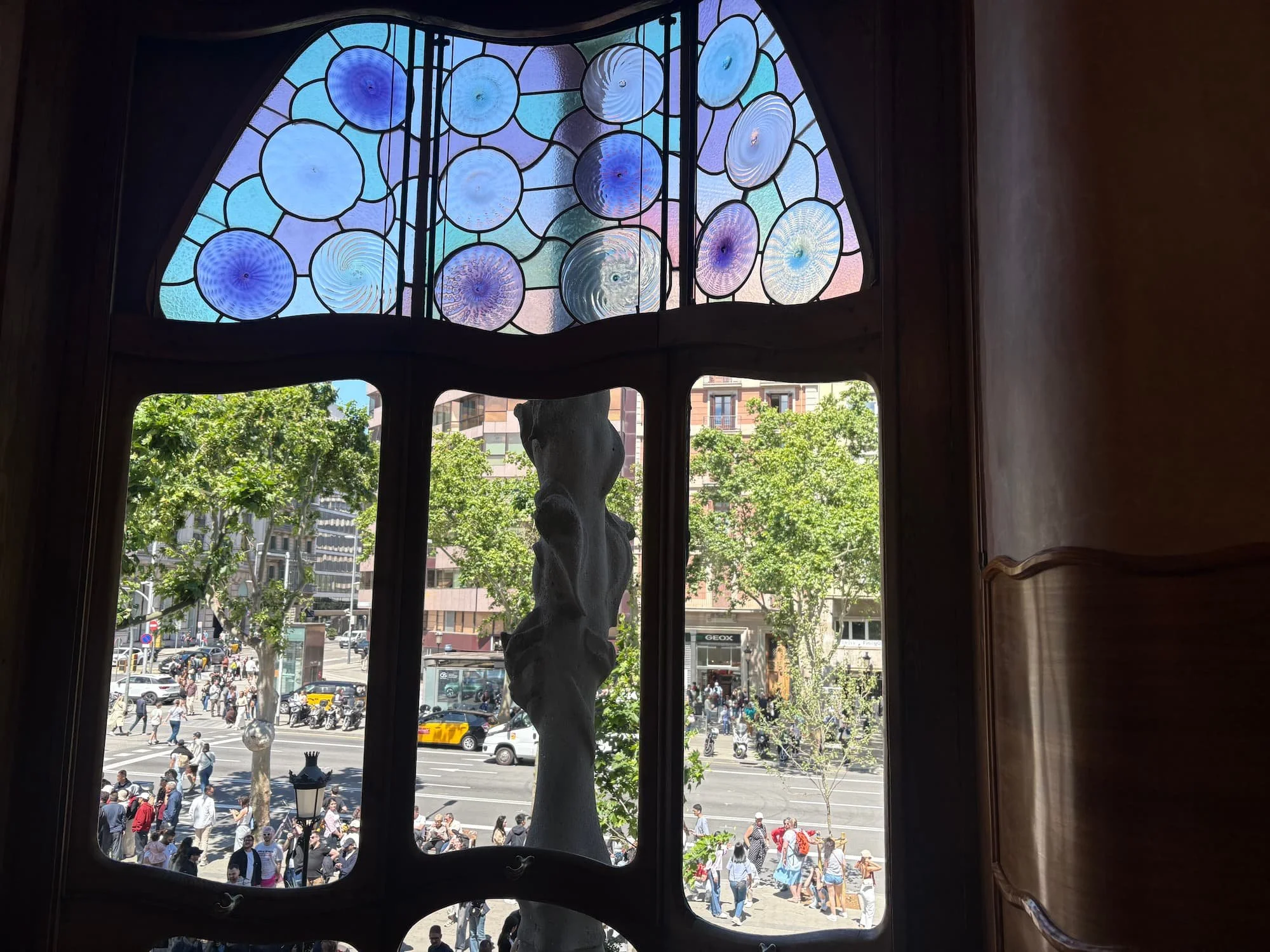
The famous stained-glass windows on the Noble Floor offer a unique view across Passeig de Gràcia and are one of Casa Batlló's most photographed interior features.
It's also where Gaudí's attention to detail is impossible to miss. From the unusual windows to the swirling ceiling above, every corner seems to reveal something new.
This famous room definitely captures the creativity and imagination of Casa Batlló.
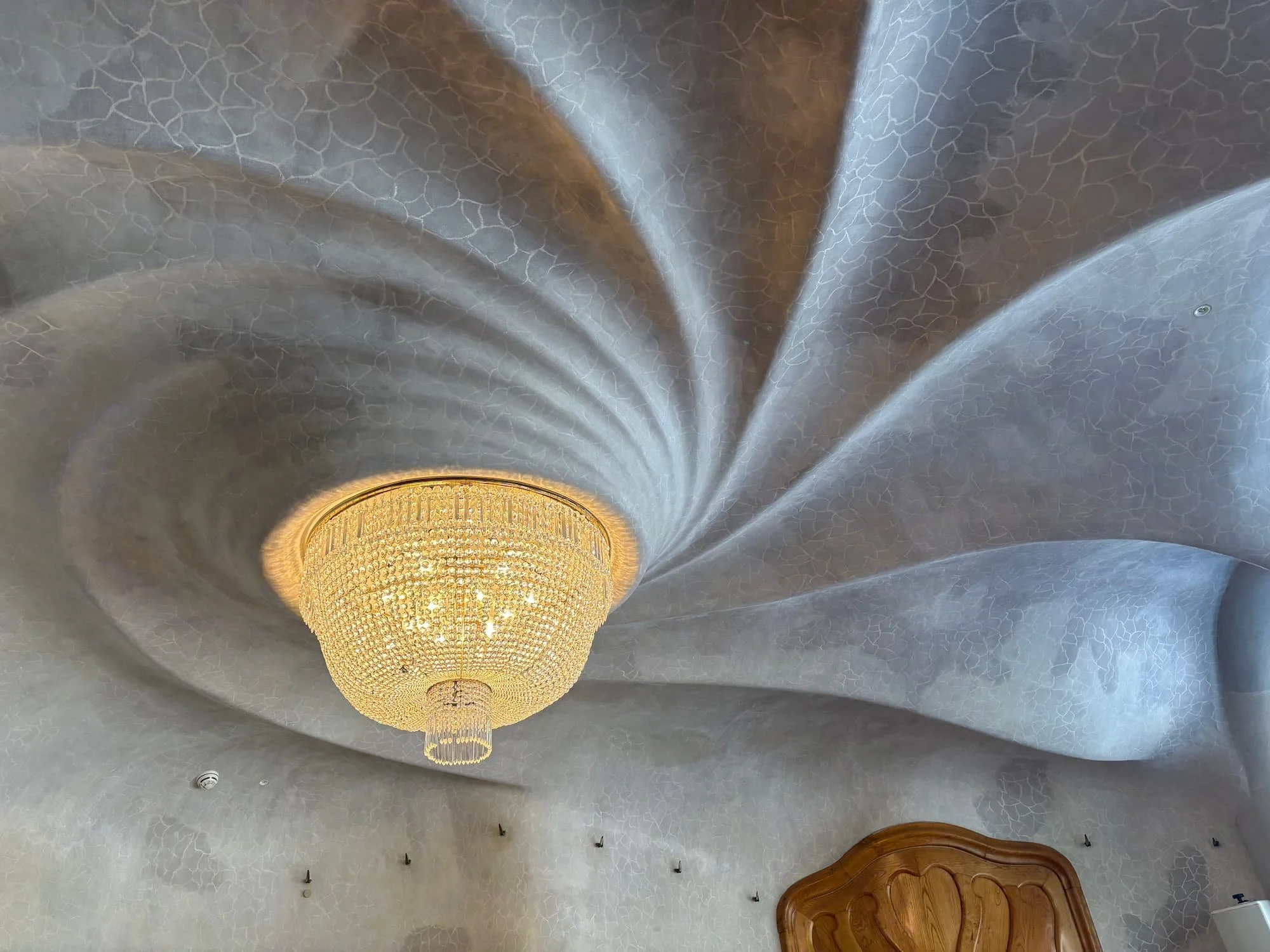
The swirling ceiling on the Noble Floor is one of Casa Batlló's most iconic interior details and reflects Gaudí's fascination with organic forms and movement.
The Light Well / Courtyard.
The Light Well sits at the heart of Casa Batlló and is one of the best examples of how Antoni Gaudí combined beauty with practicality.
Running through the centre of the house, its main purpose was to bring natural light and fresh air into the surrounding rooms. However, rather than creating a simple functional space, Gaudí transformed it into one of the building's most distinctive features.
The first thing you'll notice is the sea of blue tiles covering the walls.
The colours gradually become darker towards the top of the courtyard and lighter towards the bottom, helping distribute light more evenly throughout the house.
It's a clever design, despite being over 100 years old.
The rooftop combines colourful mosaics, unusual shapes and panoramic views to create one of the most memorable parts of the Casa Batlló experience.
Like much of Casa Batlló, the courtyard also reflects Gaudí's fascination with nature.
The shades of blue resemble the Mediterranean Sea, while the curved windows and organic shapes help create a sense of movement throughout the space.
I enjoyed sitting down in the sunshine and admiring the quirks of the courtyard.

Even the rear façade of Casa Batlló feels unique, with wave-like balconies and intricate ironwork continuing Gaudí’s nature-inspired design throughout the entire building.
The Rooftop.
The rooftop was one of my favourite parts of Casa Batlló.
After spending time exploring the house itself, it was nice to head outside and see a completely different side of the building. Blue skies and beautiful sunshine made my beer an enjoyable one as I sat and reflected on everything I had explored downstairs.
This is where you'll find the famous mosaic-covered chimneys that appear in so many photos of Casa Batlló.
Up close, they're even more impressive. The colours, shapes and intricate details show just how much thought Gaudí put into every part of the building, including features that most architects would have treated as purely functional.
The self-guided tour was a great way to learn about these things in real time.
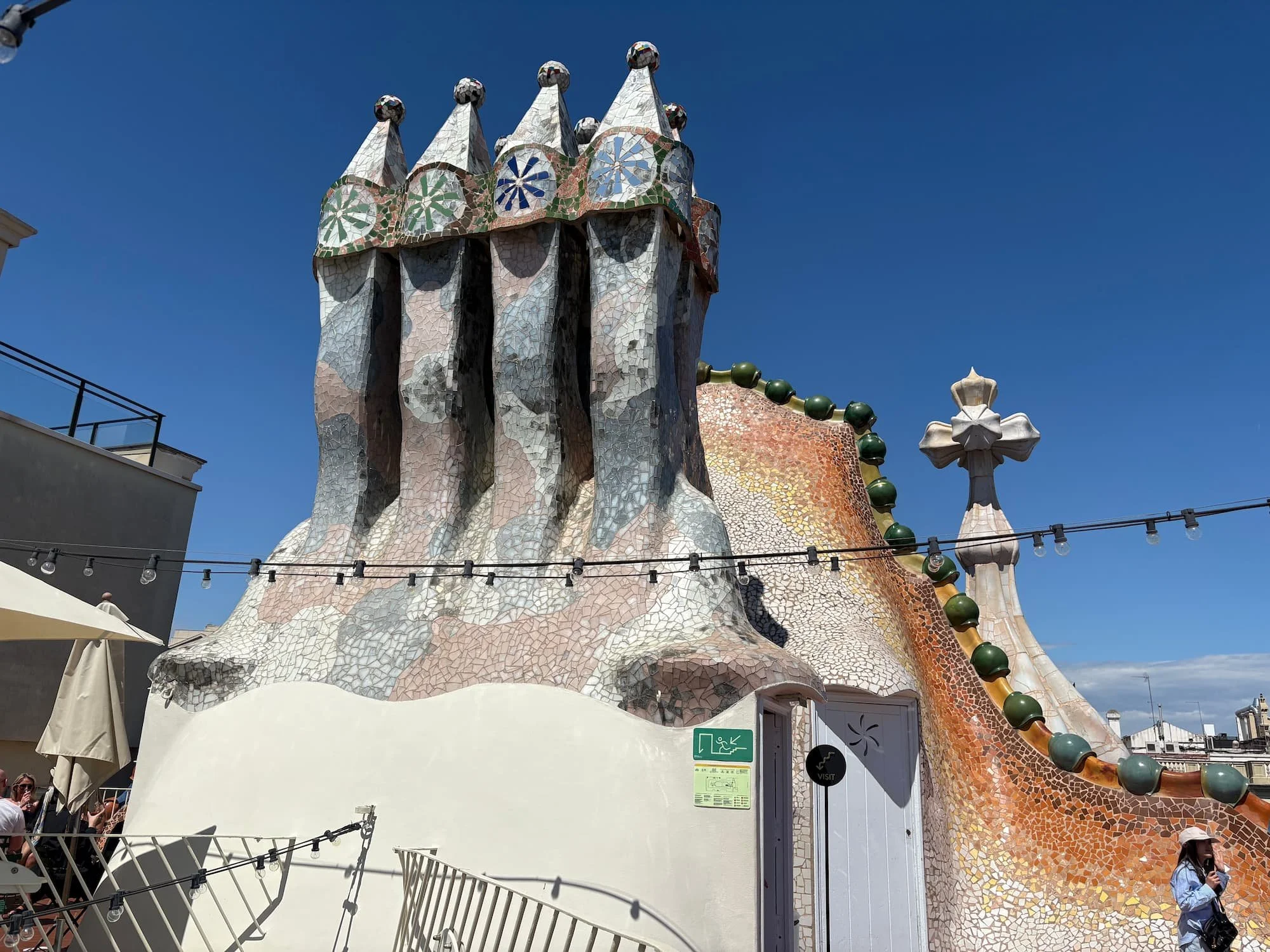
The rooftop of Casa Batlló is one of the building’s highlights, with Gaudí’s famous mosaic chimneys and dragon-inspired roof creating one of the most recognisable views in Barcelona.
The views were another highlight.
Looking out across Barcelona's rooftops, church domes and historic buildings gave me a completely different perspective of the city.
Being able to spot landmarks across the skyline while standing on one of Gaudí's most famous creations was a memorable way to finish my visit.
Many people believe the curved roof represents the back of a dragon, with the colourful scales running along its spine and the cross symbolising Saint George's sword.
Whether you notice the symbolism immediately or not, it's one of those details that makes Casa Batlló completely unique in Barcelona.
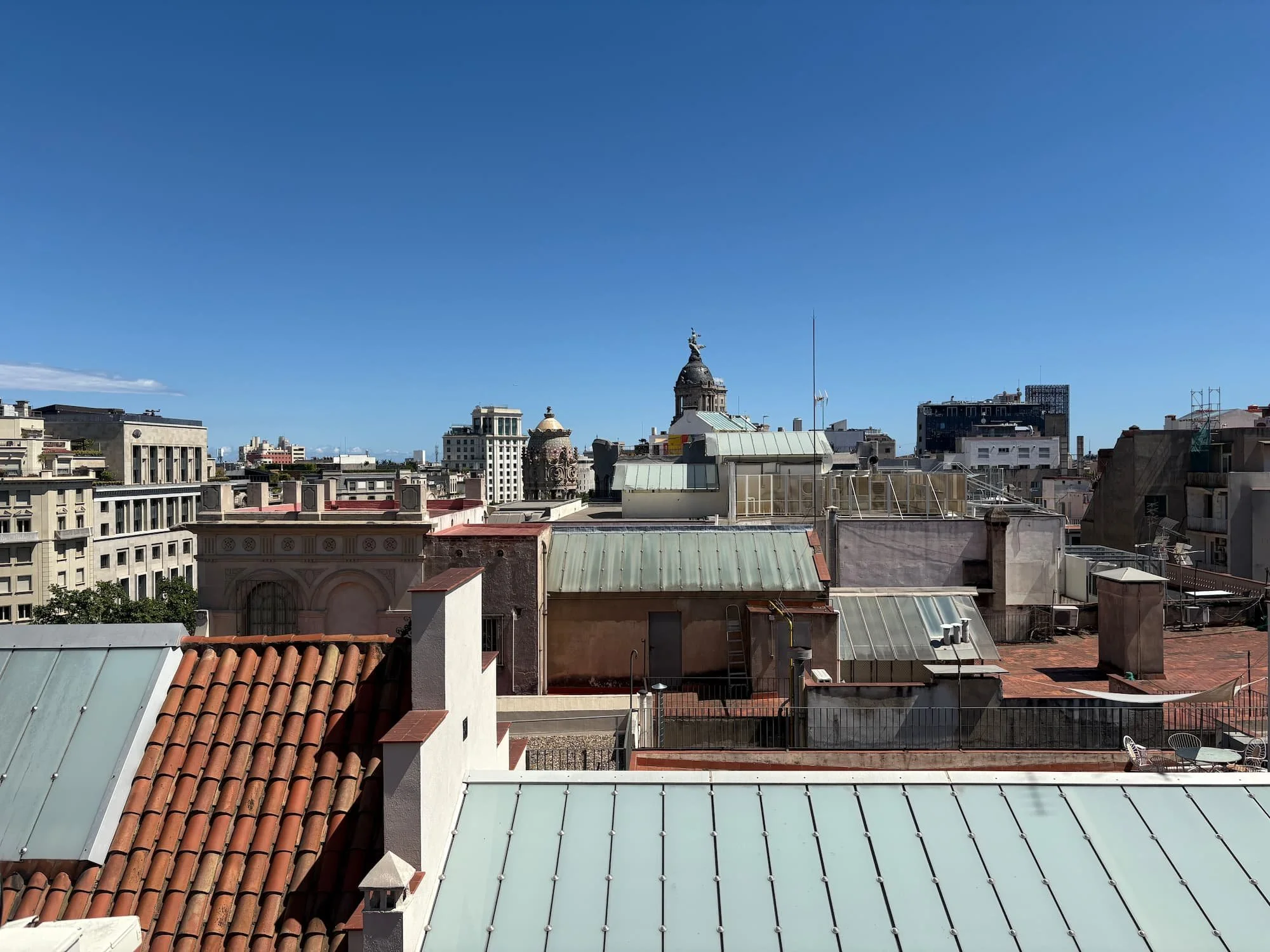
The rooftop terrace at Casa Batlló also offers impressive views across central Barcelona, with rooftops, domes and historic buildings stretching across the skyline.
Gaudi Cube.
The Gaudí Cube was unlike anything I expected to find inside Casa Batlló.
After walking through the historic rooms and admiring Gaudí's architecture, stepping into this immersive digital space felt completely different. Surrounded by moving visuals, colours and sound, it felt like the most modern part of the iconic building.
I liked how different it felt compared to a traditional museum exhibit.
There were no long information boards or complicated explanations. You simply stand in the centre of the room and experience it for yourself.
It's easy to see why Casa Batlló was named Europe's Best Immersive Experience, and for many visitors, the Gaudí Cube will probably be one of the most memorable parts of the entire visit.
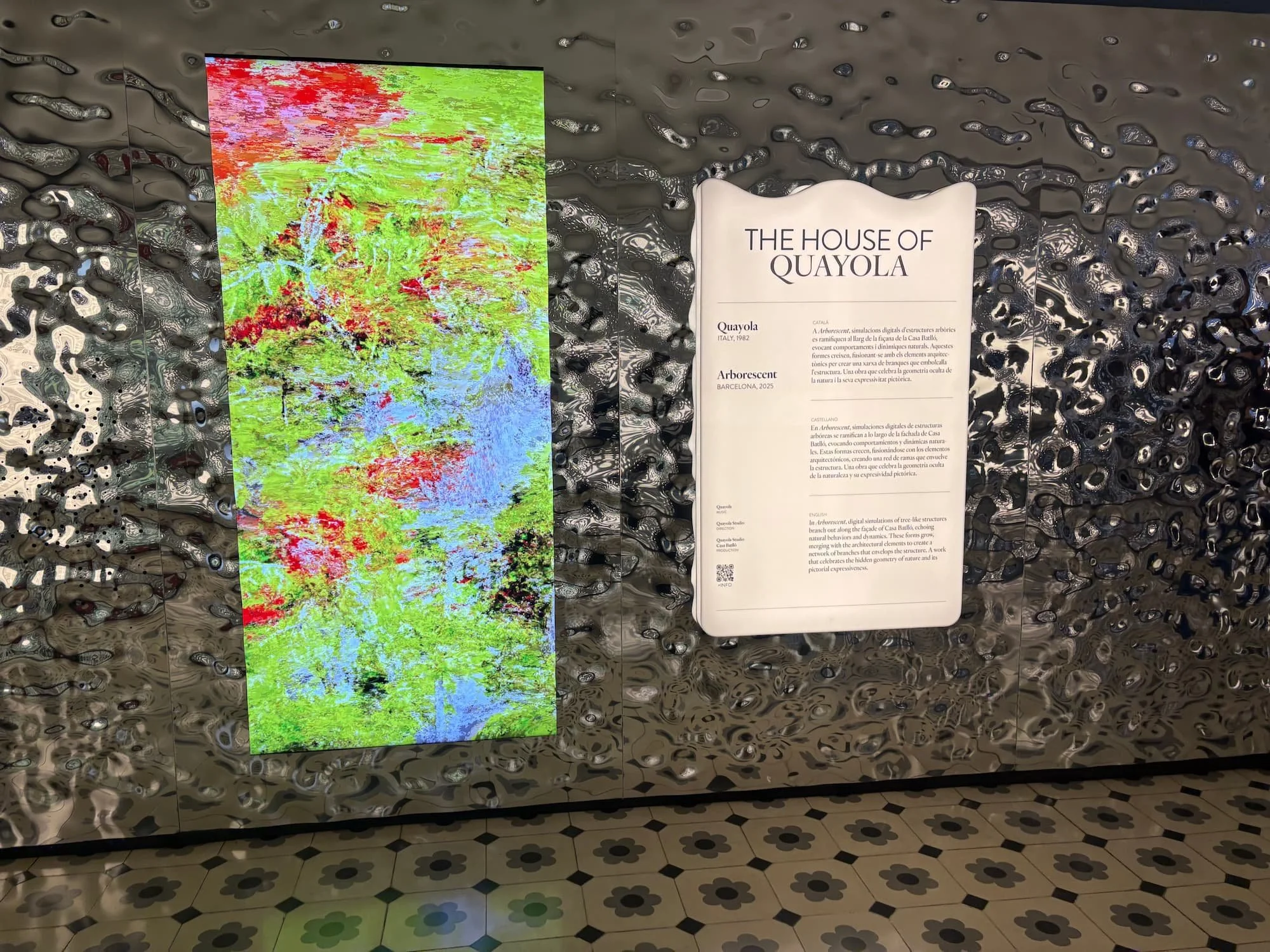
One of the modern immersive exhibition spaces inside Casa Batlló, combining digital art, reflections and interactive visuals to create a completely different side to the Gaudí experience.
Best time to visit Casa Batlló.
If I were visiting Casa Batlló again, I'd aim for one of the earliest entry slots of the day.
Not only will you encounter fewer people, but you'll also have a much better chance of enjoying the Noble Floor, central courtyard and rooftop without feeling rushed or waiting for photos.
I visited on a sunny afternoon and loved seeing the colourful stained-glass windows illuminated by natural light, but some areas were noticeably busier than they would have been first thing in the morning.
If photography is important to you, early morning is definitely the best time to visit.
For the best overall experience, I'd recommend visiting on a weekday outside of peak summer months when possible.
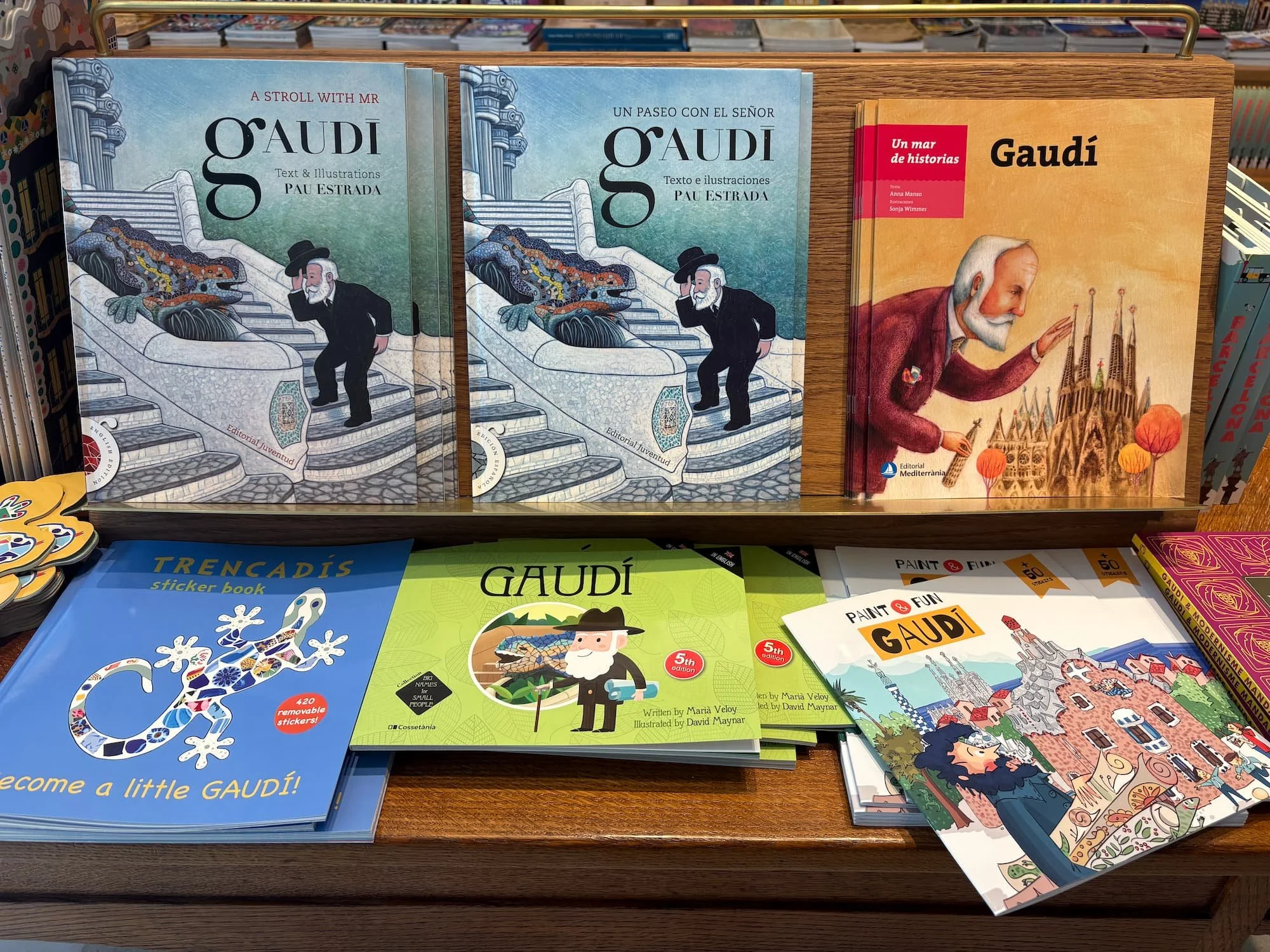
The Casa Batlló gift shop continues the creative theme of the experience, with colourful Gaudí books, artwork and souvenirs inspired by Barcelona’s most famous architect.
How long do you need at Casa Batlló?
Before visiting, I assumed Casa Batlló would be one of those attractions where I'd spend an hour walking around, take a few photos and move on to the next stop in Barcelona.
I was wrong.
Between exploring the different rooms, using the immersive tablet experience and stopping to admire the details throughout the house, and shopping for souvenirs!
I ended up spending close to two hours inside without really noticing the time passing.
In every room, small details caught my attention. This is where the immersive tablet is very beneficial, as it actually points out the very small details.
If you're simply walking through and focusing on the main highlights, you could comfortably visit Casa Batlló in around 75 to 90 minutes.
However, if you're anything like me and enjoy photography, architecture or learning the stories behind what you're seeing, I'd allow around two hours.
I found it to be one of those attractions that's best enjoyed at a slower pace rather than rushing from room to room.
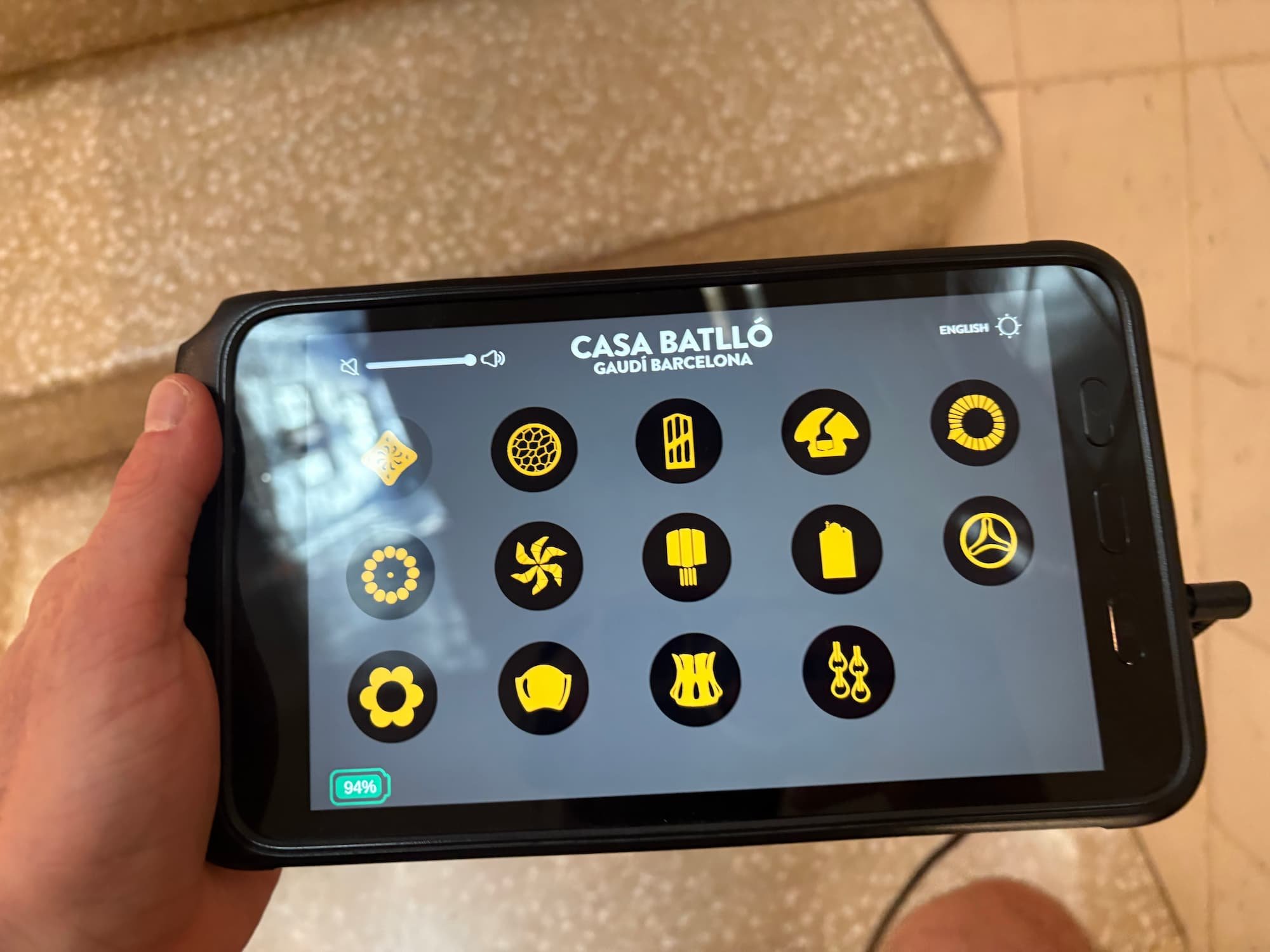
Every visitor receives an immersive tablet guide at Casa Batlló, adding audio, visuals and interactive elements that help bring Gaudí’s designs and hidden details to life throughout the tour.
My tips for visiting Casa Batlló.
Before you book your tickets and head inside, there are a few things I learned during my visit that will help you get even more out of the experience.
Most are simple, but they can make a big difference when it comes to appreciating the details and avoiding common mistakes:
Book your tickets in advance.
Casa Batlló is one of Barcelona's most popular attractions, and it attracts huge numbers of visitors throughout the year.
During my visit there was a steady flow of people entering throughout the day, so I'd strongly recommend booking in advance rather than hoping to buy tickets on arrival.
Don't rush through the rooms.
It's tempting to move quickly through the house, especially when there are other visitors around, but some of the best details are easy to miss.
I found myself stopping regularly to look at stained-glass windows, ceilings and small design features that weren't immediately obvious at first glance.
Make the most of the immersive tablet.
The tablet included with the visit adds much more than basic information.
It helped me understand the inspiration behind many of Gaudí's designs and pointed out details I would have completely missed on my own. It's worth taking your time with it rather than treating it as a standard audio guide.
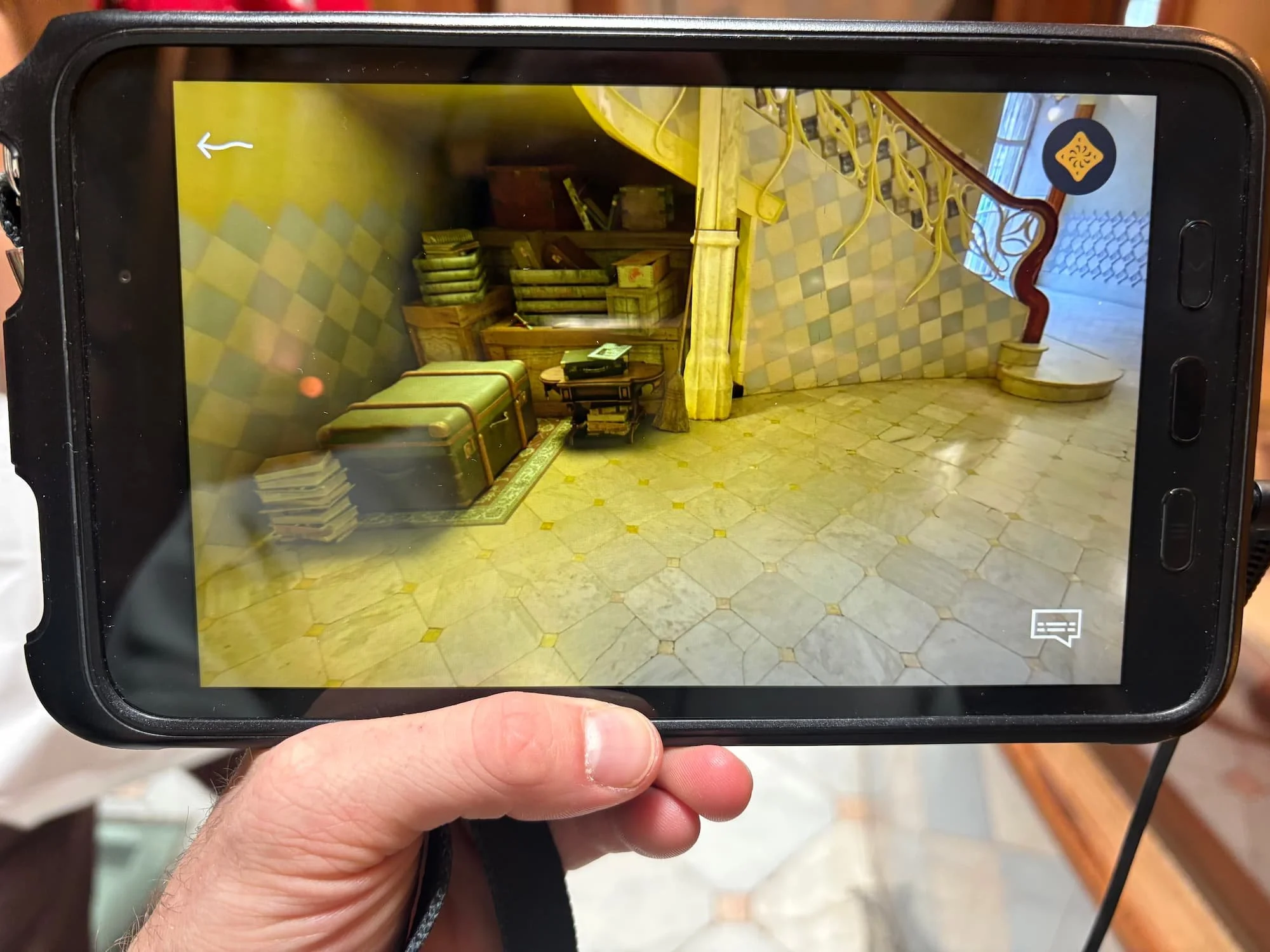
The immersive tablet experience at Casa Batlló adds another layer to the tour, using augmented reality and visual storytelling to show hidden scenes and details throughout Gaudí’s famous house.
Look up.
This sounds simple, but some of my favourite parts of Casa Batlló were above eye level. The swirling ceilings, light fixtures and organic shapes throughout the house are just as impressive as the famous rooms themselves.
Spend some time on the rooftop.
Many visitors take a few photos and move on, but I actually enjoyed slowing down up there, and enjoyed a lovely beer. The views across Barcelona are excellent, and it's a great place to reflect on everything you've seen before leaving.
Visit early if you love photography.
If photography is important to you, try to book one of the earlier entry times. Casa Batlló can become busy later in the day, especially around the Noble Floor and rooftop, making it harder to capture clean photos of some of the building's most beautiful spaces.
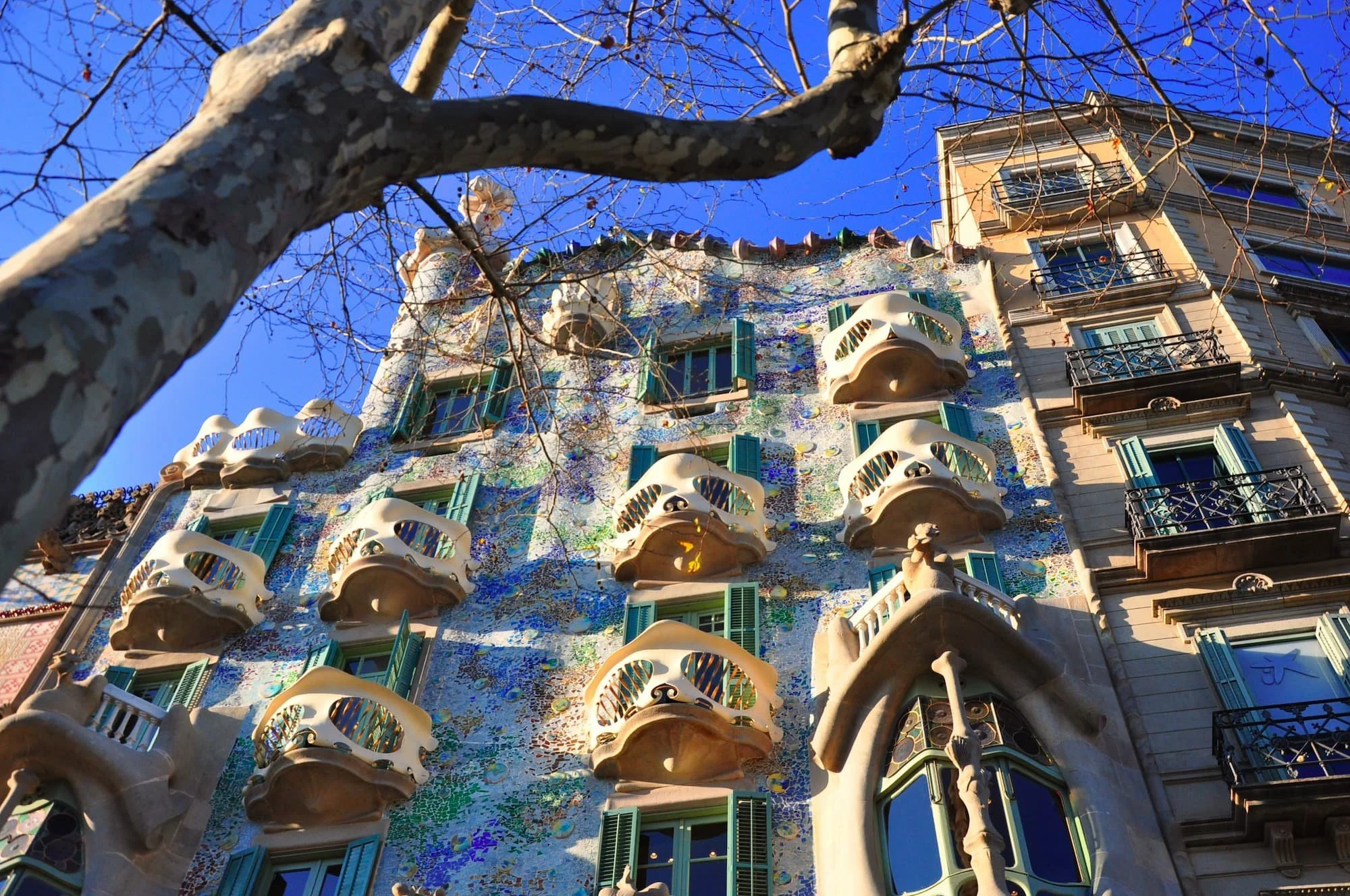
Looking up at Casa Batlló from Passeig de Gràcia gives a completely different perspective of Gaudí’s design, with colourful mosaics, curved balconies and organic shapes covering the entire façade.
Is Casa Batlló worth the price?
Yes, 100%.
At first glance, the ticket price might seem expensive compared to some other attractions in Barcelona. However, after experiencing it for myself, I came away feeling it was money well spent.
What makes Casa Batlló different is that you're not simply paying to walk through a historic building.
You're getting access to one of Gaudí's greatest masterpieces, an award-winning immersive experience, interactive storytelling, stunning architecture and some of the most unique spaces in the city, all under one roof.
I've visited plenty of famous attractions around the world that left me feeling underwhelmed once the novelty wore off. Casa Batlló wasn't one of them. Every room offered something different.
If you're only in Barcelona for a few days and want to prioritise experiences you'll genuinely remember years later, Casa Batlló is exactly the kind of attraction worth spending money on.
It was the highlight of my time in the city.