
Best eSIM for Indonesia (2026): I Tested Ubigi in Jakarta & Bandung.
Months of practice on Duolingo wasn’t quite enough in the busy backstreets of Jakarta…
When I was put on the spot.
Surrounded by locals, no English menus in sight, and a queue forming behind me… It was one of those moments where I had to figure it out quickly
So I did what every traveller does in that situation. Pulled out my phone.
Within seconds, I had the menu translated, reviews loaded, and confirmation we were in exactly the right place.
And just like that, the stress disappeared.
If you’re planning a trip to Indonesia and want to stay connected without dealing with airport SIM cards or expensive roaming charges, this guide is for you.
I’ve landed in too many countries before, tired and jet lagged, only to be hit with that dreaded “No Service” message.
For this trip across Jakarta and Bandung, I used an Ubigi eSIM, installed before I left, activated on arrival, and it worked seamlessly from the moment I landed.
From my personal experiences across the beautiful country, it is the best eSIM for Indonesia.
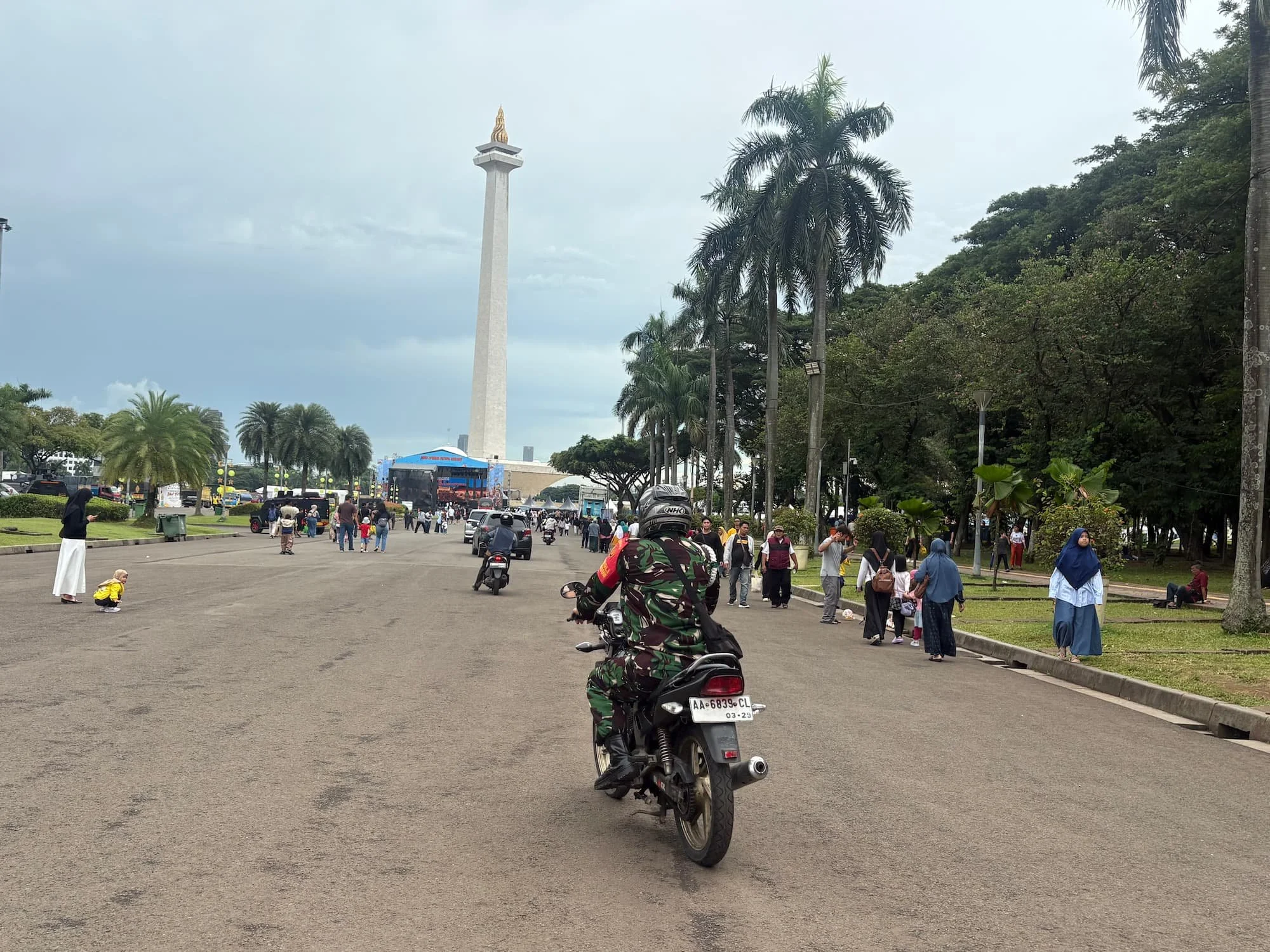
Navigating Jakarta’s busy streets around Monas — having data here made everything easier.
Disclosure: I sometimes use affiliate marketing. This will not cost you anything, but helps with my travel costs. I only recommend companies I use myself.
Note: This post was sponsored by Ubigi, but all thoughts and opinions are my own.
Recommended Ubigi eSIM Plans for Indonesia.
If you’re not sure which plan to choose, these are the best options based on how long you’re travelling:
👉 7–10 Day Trip (Light Use).
Perfect if you’re mainly using maps, Grab, and browsing.
➡️ 3GB – 5GB plan.
👉 10–14 Day Trip (Most Travellers).
Ideal balance for navigation, social media, and daily use.
➡️ 10GB plan (what I used in Jakarta & Bandung).
👉 2–3 Weeks (Heavy Use / Content / Remote Work).
Best if you’re uploading content, hotspotting, or working.
➡️ Unlimited or high-data plan.
👉 Not sure which plan to choose?
For most travellers, the 10GB plan was the perfect balance — it covered maps, Grab, social media, and everything else without worrying about running out.
➡️ View Ubigi Indonesia plans and pricing.
My Experience using Ubigi in Indonesia.
From queuing for famous Japanese restaurants in the middle of Jakarta, one of the busiest and most chaotic cities I’ve ever experienced — to exploring the quiet hills and viewpoints of Bandung, my phone never once felt like a limitation.
In fact, it was the opposite.
Whether I was navigating packed streets, checking directions on the move, or quickly looking something up in the middle of nowhere, the connection was just there when I needed it.
I can’t remember a single moment of our time in Indonesia where I needed signal and didn’t have it.
It just operated in the background, which is exactly what I need when I am travelling somewhere new, and need to keep an eye on my work etc.
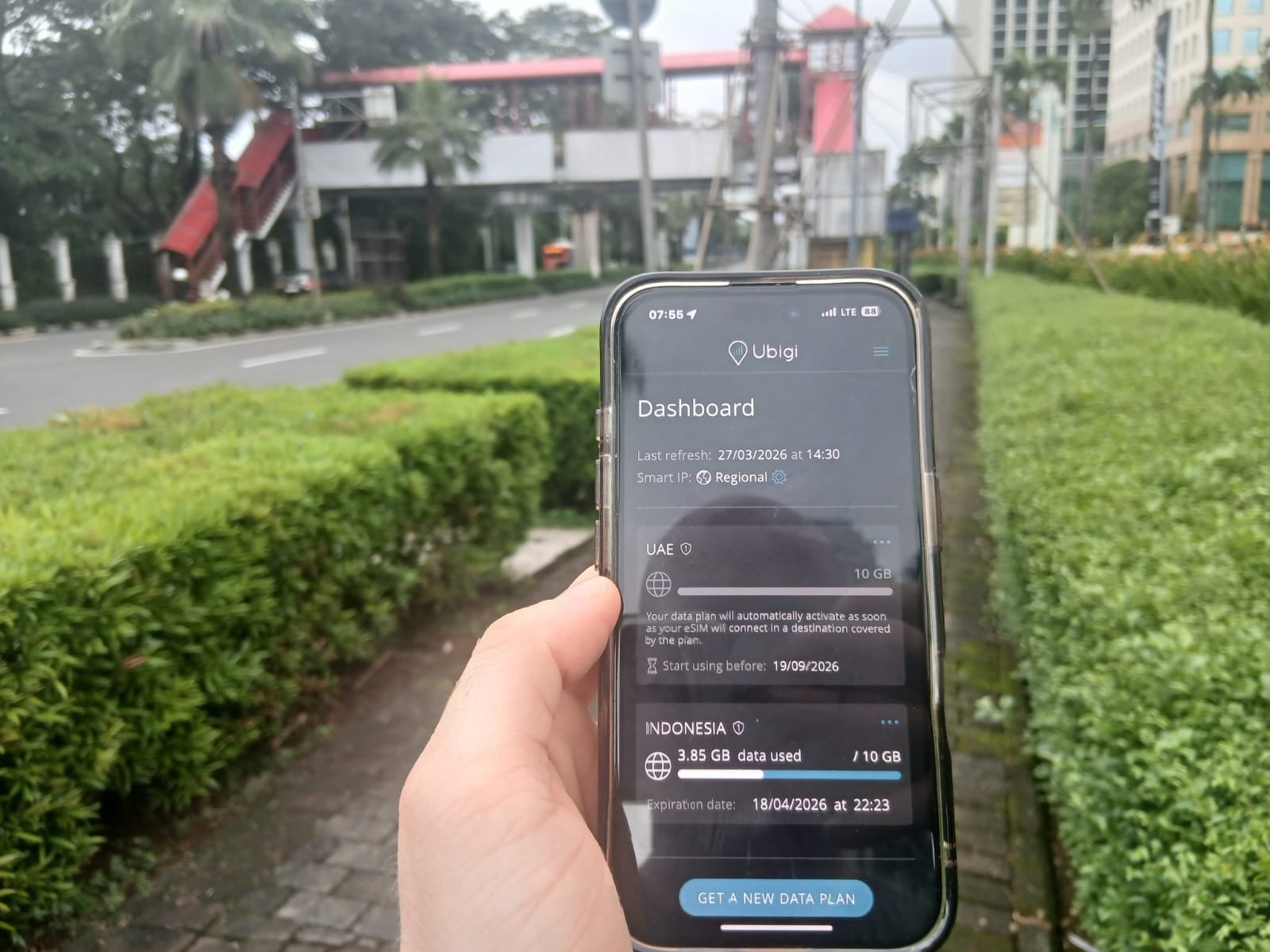
Checking my data usage on the Ubigi app while exploring Jakarta — having constant connection made navigating the city so much easier.
Double-checking whether a road actually led somewhere in Jakarta was very important in the heat, and being able to find some beautiful cafes in Bandung was a very nice touch to our trip.
It meant we avoided wasted time, stayed on track, and ended up discovering places we probably wouldn’t have found otherwise.
Here’s exactly how my Ubigi eSIM helped us out day-to-day 👇
Local vibes in Bandung.
Staying connected at 300km/h on the Whoosh Bullet Train.
One of the highlights of my trip was taking the Whoosh High-Speed Rail between Jakarta and Bandung — Indonesia’s first high-speed train.
Hitting speeds of over 300km/h, I wasn’t expecting to have much signal at all.
For most of the journey, I still had usable data.
I was checking maps for Bandung, messaging, and even looking up places to visit with my local girlfriend when we arrived.
It wasn’t perfect every second, but it was more than enough to stay connected and actually make use of the time instead of just waiting to arrive.
After nearly 27 hours of travelling, time felt pretty valuable, and being able to plan ahead before we even got there made a bigger difference than I expected.
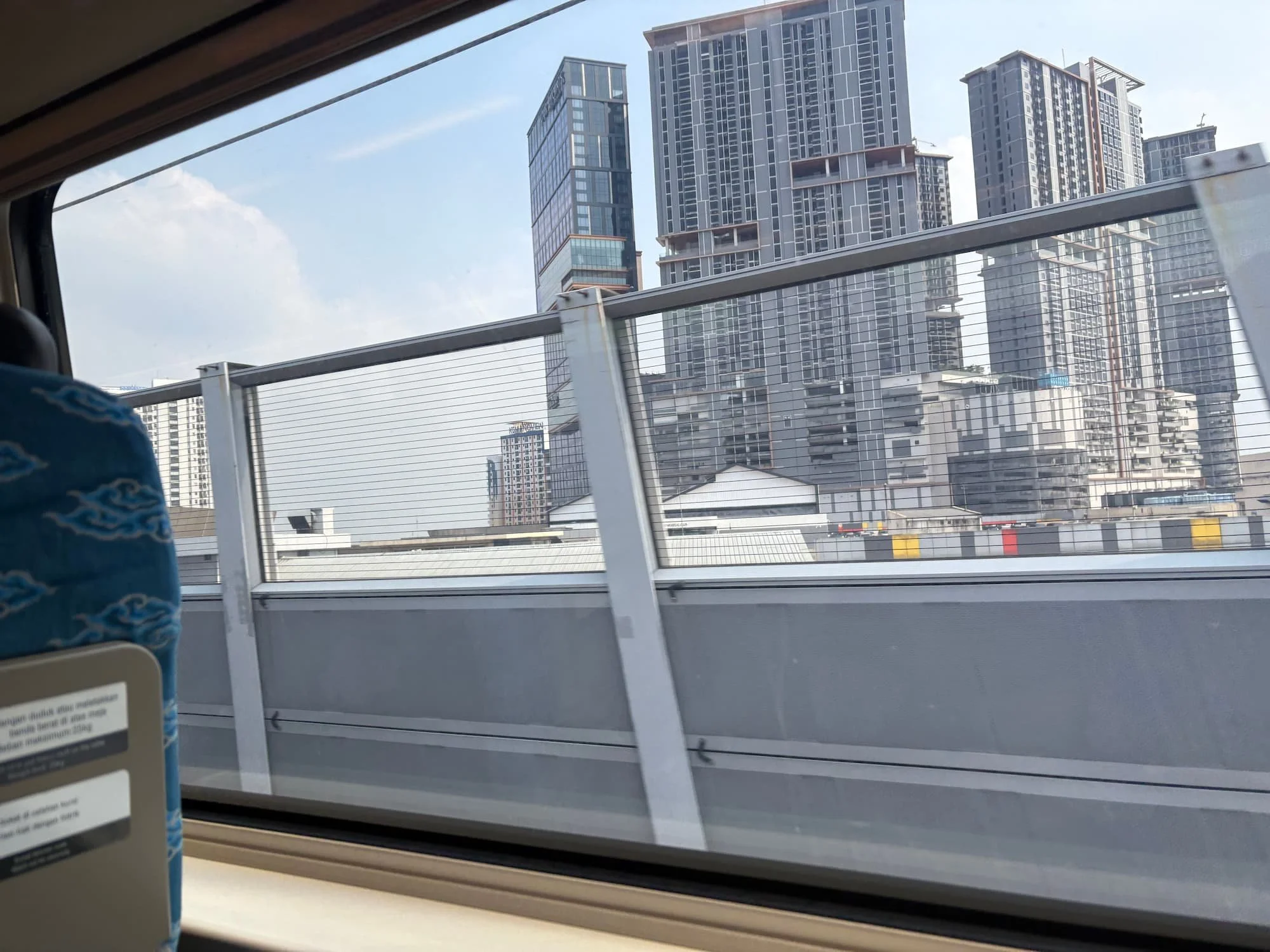
Even moving between cities at high speed, the connection stayed usable for maps, messages, and planning ahead.
Instead of arriving and trying to figure everything out from scratch, we already had a rough plan in place.
It made the whole transition from travel to actually exploring feel a lot smoother — something I’ve definitely struggled with on previous trips around Asia.
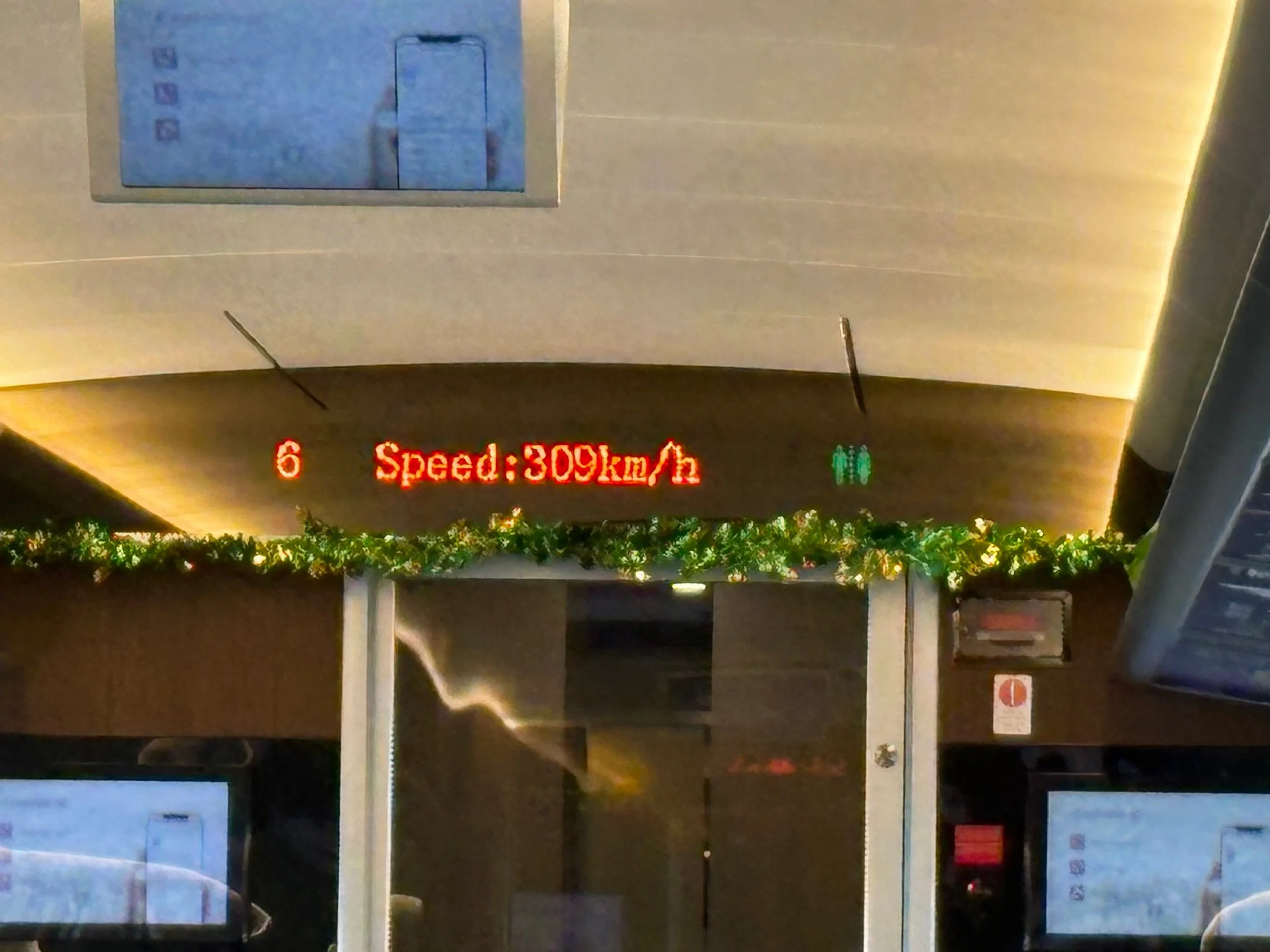
Hitting over 300km/h on the Whoosh train — and still able to stay connected throughout the journey.
Ordering Grab in Jakarta’s Chaos.
As with many of the popular destinations in Asia, ordering a Grab in Jakarta isn’t always as simple as it sounds.
Busy roads, constant traffic, motorbikes everywhere can make selecting pick-up points much more tricky.
Often during my time in Bali, there have been moments where drivers were nearby, but couldn’t quite find us.
We’d be standing on one side of the road, they’d be on the other. Or stuck in traffic just metres away, but unable to turn around.
I think it’s an Indonesian thing, as it can get so busy, very quickly!
Having a solid connection in the capital meant we could adjust things instantly.
Moving the pin. Messaging the driver. Sharing our exact location. Even quickly checking landmarks nearby to explain where we were.
Data is essential if you want to use Grab on the move, and in Asia the popular app makes such a difference.
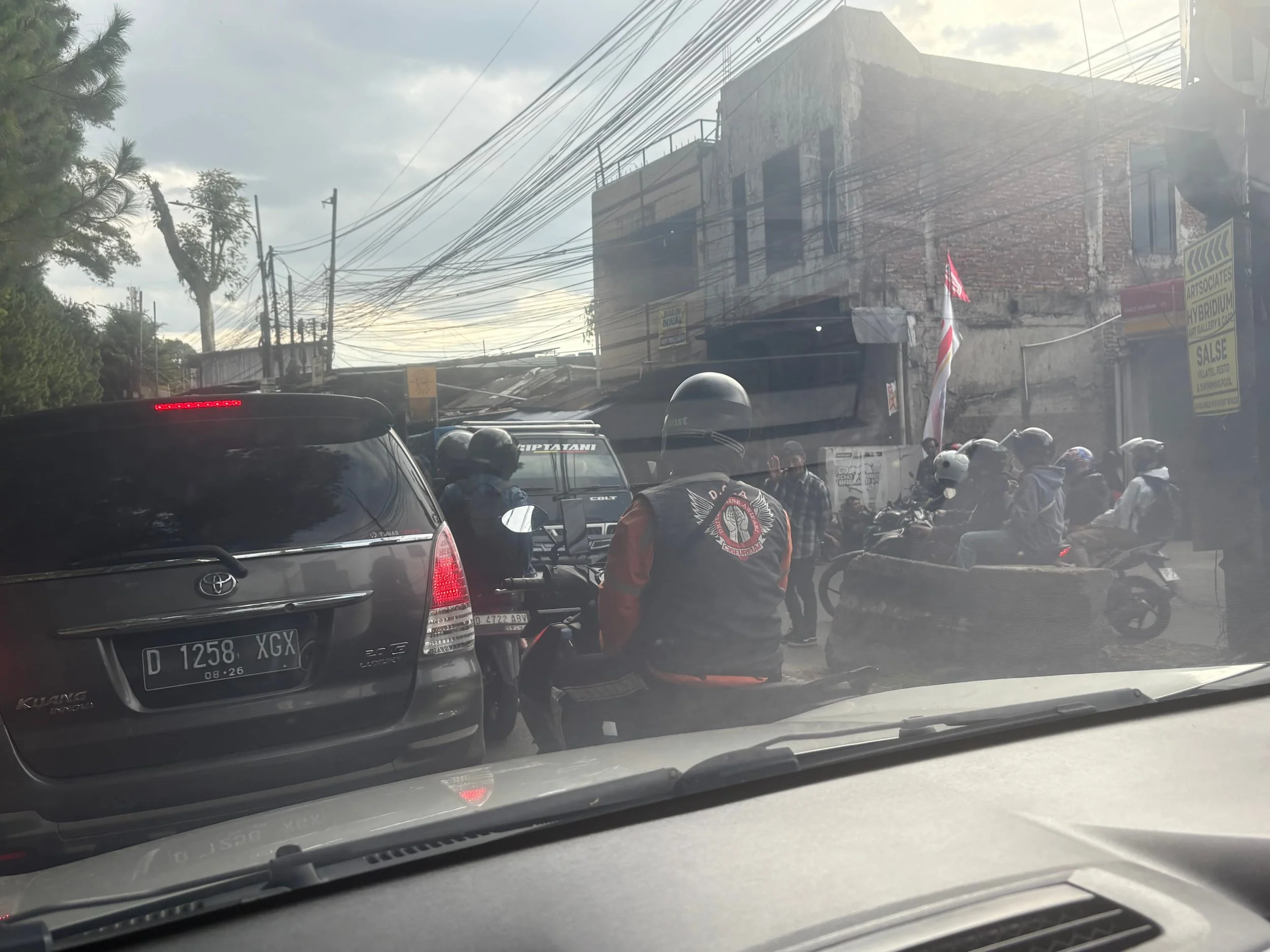
Jakarta traffic at its peak — without mobile data and Grab, getting around here would be incredibly difficult.
Exploring Bandung’s Hills & Cafés.
Bandung felt completely different to Jakarta almost straight away.
Less hectic, more spread out, and surrounded by hills, but also much easier to get lost if you don’t know where you’re going.
Some of the best viewpoints weren’t clearly marked or part of any obvious route.
Having a girlfriend who lives in Bandung obviously helped, but we still needed the help of Google Maps to find our way through the traffic, and up some scenic routes.
Very little signage, minimal English, and not always where you’d expect them to, so most of the time, we were relying on maps just to figure out where to go next.
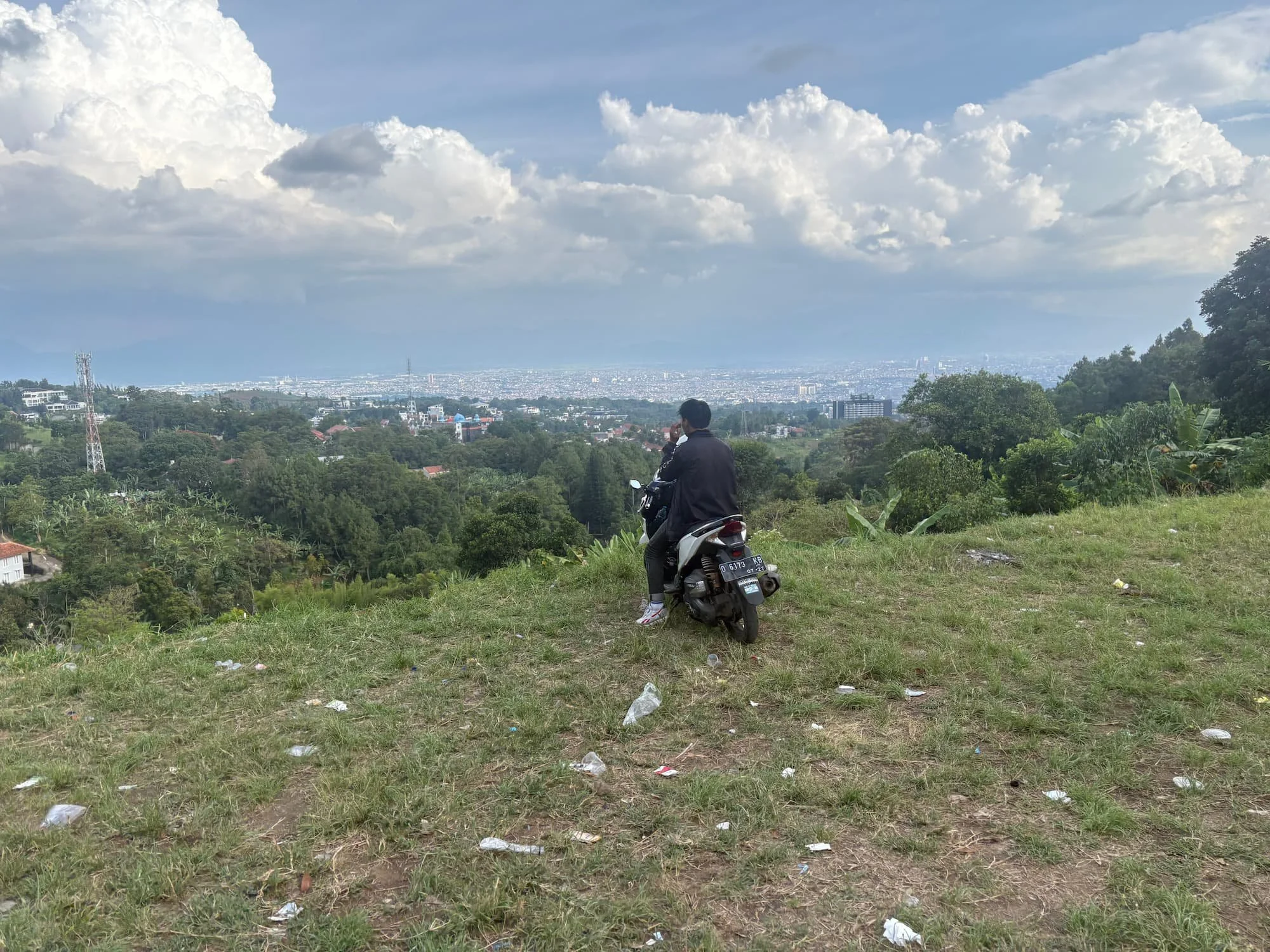
Finding viewpoints like this around Bandung was only possible using maps and data — many of these spots aren’t obvious without it.
I’d be checking directions, zooming in and out, trying to work out whether a road actually led somewhere worth visiting or just disappeared into the hills.
But that’s also what made it better.
Instead of sticking to a fixed plan, we were able to explore properly, stopping at viewpoints, pulling over when something looked interesting, and finding places we hadn’t planned at all.
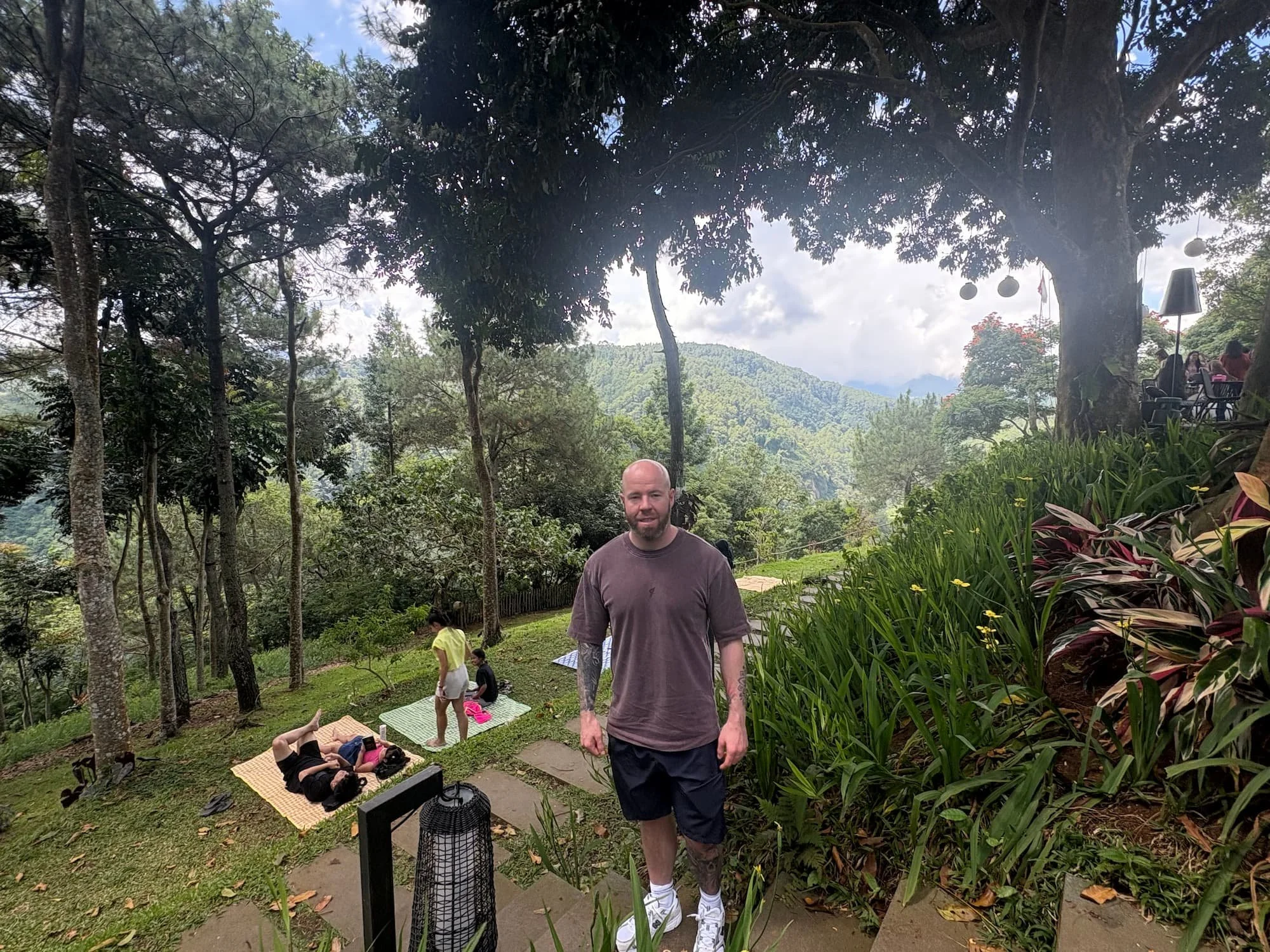
Exploring the hills around Bandung — having constant data made it easy to find places like this and plan routes on the go.
Even just driving between spots, we came across street art and random little places that we would’ve completely missed otherwise.
It turned the journey itself into a very big part of the experience, not just the viewpoints.
Having data the whole time meant we could do that without overthinking it.
And in a place like Bandung, that makes a big difference.

Even just driving between viewpoints, we came across street art and random spots like this.
Exploring Jakarta on foot.
Jakarta is one of those cities where things don’t always feel as straightforward as they first look.
We spent time walking around areas like Kota Tua and near the national stadium, where the skyline opens up and the city feels a bit more breathable compared to the constant traffic elsewhere.
But even then, it’s easy to take a wrong turn or end up somewhere that doesn’t quite lead where you expected — especially in the heat.
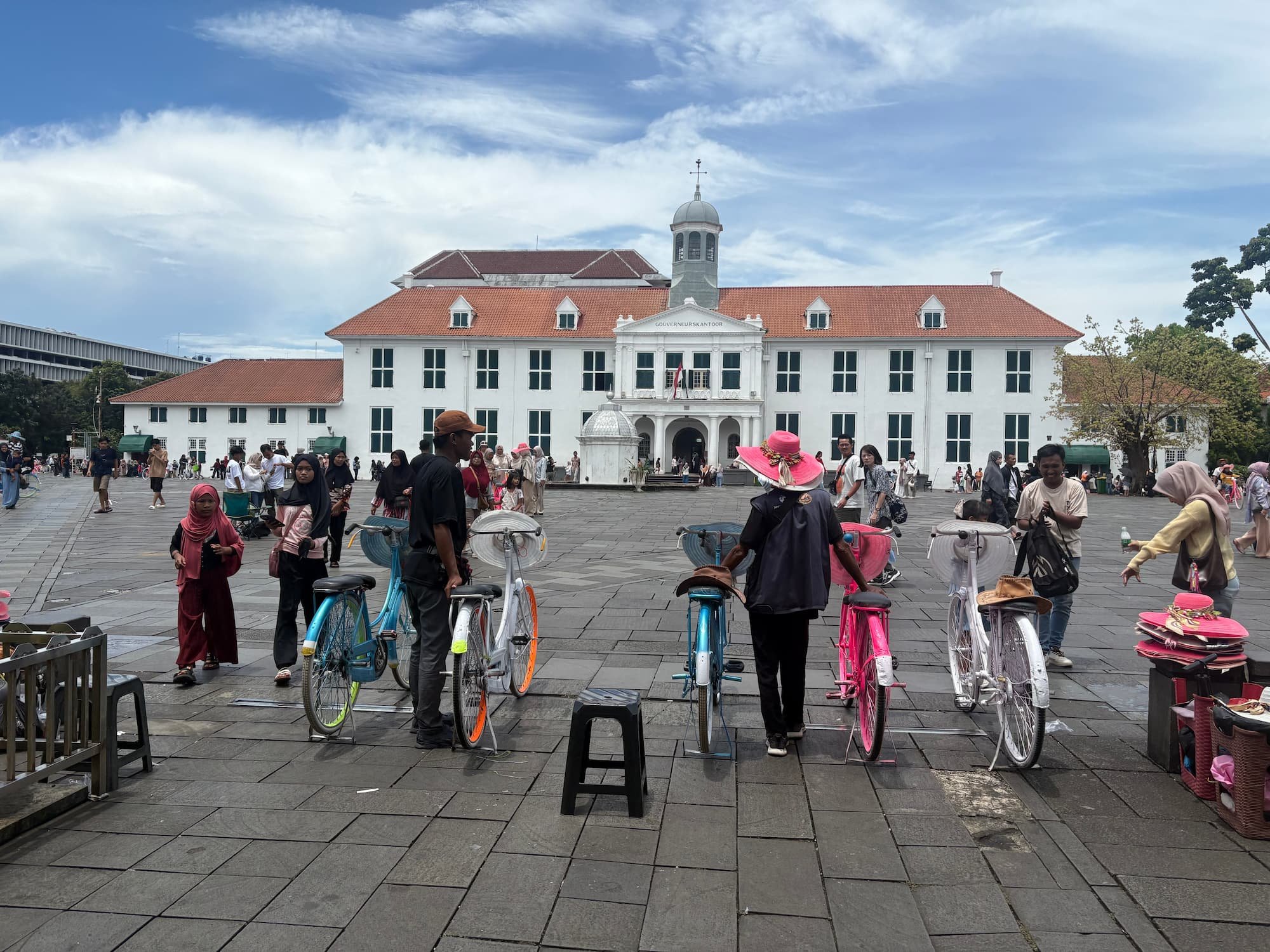
Exploring Jakarta’s Old Town (Kota Tua).
I remember one point where we thought we’d found a quick route back towards a main road, only for it to turn into a dead end.
Instead of second guessing everything, we could just adjust on the move and carry on without it becoming frustrating.
It meant we could actually enjoy being out in the city, rather than stopping every few minutes trying to work things out.
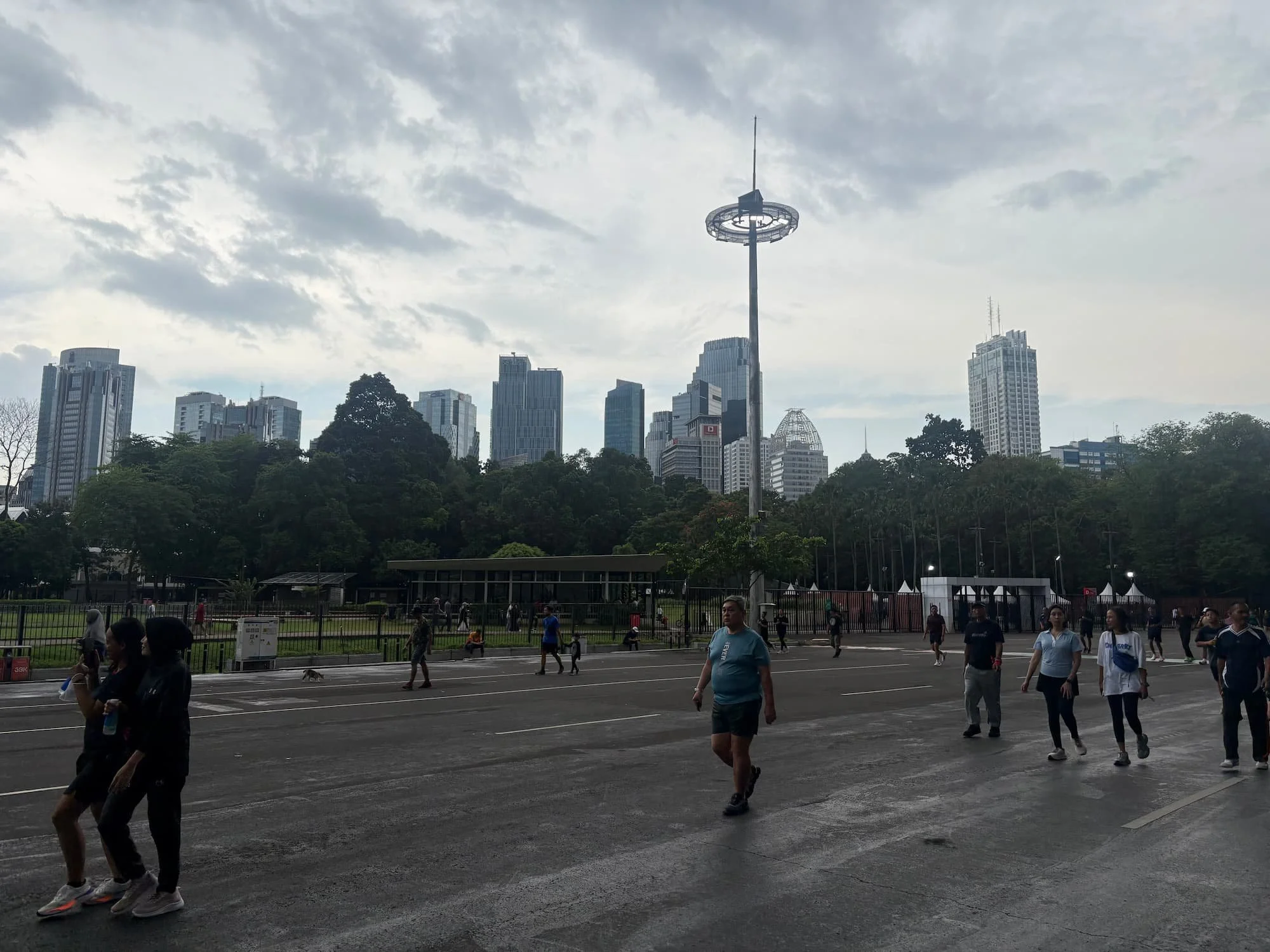
Walking around Gelora Bung Karno Stadium in Jakarta.
Choosing the right mall (Important in Jakarta).
One thing that surprised me about Jakarta was just how many malls there are.
And not just small ones either, huge, multi-level complexes that can easily take up your whole day.
From the several malls we visited, it was obvious that they are all unique in the Indonesian capital with different themes, and different designs.
As with all of the popular Asian cities, the malls cater very well to locals and visitors, however, if you want to experience some local culture, a little bit of research goes a long way.
That’s actually how we ended up choosing Senayan City Mall.
We’d heard there was a replica mosque set up inside for the Eid celebrations, and it sounded a bit different to your typical shopping mall experience.
When we got there, it definitely didn’t disappoint.
Instead of just shops and food courts, there were full cultural displays, themed areas, and a completely different atmosphere.
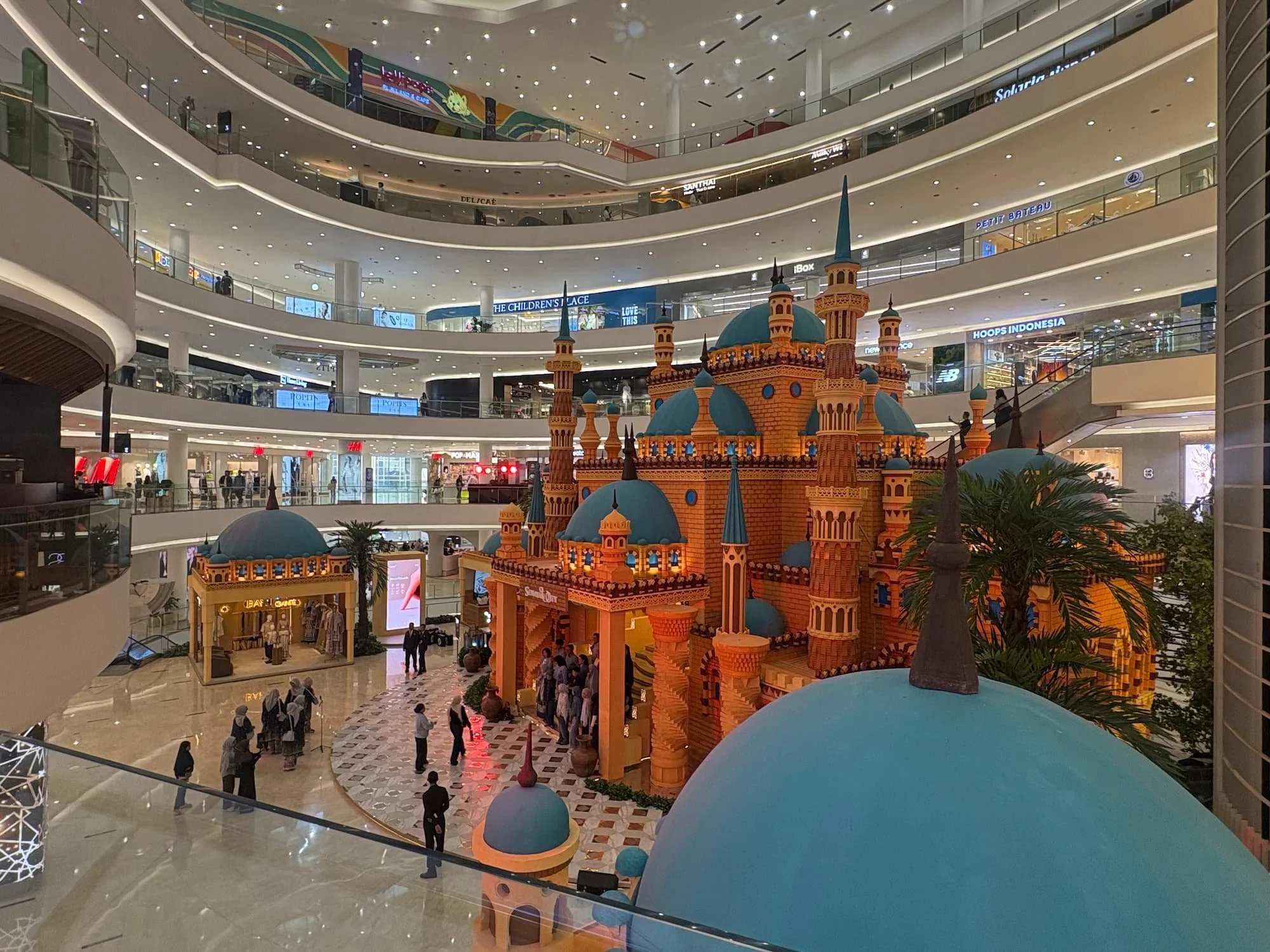
Feeling the local culture.
Translating & communicating.
This was probably where I relied on it the most.
In small local places in Central Jakarta, everything is moving quickly — people ordering, menus on the wall, staff expecting you to know what you want.
And when it’s not in English, you don’t really get much time to stand there and figure it out.
As I mentioned above, my Indonesian is much better when I am talking to an app. Let’s just say that!
There were a few moments where I quickly checked what something actually was on my translator app, before ordering, just to avoid guessing and hoping for the best.
Strong signal made things feel a lot more relaxed, especially in busier spots where you don’t want to hold the locals up.
➡️ If you want that same peace of mind when travelling, you can check Ubigi’s Indonesia eSIM plans here.
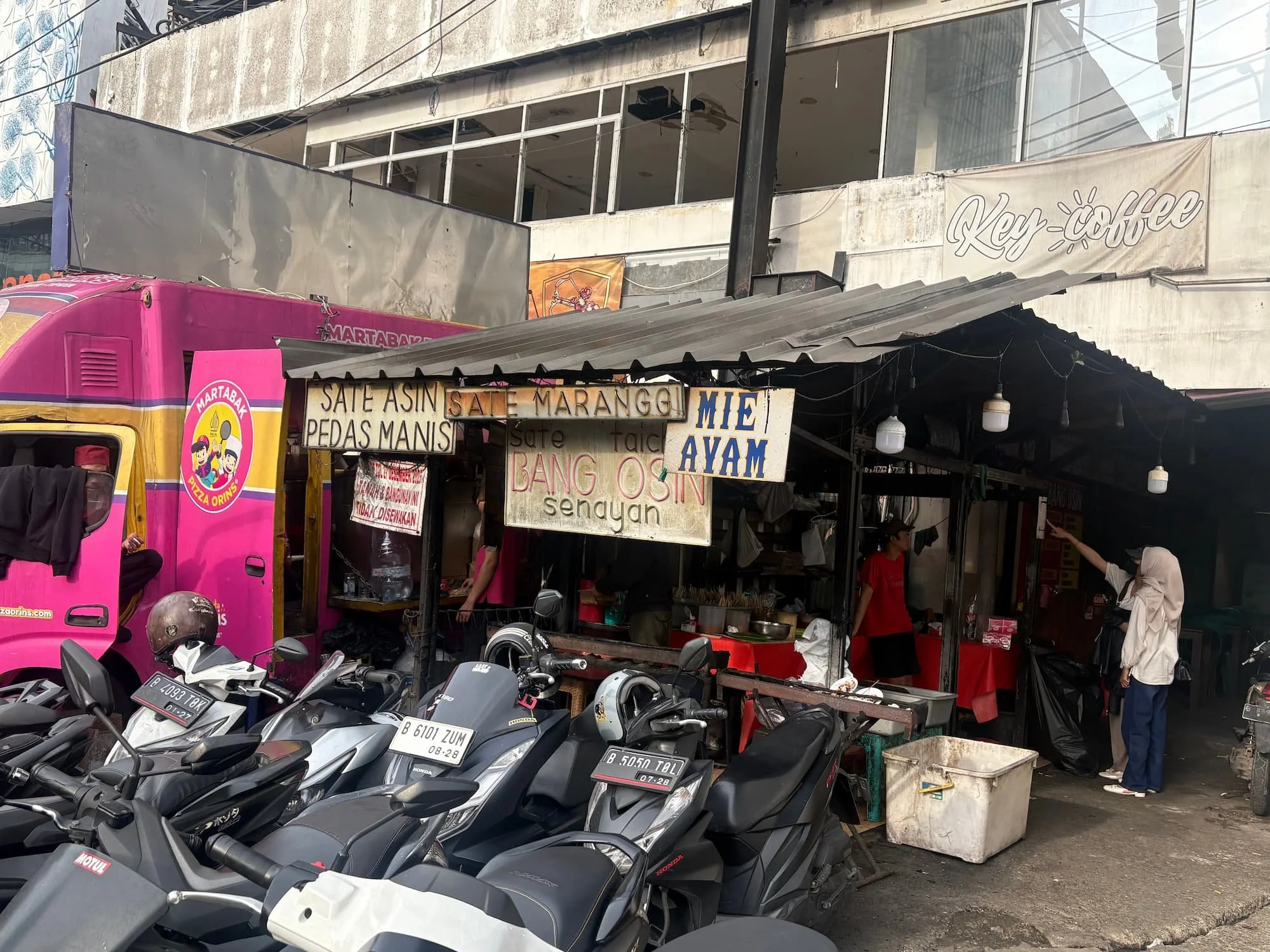
Ordering food in Indonesia isn’t always straightforward — having data meant I could translate menus and communicate much more easily..
The Biggest Advantage: Instant connection on arrival.
After a few days in Thailand, we flew back into Indonesia, and this is where it really stood out.
The moment the seatbelt sign switched off, my phone connected almost instantly. It just picked up exactly where it left off.
After a long travel day, that made a bigger difference than I expected.
Instead of landing and going through the usual routine of trying to reconnect, we were already online within seconds — sorting our Grab out as we made our way through the terminal.
No waiting around. No airport WiFi. Just straight back into the magic of our Indonesia trip.
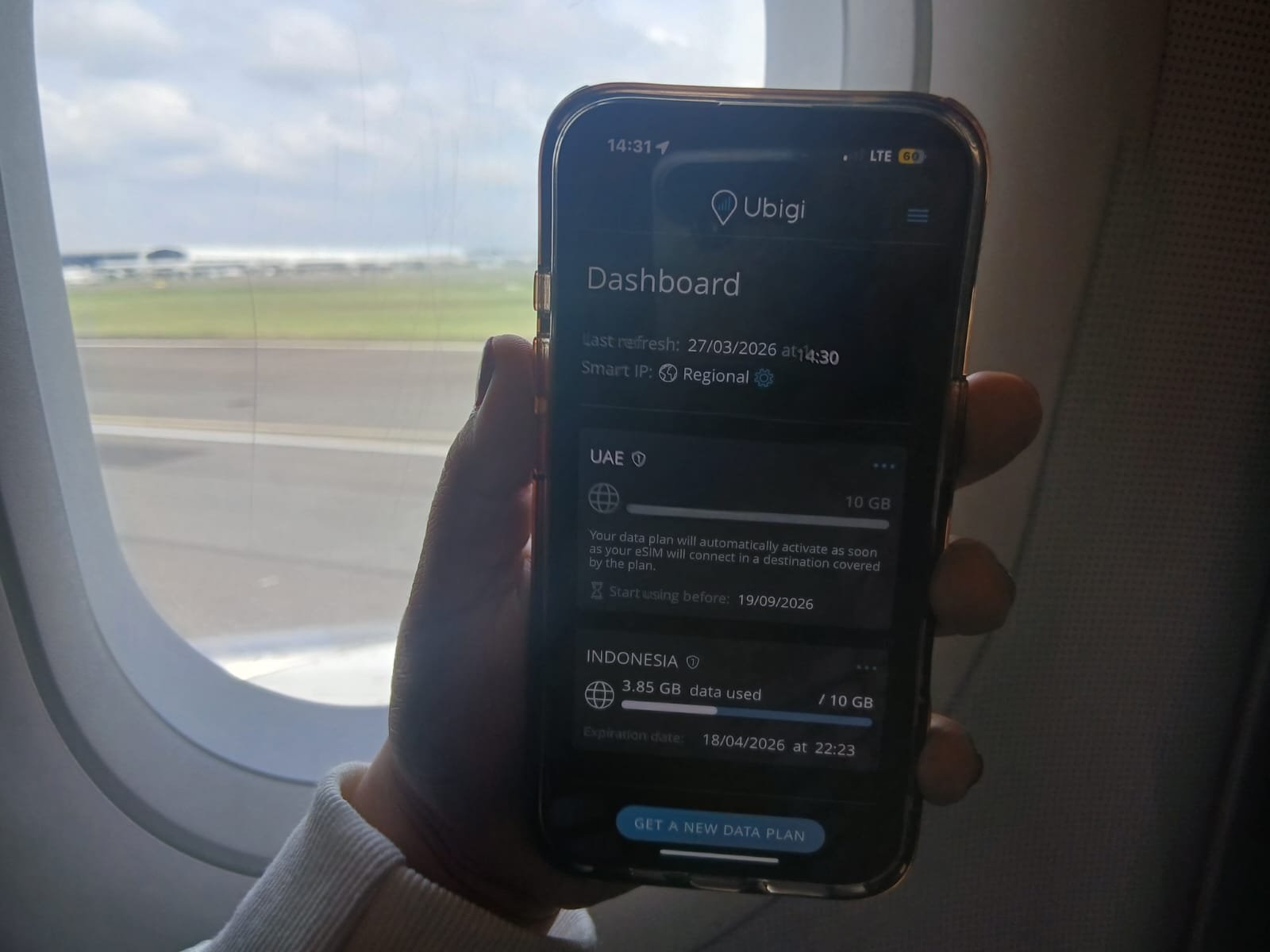
No airport WiFi, no SIM swapping — my Ubigi eSIM connected instantly as soon as we landed back in Indonesia.
Why Ubigi works so well in Indonesia.
Looking back, it wasn’t just one specific moment, it was how consistently everything worked across the entire trip.
From city to city, situation to situation, it was always there when I needed it.
Here are some of the main features of Ubigi:
Install Once, Use Everywhere.
Moving between countries felt seamless.
After a few days in Thailand, we landed back in Indonesia and didn’t have to touch a thing — it just connected and we carried on.
And it wasn’t just the country switching.
From busy streets in Jakarta to quieter areas, transport, and the hills around Bandung, it worked everywhere I actually needed it.

One eSIM, installed once — and it just worked everywhere, from city streets to local transport like this.
Strong, Reliable Coverage.
I found the connection to remain stable throughout my trip.
I watched videos while we waited for our Grab rides…
I used maps daily… I uploaded content to social media without any issues.
It did exactly what it says on the tin.
From 300km/h on the Whoosh Train to lying in the sunshine at the Bandung viewpoints in solitude.
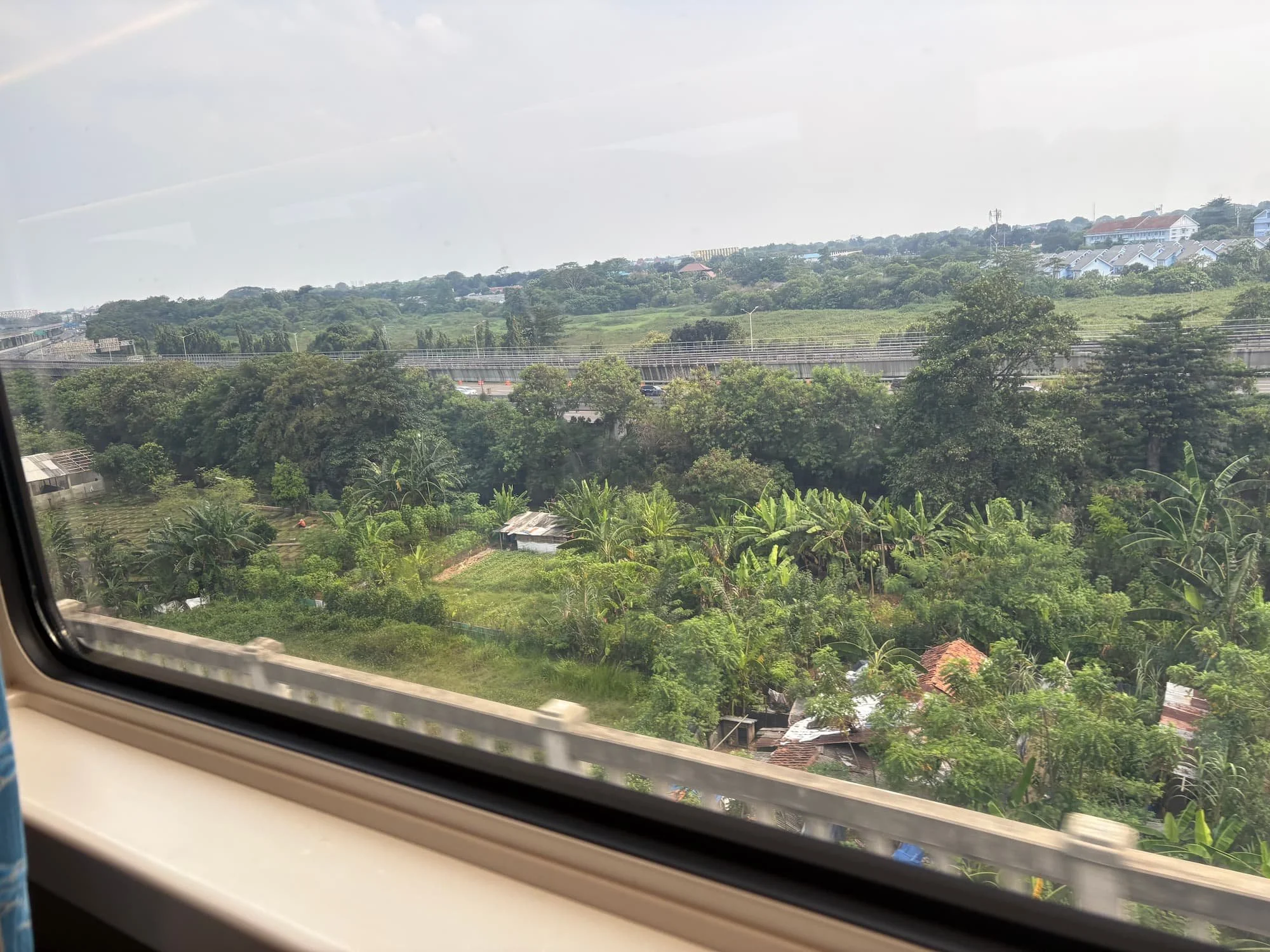
Whether in cities or travelling between them, the connection stayed consistent with no drop-offs.
Top Up even without data.
This is a good feature, which I would have liked on my previous trip to Vietnam.
When I ran out of data, I had to wait until I got back to hotel wifi to buy more data.
When exploring as a solo traveller, or venturing off track, it could be a game changer.
Tethering Allowed.
This came in really handy more than once.
Whether it was quickly hotspotting to my macbook to check my emails, or just sharing a connection with my girlfriend, it worked well.
If you’re travelling with camera gear, editing content, or working on the move, it’s a small feature that helps.
👉 If you’re travelling around Indonesia (or Southeast Asia in general), this is one of those things that just makes the whole trip easier.
No stress. No setup on arrival. Just reliable data when you need it.
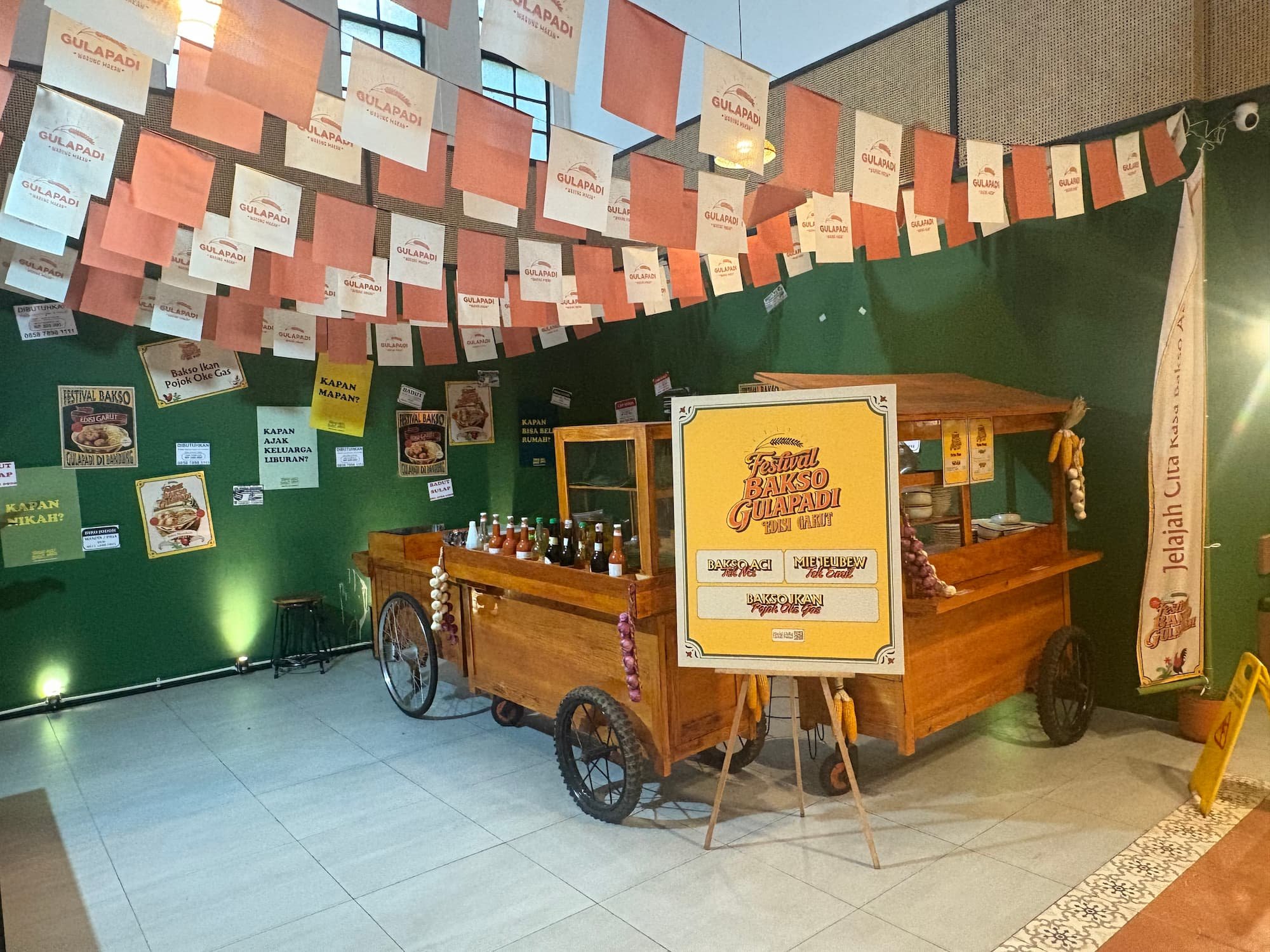
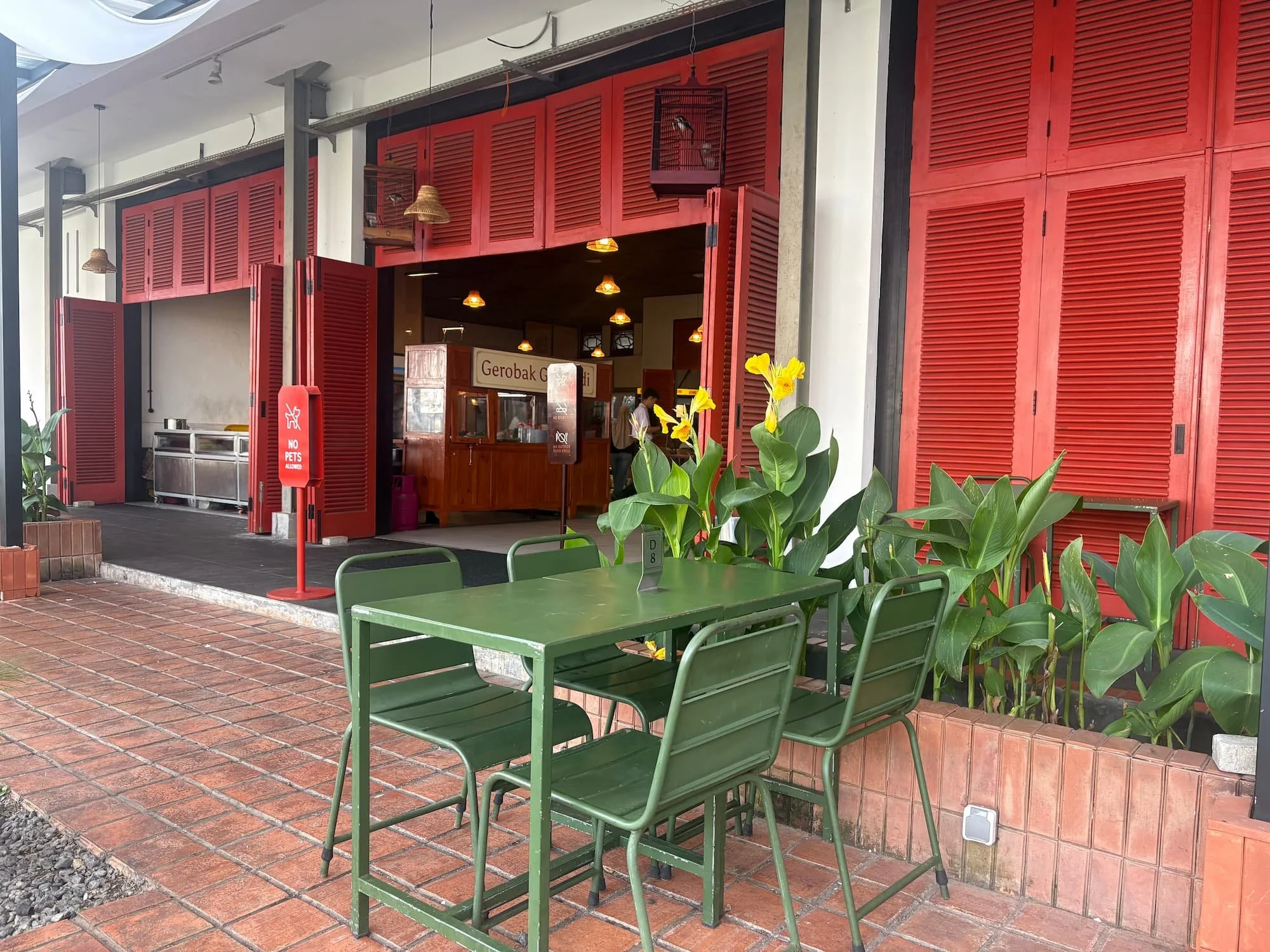
A local restaurant in Bandung.
Trying different restaurants is one of our favourite things.
FAQ — Ubigi eSIMs for Indonesia.
If you’re new to using an eSIM, you probably still have a few questions, I know I did before choosing Ubigi. Here are some common questions answered from my personal experiences:
Do eSIMs work well in Indonesia?
Yes, especially in cities like Jakarta and Bandung, and I also found it to be very reliable in Bali.
From my experience, the connection was reliable for maps, Grab, messaging, and general browsing throughout the trip.
Is Ubigi better than a local SIM card in Indonesia?
For convenience, yes. You don’t need to queue at the airport, swap SIM cards, or set anything up on arrival, it’s ready to go as soon as you land.
Can I install Ubigi before travelling?
Yes — and that’s the best way to do it, and exactly what I did. I installed it before my trip, and it only activated when I arrived in Indonesia.
Does Ubigi work in multiple countries?
Yes, this was one of the best parts.
After travelling to Thailand and back, it reconnected instantly without needing to change anything.
How reliable is Ubigi’s connection?
From my experience, it stayed consistent across cities, transport, and different areas. Not perfect every second, but always usable when I needed it.
What happens if I run out of data with Ubigi?
You can top up directly through the app, even without WiFi, and carry on using it straight away.
Disclosure: I sometimes use affiliate marketing. This will not cost you anything, but helps with my travel costs. I only recommend companies I use myself.